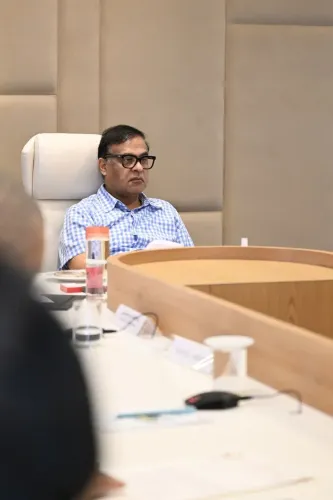
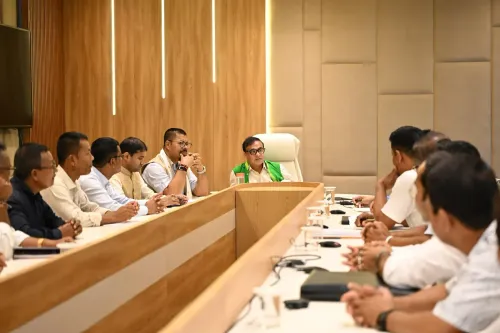
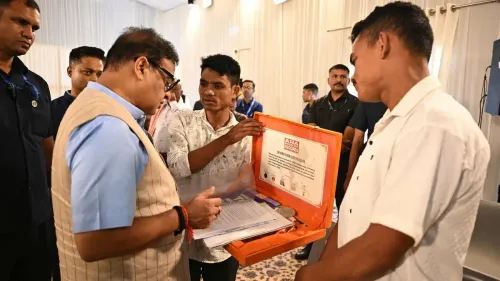
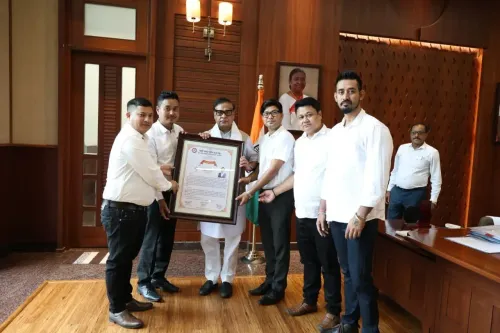
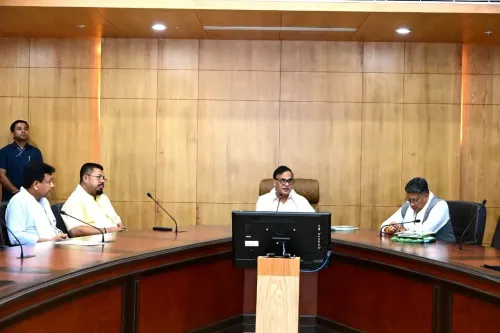
CM Himanta meets Moran, Matak groups in Dibrugarh over land rights
Synopsis
Chief Minister Himanta Biswa Sarma met Moran and Matak community organisations in Dibrugarh on 28 October 2026, announcing three Mission Basundhara 4.0 measures: portal guidelines, youth digital training, and a premium-payment deadline extension to ease land-title access.
Key Takeaways
CM Himanta Biswa Sarma held a meeting with Moran and Matak community organisations in Dibrugarh on 28 October 2026 .
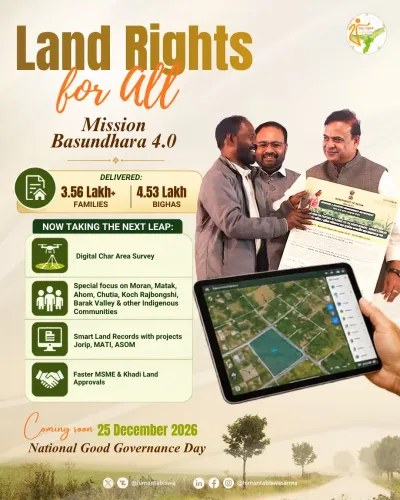
The meeting focused on land-related issues and their resolution under Mission Basundhara 4.0 .
Community-specific guidelines for Moran and Matak applicants will be published on the Basundhara portal.
Local youth will be trained to simplify the online land application process for community members.
The deadline for premium payments will be extended for applicants unable to pay within the original stipulated period.
Mission Basundhara was launched in 2021 to digitise land records and issue formal land titles to landless indigenous families across Assam.
Land rights for two of Upper Assam's oldest indigenous communities moved closer to resolution on Wednesday, 28 October 2026, when Chief Minister Dr Himanta Biswa Sarma held a focused meeting with organisations representing the Moran and Matak communities in Dibrugarh — and left the table with a concrete three-point action plan.
Three commitments on the table in Dibrugarh
Speaking at the meeting, CM Himanta outlined the steps his government will take under Mission Basundhara 4.0 to address long-standing grievances. First, community-specific guidelines for the Moran and Matak applicants will be published directly on the Basundhara portal — a move designed to remove the ambiguity that has stalled many applications. Second, local youth will be trained to help community members navigate the online application process, bridging the digital divide that has left older or less tech-literate applicants behind. Third, and perhaps most immediately impactful, the deadline for premium payments will be extended for applicants who have been unable to deposit the required amount within the stipulated period.
That payment-deadline extension is a telling detail. It signals that the government has acknowledged a structural problem: families with legitimate land claims are being locked out not because their paperwork is wrong, but because they cannot mobilise cash on the government's timeline. The extension is a procedural fix, but for the households affected, it is a lifeline.
Mission Basundhara's roots — and why Phase 4 matters now
Mission Basundhara was first launched in 2021, the same year CM Himanta took office, with the ambitious goal of digitising land records and issuing formal land titles — pattas — to landless indigenous families across Assam. Each successive phase has broadened the programme's reach, extending similar measures to ethnic groups that had been left out of earlier rounds. The Moran and Matak communities, concentrated in Upper Assam's Dibrugarh and neighbouring districts, have longstanding claims to land they have farmed and inhabited for generations but have often held without formal documentation.
For communities like these, a patta is not just a piece of paper — it is the difference between security and eviction, between a collateral-backed loan and no credit at all. Getting the fourth phase of Basundhara right in Upper Assam is therefore a governance test with very real human stakes.
What comes next for Moran and Matak applicants
The immediate watch-points are the publication of the community-specific guidelines on the Basundhara portal and the roll-out of the youth training programme in Dibrugarh and potentially neighbouring districts. Both are administrative actions that can be tracked and held to account. The government's credibility on this issue will be measured not by the meeting in Dibrugarh, but by how quickly those guidelines appear online and how many trained youth facilitators reach the ground.
For two communities that have waited long for formalisation of their land holdings, the momentum now shifts from the conference room to the portal — and to the clock.
Point of View
The government signals an intent to close gaps that earlier phases left open, potentially reducing a long-standing grievance that has carried political salience in Upper Assam. The premium-deadline extension is the most telling concession: it implicitly acknowledges that procedural design, not community willingness, was the barrier. Whether this translates into a measurable rise in formal land settlements in Dibrugarh will determine whether Phase 4 is remembered as incremental progress or a genuine inflection point.
NationPress
28 Oct 2026
Frequently Asked Questions
What is Mission Basundhara 4.0 in Assam?
Mission Basundhara 4.0 is the fourth phase of the Assam government's programme to digitise land records and issue formal land titles to landless indigenous families through an online portal. It builds on earlier phases launched since 2021, broadening access through procedural reforms and targeted community guidelines.
Who are the Moran and Matak communities in Assam?
The Moran and Matak are indigenous ethnic communities concentrated in Upper Assam, particularly in and around Dibrugarh district. Both communities have longstanding claims to land they have historically inhabited but have often lacked formal documentation for.
What did CM Himanta announce for Moran and Matak land applicants?
CM Himanta Biswa Sarma announced three steps under Mission Basundhara 4.0: publishing community-specific guidelines on the portal, training local youth to assist with online applications, and extending the premium-payment deadline for applicants who cannot pay within the original timeframe.
Why is the premium payment deadline extension significant?
The extension addresses a key barrier where financially constrained applicants with valid land claims were being excluded simply because they could not mobilise cash within the government's original deadline. The relaxation makes the settlement process more accessible for low-income community members.
Where was the Mission Basundhara 4.0 community meeting held?
The meeting was held in Dibrugarh, a major district in Upper Assam, on 28 October 2026. Dibrugarh is one of the key areas where Moran and Matak communities have significant land-rights concerns.