Smriti Irani: Congress draws blank in 28 MLC seats on ballot paper
Synopsis
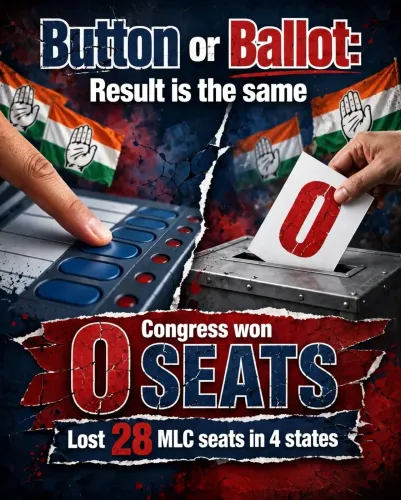
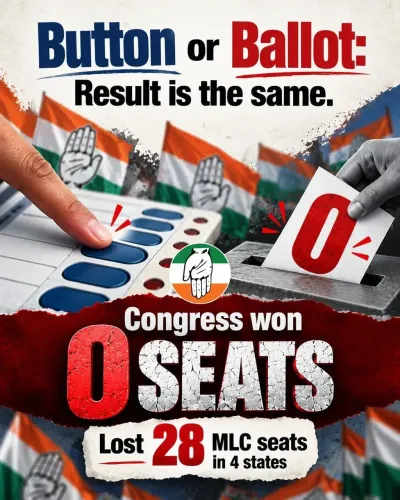
BJP leader Smriti Irani on October 28, 2026 highlighted that Congress failed to win a single seat among 28 MLC constituencies across UP, Maharashtra, Bihar, and Karnataka — contests held on ballot papers — directly undercutting the party's longstanding EVM-tampering narrative.
Key Takeaways
Congress won zero seats across 28 MLC constituencies in UP, Maharashtra, Bihar, and Karnataka.
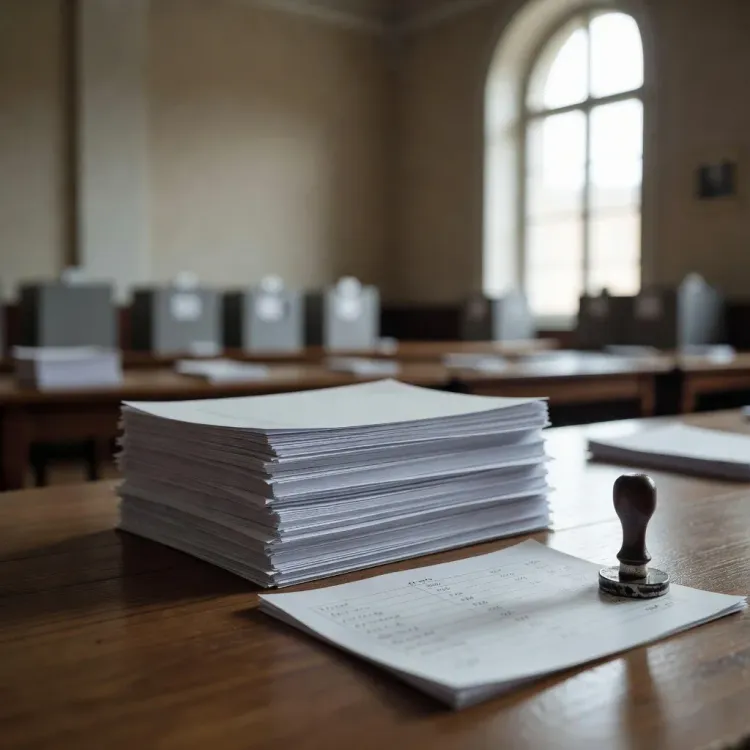
The elections were conducted on ballot papers , removing the EVM-tampering argument Congress has used since 2014.
Smriti Irani cited the results as proof that voters, not machines, are rejecting Congress.
The BJP has routinely used non-EVM format results to counter opposition allegations of vote theft.
The Supreme Court upheld EVM integrity in judgments in 2019 and 2023 .
Irani called on the Congress leadership to 'stop making excuses and do a reality check on the ground.'
The party that cried 'vote theft' every time an EVM delivered a verdict it disliked has now been handed a reckoning — on paper. BJP leader Smriti Irani on Wednesday, October 28, 2026, turned the Congress's long-running EVM controversy argument on its head, pointing out that the opposition drew a complete blank across 28 MLC seats in four large states — elections conducted using ballot papers, not electronic voting machines.
Irani's post, written in Hindi, stated bluntly: 'EVM ko katghare mein khada karne wale aur vote chori ka rona rone walon ko janta ne ballot paper par bhi nil batte sannata de diya hai' — 'Those who put EVMs in the dock and wept about vote theft have been handed a resounding zero by the public on ballot paper too.' She named Uttar Pradesh, Maharashtra, Bihar, and Karnataka as the four states where Congress failed to win a single seat across the 28 MLC constituencies that went to polls.
The EVM argument Congress cannot make here
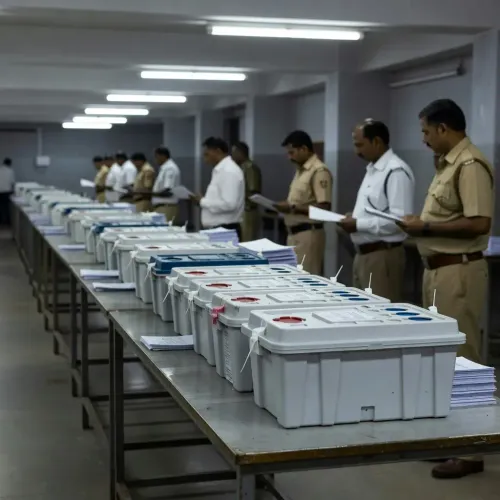
For more than a decade, Congress and several allied opposition parties have alleged that electronic voting machines are vulnerable to manipulation — a charge that surfaces reliably after every significant electoral loss. The Supreme Court examined and rejected these claims in major judgments in 2019 and again in 2023, upholding the integrity of EVMs with VVPAT cross-verification. The Election Commission of India has consistently defended the machines as tamper-proof.
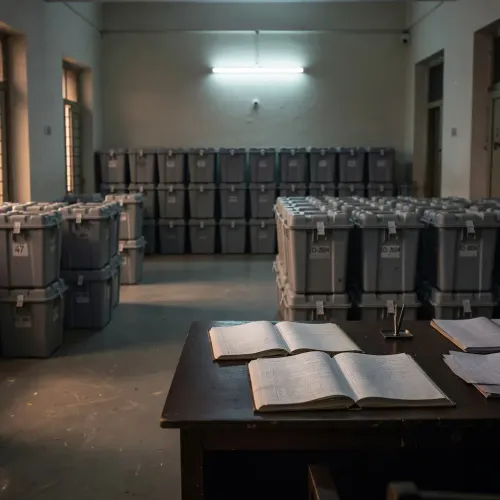
MLC elections — polls to state Legislative Councils — frequently use ballot papers rather than EVMs, depending on the category of constituency (graduates' constituencies and teachers' constituencies, for instance, have historically used paper ballots). A zero tally across four major states removes the one escape route Congress has repeatedly used to explain away unfavourable verdicts.
Irani targets 'Rajkumar and Company' by name
In a direct swipe that BJP audiences will read as aimed squarely at Rahul Gandhi, Irani referred to 'Rajkumar and Company' — an established BJP shorthand for the Congress leadership — as those who 'insult public opinion after every defeat.' Her prescription: 'stop making excuses, come down to the ground, and do a reality check.' The phrase 'nil batte sannata' — literally 'zero multiplied by silence', a Hindi idiom for an emphatic nothing — sharpen the point: not a narrow loss, but a complete non-presence.
The post is the latest in a well-worn cycle of BJP counterattacks following state-level results. What sets this instance apart is the ballot-paper angle — it forecloses the specific technological alibi that Congress has deployed most aggressively since 2014.
Four-state sweep and what it signals
A clean sweep across UP, Maharashtra, Bihar, and Karnataka — states that span north, west, east, and south India — is politically significant not merely as a number but as a geographic statement. These are not peripheral contests; together they represent a cross-section of India's electoral diversity. Whether this blank slate reflects organisational weakness, candidate selection failures, or a broader structural decline in Congress's state-level machinery is a question the party will need to answer internally — and quickly, with more MLC and assembly by-elections in the pipeline.
For now, the BJP has a clean, difficult-to-rebut data point: the ballot-paper election, the one format the opposition said it trusted, returned the same verdict.
Point of View
She strips Congress of its most-used post-defeat alibi. The four-state geographic spread — UP, Maharashtra, Bihar, Karnataka — makes it difficult to attribute the blank tally to regional anomaly. This exchange is part of a longer BJP communications strategy of letting opposition rhetoric accumulate and then countering it with a single inconvenient data point, a pattern that has intensified since 2019. For Congress, the more uncomfortable question is not whether EVMs are fair, but why its ground organisation is failing in formats where the technology argument cannot be raised.
NationPress
28 Oct 2026
Frequently Asked Questions
What did Smriti Irani say about Congress and the MLC elections?
Irani said Congress failed to win a single seat across 28 MLC constituencies in UP, Maharashtra, Bihar, and Karnataka — elections held on ballot papers — and called out the party for blaming EVMs after every loss.
Why does it matter that MLC elections use ballot papers?
Congress has repeatedly alleged EVM tampering to explain election defeats; ballot-paper results remove that specific argument, making a zero tally politically harder for the party to deflect.
What is the EVM controversy in India?
Since 2014, several opposition parties including Congress have alleged electronic voting machines can be manipulated; the Supreme Court upheld EVM integrity with VVPAT verification in 2019 and 2023.
Who is 'Rajkumar' Smriti Irani referred to in her post?
'Rajkumar' is a BJP shorthand widely understood as a reference to Congress leader Rahul Gandhi; Irani used it alongside 'and Company' to refer to the Congress leadership collectively.
What are MLC elections in India?
MLC stands for Member of Legislative Council; these are elections to the upper houses of state legislatures that exist in six Indian states, and certain categories — such as graduates' and teachers' constituencies — are traditionally held using ballot papers.