Cabinet Clears PM VGSY With ₹7,395 Cr to Boost Village Governance
Synopsis
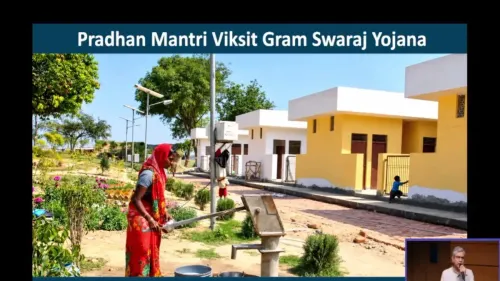
The Union Cabinet approved the Pradhan Mantri Viksit Gram Swaraj Yojana (PM VGSY) with a ₹7,395.55 crore outlay, aiming to strengthen grassroots governance through Panchayati Raj institutions and accelerate comprehensive village development across India.
Key Takeaways
The Union Cabinet approved the Pradhan Mantri Viksit Gram Swaraj Yojana (PM VGSY) on 28 October 2026 .
The scheme carries a total outlay of ₹7,395.55 crore .
Its stated objectives are to empower grassroots governance and accelerate holistic village development.
The approval builds on a policy lineage that includes the 73rd Constitutional Amendment (1992) and the Rashtriya Gram Swaraj Abhiyan (2018) .
State-wise fund releases and detailed scheme guidelines are the key next milestones to watch.
Union Textiles Minister and Begusarai MP Giriraj Singh publicly highlighted the Cabinet decision on social media.
India's villages are getting a direct line to stronger self-governance. The Union Cabinet approved the Pradhan Mantri Viksit Gram Swaraj Yojana (PM VGSY) on Wednesday, 28 October 2026, committing an outlay of ₹7,395.55 crore to power grassroots institutions and accelerate the holistic development of rural India — a move Union Textiles Minister Giriraj Singh highlighted on X as a landmark push for ground-level governance.
What PM VGSY promises gram sabhas across the country
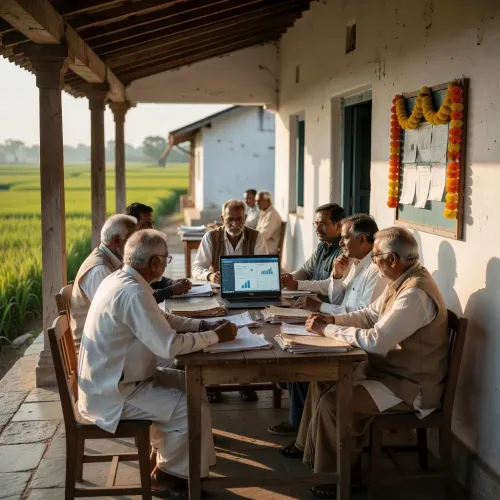
According to Giriraj Singh's post, the scheme is designed to 'empower governance at the grassroots level and give momentum to the comprehensive development of villages.' The ₹7,395.55 crore envelope signals a substantial bet on Panchayati Raj institutions — the constitutional pillars of rural self-rule — as engines of local planning and service delivery.
India's framework for village self-governance flows directly from the 73rd Constitutional Amendment, passed in 1992, which mandated the devolution of powers, funds, and functions to elected local bodies. Successive governments have attempted to operationalise that promise through targeted schemes: the Rashtriya Gram Swaraj Abhiyan, approved in 2018, was one such effort, focusing on capacity-building for Panchayati Raj institutions. PM VGSY appears to be the next chapter in that lineage.
Panchayati Raj's long road from amendment to action
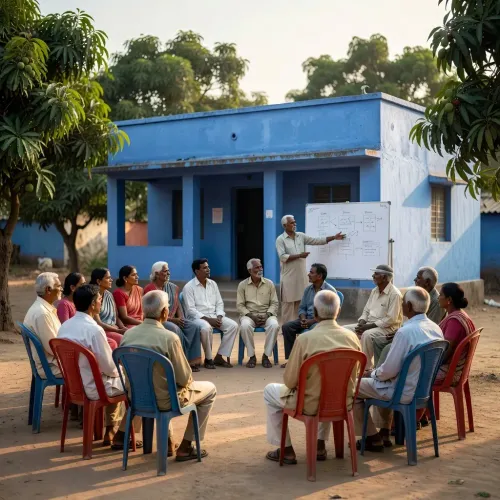
The gap between constitutional intent and on-the-ground reality has always been the central challenge of rural governance in India. Gram sabhas — the foundational village assemblies — often lack trained personnel, digital infrastructure, and the administrative muscle to absorb and utilise central funds effectively. Programmes like MGNREGA and PMAY-G depend heavily on functional panchayats; a scheme that builds their capacity ripples outward into every welfare delivery chain that touches rural households.
The approval of PM VGSY, with a named outlay attached, suggests the Cabinet intends to move beyond broad mandates toward funded, measurable targets at the village level. The questions that will define its success — which states receive priority funding, how scheme guidelines are structured, and whether it integrates with existing rural development architecture — are the ones to watch in the months ahead.
Giriraj Singh's role and the BJP's rural governance push
That a senior leader like Giriraj Singh — Union Minister of Textiles and Lok Sabha MP from Begusarai, Bihar — chose to amplify this Cabinet decision underscores the political weight the ruling party attaches to rural governance signalling. Bihar, a state where gram sabha effectiveness directly shapes the reach of welfare schemes, makes the announcement locally resonant for his constituency. For the broader BJP, PM VGSY fits a consistent narrative of 'Viksit Bharat' — a developed India built from the village up.
With ₹7,395.55 crore on the table and the Cabinet's formal approval in hand, the next milestone is the release of scheme guidelines and the first round of state-wise fund allocations. When that happens, villages will find out whether this approval translates into administrators they can count on.
Point of View
A named scheme with a concrete financial envelope is a political signal as much as a policy instrument. The real test, as with Rashtriya Gram Swaraj Abhiyan before it, will be whether funding reaches functional institutions or disperses into the familiar fog of under-capacitated panchayats. Bihar-heavy optics around the announcement suggest the party is also calibrating its rural constituency management ahead of the electoral cycle.
NationPress
28 Oct 2026
Frequently Asked Questions
What is PM Viksit Gram Swaraj Yojana (PM VGSY)?
PM VGSY is a centrally-approved scheme with an outlay of ₹7,395.55 crore designed to strengthen Panchayati Raj institutions at the grassroots level and drive comprehensive development in Indian villages.
How much money has been allocated to PM VGSY?
The Union Cabinet approved PM VGSY with a total outlay of ₹7,395.55 crore.
What is the difference between PM VGSY and Rashtriya Gram Swaraj Abhiyan?
Rashtriya Gram Swaraj Abhiyan, approved in 2018, focused on capacity-building for Panchayati Raj institutions. PM VGSY appears to be the next evolution in that lineage, explicitly targeting holistic village development alongside governance empowerment — though detailed guidelines are yet to be released.
Who announced the PM VGSY Cabinet approval?
Union Textiles Minister Giriraj Singh, a senior BJP leader and Lok Sabha MP from Begusarai, Bihar, shared the Cabinet approval of PM VGSY on X on 28 October 2026.
How does PM VGSY relate to gram sabhas and Panchayati Raj?
PM VGSY aims to operationalise the spirit of the 73rd Constitutional Amendment by building the capacity of gram sabhas and elected panchayat bodies, enabling better local planning, service delivery, and accountability in rural India.