CM Himanta Reviews Care of 3 Rescued Red Pandas at Assam Zoo
Synopsis
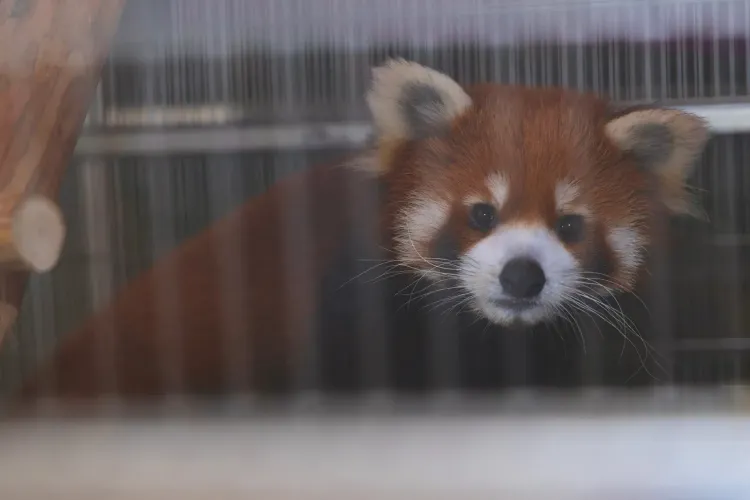
Chief Minister Himanta Biswa Sarma visited the Assam State Zoo on 11 July 2026 to review the health of three red pandas rescued from traffickers in February. The animals, classified under Schedule I of the Wildlife Protection Act and CITES Appendix I, are under expert veterinary care at the Guwahati facility.
Key Takeaways
Three red pandas recovered from wildlife traffickers in February 2026 are under care at the Assam State Zoo and Botanical Garden, Guwahati .
Himanta Biswa Sarma personally visited the zoo on 11 July 2026 to review the animals' health.
Red pandas are listed under Schedule I of the Wildlife Protection Act, 1972 , giving them the highest legal protection in India.
The species is also listed in CITES Appendix I , banning all international commercial trade.
The Assam State Zoo , established in 1957 , is the state's primary institution for ex-situ conservation and wildlife rescue.
The rescue illustrates Assam's role in countering wildlife trafficking networks operating across Himalayan corridors in the Northeast.
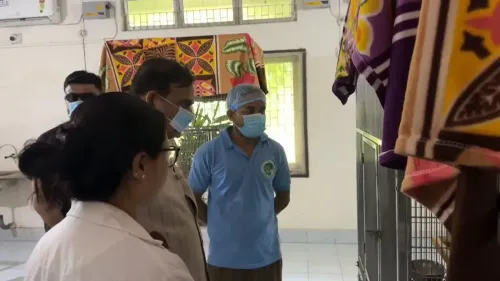
The Chief Minister's Office of Assam announced on Saturday, 11 July 2026, that Chief Minister Dr. Himanta Biswa Sarma visited the Assam State Zoo and Botanical Garden in Guwahati to personally review the health and recovery of three red pandas rescued from wildlife traffickers earlier this year.
Context
The three red pandas were recovered from wildlife traffickers in February 2026 and subsequently placed under expert veterinary care at the Assam State Zoo. The Chief Minister's Office described the visit as offering a 'second chance for one of the Himalayas' most treasured species.' Dr. Sarma's on-site review signals direct executive attention to the animals' rehabilitation progress. The Assam State Zoo and Botanical Garden, established in 1957, serves as the state's primary institution for wildlife rescue, ex-situ conservation, and public education on endangered native species. It has the veterinary infrastructure and specialist personnel required to manage the complex care needs of Schedule I animals such as the red panda.Policy Backdrop
The red panda is classified as a Schedule I species under the Wildlife Protection Act, 1972, affording it the highest level of legal protection under Indian law. Penalties for trafficking Schedule I species are among the most severe prescribed by the Act. India is also a signatory to the Convention on International Trade in Endangered Species of Wild Fauna and Flora (CITES), which lists the red panda in Appendix I, effectively banning all commercial trade in the animal internationally. Assam occupies a critical position in the red panda's range, with the eastern Himalayas and associated forest corridors running through the state providing natural habitat. Wildlife enforcement agencies operating in the Northeast have increasingly targeted trafficking networks that exploit these corridors to move protected animals across borders.Stakeholders and Impact
The immediate beneficiaries of the intervention are the three pandas themselves, whose recovery under zoo veterinarians represents a direct outcome of coordinated enforcement and rehabilitation. Zoo staff, wildlife enforcement personnel, and conservation scientists are the principal actors involved in the ongoing care process. Broader stakeholders include communities living along Himalayan wildlife corridors, whose long-term interests are tied to the health of regional biodiversity. India's international conservation commitments under CITES also mean that successful rehabilitation cases carry diplomatic and reputational weight, demonstrating the country's capacity to enforce wildlife protection laws and rehabilitate confiscated animals.What's Next
Attention will now turn to the pace of the pandas' recovery and whether the state announces any formal reintroduction protocols or expanded coordination with central wildlife authorities and neighbouring states. The Chief Minister's personal visit may also signal forthcoming policy announcements on anti-trafficking infrastructure or inter-agency enforcement cooperation in the Northeast. Progress on the three animals' health will be closely watched by conservation groups tracking red panda population trends across the Himalayan range.Point of View
And it serves a dual purpose: reinforcing the government's conservation credentials while signalling to enforcement agencies that anti-trafficking outcomes receive top-level attention. Assam's positioning as a frontline state in Himalayan wildlife protection has grown steadily under Dr. Sarma, and this visit fits a pattern of high-visibility interventions in the environment space. The red panda, as a charismatic flagship species, also carries strong public communication value, making the optics of the visit politically low-risk and reputationally beneficial. The more substantive question is whether the visit translates into institutional follow-through — expanded zoo rehabilitation capacity, inter-state enforcement coordination, or formal reintroduction planning.
NationPress
10 Oct 2026
Frequently Asked Questions
Where are the rescued red pandas being kept in Assam?
The three rescued red pandas are being kept at the Assam State Zoo and Botanical Garden in Guwahati , where they are under expert veterinary care following their recovery from wildlife traffickers.
When were the red pandas rescued from traffickers in Assam?
The three red pandas were recovered from wildlife traffickers in February 2026 and have since been under care at the Assam State Zoo.
Is the red panda a protected species in India?
Yes. The red panda is classified as a Schedule I species under the Wildlife Protection Act, 1972 , which prescribes the severest penalties for poaching or trafficking. It is also listed in CITES Appendix I , banning international commercial trade.
Why did CM Himanta Biswa Sarma visit the Assam State Zoo?
Chief Minister Dr. Himanta Biswa Sarma visited the Assam State Zoo on 11 July 2026 to personally review the health and rehabilitation progress of the three red pandas rescued from wildlife traffickers earlier in the year.
What is the Assam State Zoo's role in wildlife conservation?
The Assam State Zoo and Botanical Garden , established in 1957 , is the state's primary institution for wildlife rescue, ex-situ conservation, and public education, and it has the veterinary expertise to care for endangered Schedule I species.