HP CM Office: 85,000 Families Left Out of BPL and Welfare Schemes

Synopsis
The Chief Minister's Office of Himachal Pradesh has flagged that 85,000 families remain excluded from both the BPL list and all state welfare schemes. Rural Development Minister Anirudh Singh attended the review meeting alongside senior officials, signalling a push to close the gap in welfare delivery.
Key Takeaways
85,000 families in Himachal Pradesh have been excluded from the BPL list and have not received benefits under any state welfare scheme.
The gap was disclosed by the Chief Minister's Office of Himachal Pradesh on 30 July 2026 .
Rural Development and Panchayati Raj Minister Anirudh Singh was present at the review meeting alongside senior officials.
India's welfare targeting framework is rooted in the Socio-Economic Caste Census (SECC) of 2011 , whose data gaps are a known source of exclusion errors.
State governments periodically audit beneficiary rolls to reduce such exclusions; HP's Rural Development department coordinates these reviews.
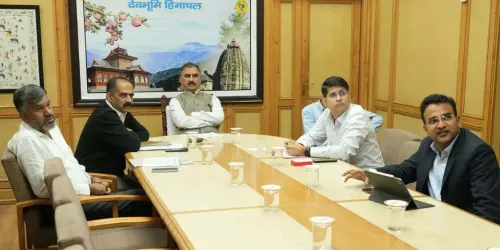
Eighty-five thousand families in Himachal Pradesh have slipped through every net — excluded from the Below Poverty Line (BPL) list and denied the benefit of any state welfare scheme. That gap, now officially on the table, was the focus of a high-level government review meeting convened by the Chief Minister's Office of Himachal Pradesh on Thursday, 30 July 2026.
The 85,000 families no scheme has reached
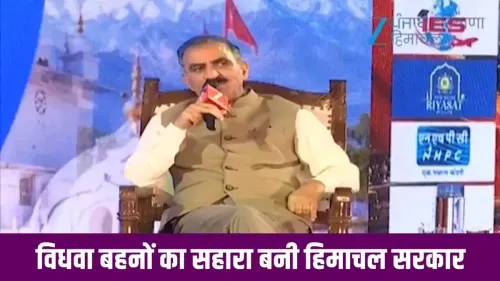
The CMO's post flagged the stark figure directly: 'इनमें 85 हजार परिवार ऐसे हैं, जिन्हें अब तक न तो बीपीएल सूची में शामिल किया गया और न ही प्रदेश सरकार की किसी कल्याणकारी योजना का लाभ मिल पाया' — 'Among these, 85,000 families are those who have neither been included in the BPL list nor received the benefit of any welfare scheme of the state government.' These are households that exist outside every administrative category designed to help them. No ration card benefit. No scheme subsidy. Nothing.
Rural Development Minister in the room
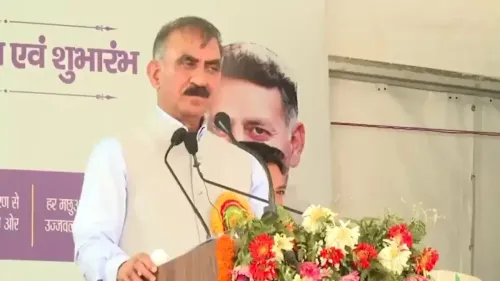
Rural Development and Panchayati Raj Minister Anirudh Singh was present at the meeting alongside other senior officials — a signal that this is not a clerical audit but a political priority. The Panchayati Raj department is the ground-level machinery through which any inclusion drive would actually reach village households, making his presence at the table consequential.
Why exclusion errors persist in welfare delivery
India's welfare targeting framework traces back to the Socio-Economic Caste Census (SECC) of 2011, which set the data baseline for identifying BPL families across states. But census data ages. Families fall into poverty after the survey window closes; others migrate, split, or simply get missed by enumerators. The result is what policy circles call an 'exclusion error' — the genuinely poor who don't appear on any list. State governments periodically audit beneficiary rolls to catch exactly these cases, and Himachal Pradesh conducts such reviews through its Rural Development department to align with national poverty-targeting guidelines. The 85,000-family figure now surfaced suggests the current audit has found a gap of significant scale.
For a state with a total population of roughly 7.5 million, eighty-five thousand uncovered families represents a meaningful share of the rural poor — and a direct test of whether the government's review translates into actual enrolment.Point of View
000 uncovered families is as much a political signal as an administrative one — the Himachal Pradesh government is publicly acknowledging a systemic failure in welfare targeting before an expected inclusion drive, a move that pre-empts opposition criticism while building a narrative of corrective governance. It fits a broader pattern across Indian states of using beneficiary audits to generate visible reform momentum ahead of local body elections or budget cycles. The presence of Minister Anirudh Singh elevates this beyond routine bureaucratic review, suggesting the state intends to move toward enrolment rather than just documentation. The real test will be whether the audit produces a revised BPL list and scheme enrolments within a defined timeline.
NationPress
14 Sept 2026
Frequently Asked Questions
How many families in Himachal Pradesh are excluded from BPL and welfare schemes?
According to the Chief Minister's Office of Himachal Pradesh, 85,000 families have been excluded from both the BPL list and all state government welfare schemes.
What is the BPL list and why does it matter?
The Below Poverty Line (BPL) list identifies economically disadvantaged households eligible for subsidised food, housing, health, and other government welfare benefits. Families excluded from it are effectively locked out of most state and central support.
Who attended the Himachal Pradesh welfare review meeting?
Rural Development and Panchayati Raj Minister Anirudh Singh attended along with other senior officials of the Himachal Pradesh government.
Why are poor families sometimes left out of BPL lists in India?
BPL targeting in India relies heavily on the Socio-Economic Caste Census (SECC) of 2011 , whose data has aged significantly. Families that fell into poverty after the survey, split households, or were missed by enumerators often remain uncounted — a problem known as an 'exclusion error'.
What happens after such a welfare audit in Himachal Pradesh?
State governments typically follow audits with revised beneficiary lists and targeted enrolment drives through the Panchayati Raj machinery to bring excluded families into active welfare coverage.