HP CM Office: 17 Traditional Products Now Hold GI Tags

Synopsis
Himachal Pradesh has secured GI registrations for 17 traditional products, including Kinnauri apples and Kinnauri jewellery, through HIMCOST. The Chief Minister's Office announced the milestone on 1 July 2026, extending congratulations to all residents of the state.
Key Takeaways
The Chief Minister's Office of Himachal Pradesh announced on 1 July 2026 that 17 traditional products from the state now hold GI registrations.
Eight new products were added in the latest round, including Kinnauri apples and Kinnauri jewellery .
All GI registrations were facilitated through HIMCOST , the state's autonomous science and environment council.
Himachal Pradesh entered the GI framework as early as 2005 with the registration of Kangra Tea , followed by Kullu Shawl .
The GI tag provides legal protection against unauthorised use and supports premium pricing for apple growers and traditional artisans in Kinnaur district .
Future focus is expected on export linkages, e-commerce branding, and fresh GI applications from other Himachal districts.
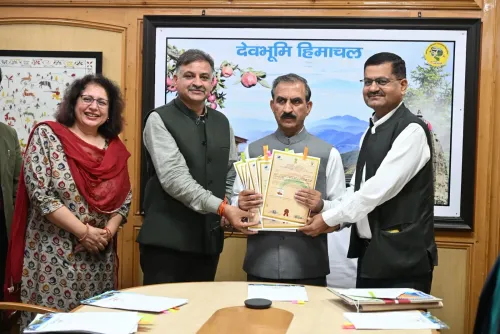
The Chief Minister's Office of Himachal Pradesh announced on Wednesday, 1 July 2026 that the state has secured Geographical Indication (GI) registrations for a total of 17 traditional products, with eight new additions — including Kinnauri apples and Kinnauri jewellery — registered through the Himachal Pradesh Council for Science, Technology and Environment (HIMCOST).
Context
The official post, shared in Hindi, reads: 'इन आठ नए उत्पादों के साथ अब हिमाचल प्रदेश के कुल 17 पारंपरिक उत्पादों को GI पंजीकरण मिल चुका है' — meaning, 'With these eight new products, a total of 17 traditional products of Himachal Pradesh have now received GI registration.' The announcement extended 'heartfelt congratulations and best wishes to all residents of the state.'
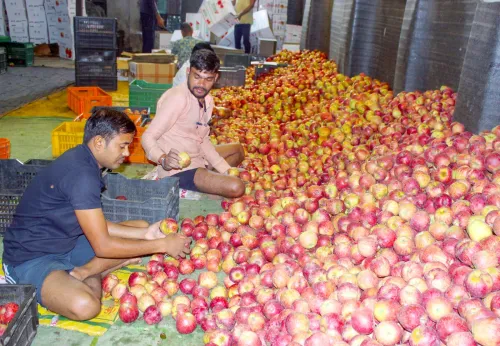
Kinnauri apples, grown in the high-altitude Kinnaur district of the Himalayas, are among the most prized varieties in India. Kinnauri jewellery, crafted by indigenous artisans using silver and semi-precious stones, is a hallmark of the district's cultural identity. Both now carry the legal shield of a GI tag.
Policy Backdrop
India's Geographical Indications of Goods (Registration and Protection) Act, 1999 grants exclusive rights to producers of region-specific goods, preventing unauthorised use of the product name by outsiders. The law is a key instrument for protecting traditional knowledge and supporting rural livelihoods.
Himachal Pradesh entered the GI framework early, with Kangra Tea receiving registration in 2005 and Kullu Shawl following shortly thereafter. HIMCOST, the state's autonomous science and environment council, has been the nodal agency driving these registrations, systematically building a portfolio of protected products over two decades.
India's broader push to register GI products has accelerated since the early 2000s, particularly in Himalayan and northeastern states where agro-produce and crafts carry strong geographic identity. Himachal Pradesh's approach through HIMCOST mirrors this national pattern of using GI tags to brand and protect unique regional goods.
Stakeholders and Impact
Apple growers in Kinnaur stand to benefit from stronger market recognition and legal protection against imitation products sold under the Kinnauri name. The district's apple economy is a significant source of income for thousands of farming families in the high-altitude belt.
For traditional artisans producing Kinnauri jewellery, the GI tag offers both cultural recognition and a commercial advantage — enabling premium pricing in domestic and export markets. Certification signals authenticity to buyers and can open doors to curated craft platforms and international trade fairs.
Collectively, the 17 GI-tagged products represent a growing portfolio that strengthens Himachal Pradesh's identity as a source of verified, origin-linked goods — a brand asset for tourism, exports, and rural enterprise.
What's Next
The immediate focus will be on translating GI status into market access — through export linkages, e-commerce tie-ups, and branding initiatives that communicate the certified origin of these products to buyers. State agencies and HIMCOST are expected to coordinate outreach to both domestic retail and international craft markets.
Observers will also watch whether other districts in Himachal Pradesh accelerate fresh GI applications, building on the momentum of reaching the 17-product milestone. Districts with distinct agro-produce and craft traditions — such as Chamba, Lahaul and Spiti, and Sirmaur — are potential candidates for future registrations.
Point of View
The government has institutionalised the GI pipeline rather than treating each tag as a one-off achievement. The inclusion of both an agro-product (Kinnauri apple) and a craft item (Kinnauri jewellery) in the same batch signals an effort to protect the full economic ecosystem of a single district. The real test, however, will be whether GI status translates into measurable income gains for growers and artisans — a gap that has historically challenged GI programmes across India.
NationPress
1 Jul 2026
Frequently Asked Questions
What is a GI tag and why does it matter for Himachal Pradesh products?
A GI (Geographical Indication) tag is a legal certification under India's GI Act of 1999 that links a product to its specific region of origin, preventing others from misusing the name. For Himachal Pradesh, it protects products like Kinnauri apples and Kullu Shawls from imitation and supports premium pricing for local producers.
Which new products received GI tags in Himachal Pradesh in 2026?
The Chief Minister's Office announced eight new GI registrations in July 2026, including Kinnauri apples and Kinnauri jewellery. The full list of all eight additions has not been individually enumerated in the official announcement beyond these two named items.
How many GI-tagged products does Himachal Pradesh have in total?
As of 1 July 2026, Himachal Pradesh has a total of 17 traditional products registered under the GI framework, all facilitated through HIMCOST.
What is HIMCOST and what role does it play in GI registration?
HIMCOST — the Himachal Pradesh Council for Science, Technology and Environment — is the state's autonomous body that acts as the nodal agency for identifying, documenting, and securing GI registrations for traditional Himachal products.
What was Himachal Pradesh's first GI-tagged product?
Kangra Tea was among Himachal Pradesh's earliest GI registrations, receiving its tag in 2005. Kullu Shawl followed shortly thereafter, establishing the state's early presence in the GI framework.