HP CM Office: Compassionate Appointments Restore Dignity

Synopsis
The Chief Minister's Office of Himachal Pradesh on July 30, 2026 reaffirmed compassionate appointments as a structured, dignity-first policy that offers government jobs to dependents of deceased state employees, framing it as a new beginning rather than relief.
Key Takeaways
The Chief Minister's Office of Himachal Pradesh posted on July 30, 2026 reaffirming the state's compassionate appointment policy for families of deceased government employees.
Compassionate appointment offers a government job to an eligible dependent when an employee dies while in active service, replacing lost household income.
The CMO framed the policy as providing dignity alongside economic relief — a new beginning, not just a handout.
Himachal Pradesh, like other Indian states, maintains its own rules governing eligibility, post category, and processing timelines for such appointments.
The post carried no specific case or statistics; it was a statement of welfare principle , signalling the government's intent to keep this channel active and visible.
When the sole breadwinner of a family dies without warning, the immediate crisis is not grief alone — it is survival. The Chief Minister's Office of Himachal Pradesh, on Thursday, July 30, 2026, put that reality into words, reaffirming the state's commitment to compassionate appointments as a lifeline for families of deceased government employees.
The post, shared in Hindi, reads: 'Parivar ka kamane wala sahara achanak saath chhod kar chala jaye, to sabse bada sawaal rozi-roti se pehle bhavishya ka hota hai. Aise kathin samay mein karunamoolk niyukti us parivar ke liye samman ke saath naye jeevan ki shuruaat banti hai.' In English: 'When the earning support of a family suddenly departs, the biggest question before daily bread is the question of the future. In such difficult times, a compassionate appointment becomes the beginning of a new life with dignity for that family.'
What Compassionate Appointment Actually Means
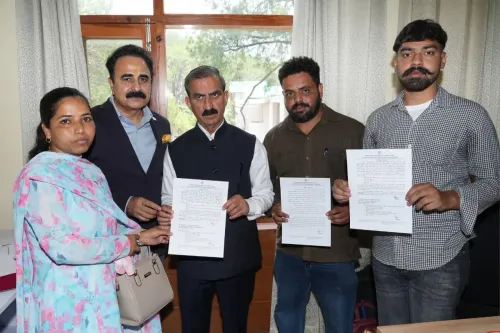
A compassionate appointment is a policy provision under which a dependent of a government employee who dies 'in harness' — that is, while still in active service — is offered a government job. The intent is direct: replace lost income fast, and do it in a way that preserves the family's standing rather than forcing them into destitution. Indian states, including Himachal Pradesh, maintain their own rules governing eligibility, the class of post offered, and the timeline for processing such appointments. The scheme does not hand out jobs arbitrarily. Dependents — typically a spouse, son, or daughter — must apply, meet basic qualifications, and be cleared through the state's administrative machinery. The result, when it works, is exactly what the CMO's post describes: not charity, but a structured, dignified re-entry into economic life.Why the CMO Chose to Speak on This Now
The post carries no specific case or statistics — it reads as a statement of principle, a public articulation of why the policy exists. In a state like Himachal Pradesh, where government employment is a significant share of formal jobs and where hill geography limits private-sector options, the death of a sarkari employee can be catastrophic for a household. The CMO's framing — future before food — captures that reality sharply. For families in that position, the question is never just 'what do we eat tomorrow' but 'what do we become.' Compassionate appointment answers the second question first, and in doing so, steadies the first as well. The broader message from Shimla is one of welfare intent: that the state sees itself as a continuing employer-partner to the families of those who served it, not just to the employees themselves.Point of View
The Himachal Pradesh government positions compassionate appointment as a rights-adjacent entitlement rather than a discretionary favour. This fits a broader pattern in Indian state governance where welfare optics increasingly matter as much as the scheme itself. The signal to watch is whether this messaging precedes a revision of eligibility criteria or a push to clear pending appointment backlogs — two levers that would give the rhetoric operational weight.
NationPress
30 Jul 2026
Frequently Asked Questions
What is a compassionate appointment in Himachal Pradesh?
A compassionate appointment is a government job offered to an eligible dependent — typically a spouse or child — of a state government employee who dies while in active service, providing immediate income support and financial stability to the bereaved family.
Who is eligible for compassionate appointment in HP?
Eligibility is governed by Himachal Pradesh's state-specific rules, but generally covers immediate dependents of a deceased government servant who died 'in harness', subject to meeting minimum educational qualifications and other prescribed criteria.
What did the HP Chief Minister's Office post on July 30, 2026?
The HP CMO posted a Hindi message reaffirming the value of compassionate appointments, stating that when a family's breadwinner dies suddenly, such appointments offer a dignified new beginning rather than mere financial relief.
Does India have a national compassionate appointment policy?
There is no single national policy; compassionate appointment rules are maintained separately by each state government and the central government for their respective employees, each with its own eligibility and procedural guidelines.
How does compassionate appointment help families of deceased government employees?
It replaces the lost household income by bringing an eligible dependent into government service, preserving both financial stability and the family's social standing, without requiring them to compete in the open job market during a period of acute crisis.