HP CM Office holds talks with Norway envoy in Shimla
Synopsis
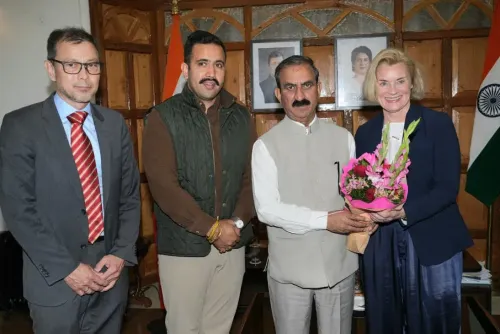
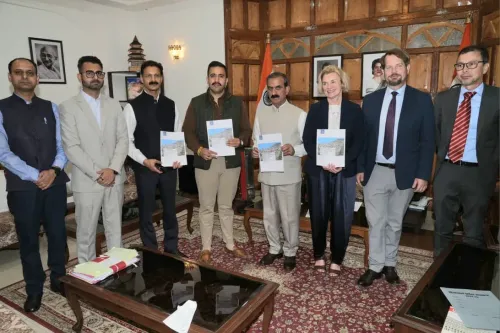
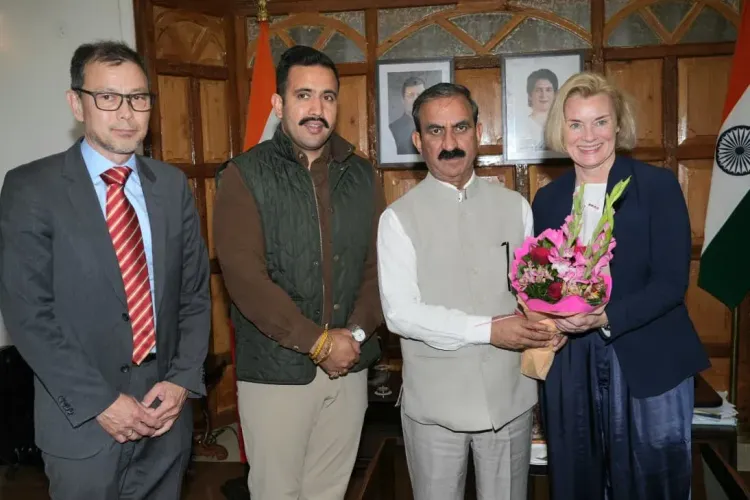
The Chief Minister's Office of Himachal Pradesh held discussions with Norway's Ambassador May-Elin Stener in Shimla on 9 June 2026, covering C&D waste management, circular economy, sustainable tourism, climate-resilient urban development, renewable energy, digital governance and smart city cooperation.
Key Takeaways
The Chief Minister's Office of Himachal Pradesh met Norway's Ambassador May-Elin Stener in Shimla on 9 June 2026 .
Discussions covered seven domains : C&D waste management, circular economy, sustainable tourism, climate-resilient urban development, renewable energy, digital governance, and smart cities.
Norway has maintained diplomatic ties with India since 1947 and brings recognised expertise in renewable energy and circular economy frameworks.
The meeting reflects the growing role of sub-national diplomacy in India's green transition, with state governments directly engaging foreign partners.
Potential follow-up steps include MoUs , technical exchanges, and pilot projects between Norwegian agencies and Himachal Pradesh departments.
Himachal Pradesh 's Himalayan geography and tourism-driven economy make it a key candidate for Norway–India climate cooperation.
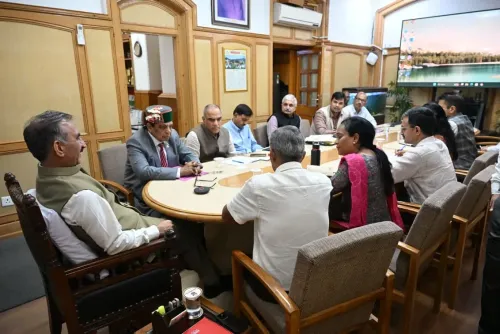
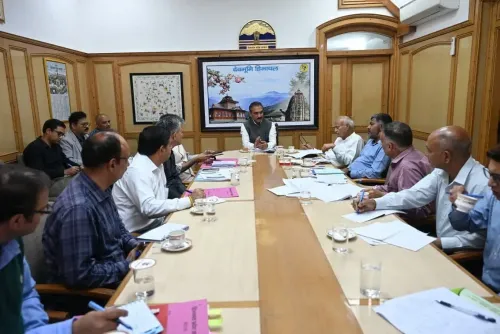
The Chief Minister's Office of Himachal Pradesh on Tuesday, 9 June 2026, announced that meaningful discussions were held in Shimla with May-Elin Stener, Ambassador of Norway to India, on potential cooperation across several sustainability and governance domains.
Context
The meeting, held at the state capital, covered a broad range of themes including Construction and Demolition (C&D) waste management, circular economy, sustainable tourism, climate-resilient urban development, renewable energy, digital governance, and smart city development. The official post described the exchange as 'sarthak charcha' — meaning 'meaningful discussion' — signalling substantive engagement rather than a courtesy call.
Norway has maintained diplomatic relations with India since 1947 and is widely recognised for its expertise in renewable energy systems, circular economy frameworks, and climate-adaptive planning — areas directly relevant to Himachal Pradesh's development priorities.
Policy Backdrop
Himachal Pradesh occupies a strategically important position in India's climate agenda. As a Himalayan state, it faces acute pressures from glacial retreat, erratic monsoons, and rapid urban expansion in ecologically sensitive zones such as Shimla. The state has historically leveraged its hydropower potential, with renewable energy expansion pursued under successive state policies since the early 2000s.
At the national level, the Smart Cities Mission, launched by the Central government in 2015, has provided a framework for technology-enabled urban infrastructure and governance. Discussions on digital governance and smart city development in Tuesday's meeting align with this broader national programme. C&D waste management has also emerged as a pressing urban challenge across Indian hill towns, where construction activity has surged alongside tourism growth.
Stakeholders and Impact
The sectors discussed directly affect a wide range of stakeholders in Himachal Pradesh. Municipal bodies in Shimla and other urban centres stand to benefit from Norwegian expertise in waste processing and circular economy practices. Tourism operators and urban planners could gain from knowledge exchange on sustainable tourism models, given that Himachal Pradesh receives millions of domestic and international visitors annually.
Renewable energy developers operating in the state may find new avenues for technical collaboration, while digital governance initiatives could improve service delivery to residents in remote hill districts. The engagement reflects a growing trend of sub-national diplomacy, where state governments actively pursue bilateral partnerships to advance their own climate and development goals independent of — though complementary to — the Central government's foreign policy.
What's Next
The discussion is expected to lay groundwork for more structured follow-up, potentially including Memoranda of Understanding (MoUs), technical exchange programmes, or pilot projects between Norwegian agencies and relevant Himachal Pradesh departments. Observers will watch whether the themes discussed — particularly C&D waste management and climate-resilient urban planning — are reflected in upcoming state budget allocations or policy announcements.
As Indian states increasingly engage with Nordic partners on green transition goals, Himachal Pradesh's Himalayan vulnerability and tourism economy make it a particularly compelling candidate for deeper Norway–India sub-national cooperation. Concrete outcomes from Tuesday's talks are awaited.
Point of View
Rather than waiting for Central government-led frameworks to trickle down. The choice of Norway as a partner is strategically sound — Nordic expertise in hydropower governance, circular economy regulation, and climate-adaptive urban design maps directly onto the state's most pressing challenges. The breadth of topics covered, from C&D waste to digital governance, suggests the state is casting a wide net before narrowing down to specific project areas. If even one or two of the discussed themes advance to formal MoUs, it could serve as a replicable model for other Himalayan states seeking bilateral green-transition partnerships.
NationPress
23 Oct 2026
Frequently Asked Questions
Why did Himachal Pradesh meet Norway's ambassador?
The Chief Minister's Office of Himachal Pradesh met Norway's Ambassador May-Elin Stener on 9 June 2026 in Shimla to explore cooperation on C&D waste management, circular economy, sustainable tourism, renewable energy, digital governance, and smart city development.
Who is May-Elin Stener?
May-Elin Stener is the Ambassador of Norway to India, engaged in bilateral discussions on sustainability and governance cooperation with Indian state and central government entities.
What is C&D waste management and why does it matter for Shimla?
Construction and Demolition (C&D) waste management refers to the processing and recycling of debris from building and demolition activities. Shimla, as a rapidly expanding hill city, faces significant challenges from unmanaged construction waste that affects its fragile Himalayan environment.
What is India's Smart Cities Mission?
The Smart Cities Mission is a Central government programme launched in 2015 to develop technology-enabled, sustainable urban infrastructure and governance systems in selected Indian cities, including several in Himachal Pradesh's broader region.
What could come out of the Himachal Pradesh–Norway talks?
Potential outcomes include Memoranda of Understanding, technical exchange programmes, and pilot projects between Norwegian agencies and Himachal Pradesh departments in areas such as renewable energy, waste management, and digital governance, though no specific agreements have been announced yet.