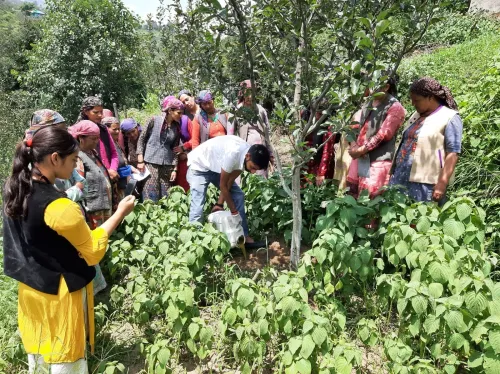
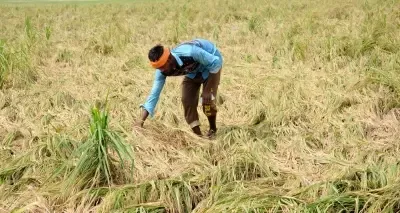
HP CM Office: MSP for Natural Farming, HP-Shiva Review
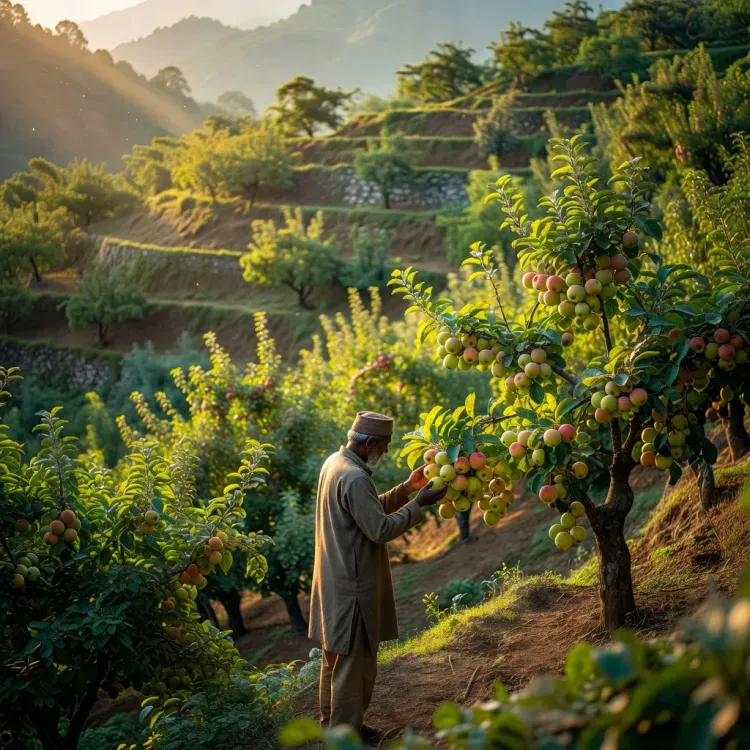
Synopsis
The Himachal Pradesh Chief Minister's Office has announced MSP for chemical-free agricultural produce to promote natural farming, while directing diversification of fruit varieties and stronger technical support for horticulturists under the HP-Shiva Project review.
Key Takeaways
The Himachal Pradesh state government is providing minimum support price (MSP) on chemical-free agricultural produce to incentivise natural farming.
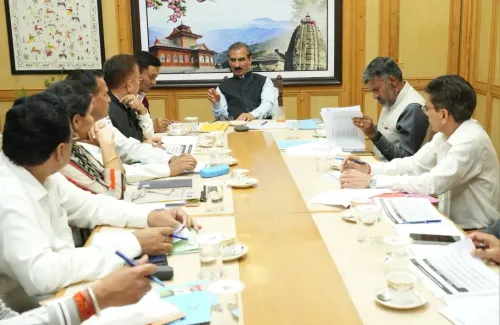
Directions were issued during a review of the HP-Shiva Project to promote production of diverse fruit varieties in lower and mid-hill areas.
Horticulturists are to receive improved technical assistance as part of the HP-Shiva Project's revised priorities.
The MSP initiative builds on the Prakritik Kheti Khushhal Kisan Yojana , launched in 2018 , which promotes zero-budget natural farming statewide.
Specific MSP rates and procurement mechanisms have not yet been publicly disclosed.
The Chief Minister's Office of Himachal Pradesh announced on Tuesday, 23 June 2026 that the state government is providing a minimum support price (MSP) for chemical-free agricultural produce to promote natural farming, and that directions have been issued during a review of the HP-Shiva Project to boost production of diverse fruit varieties and improve technical assistance to horticulturists.
Context
The official post, shared by the Chief Minister's Office, states: 'Prakritik kheti ko badhawa dene ke liye rajya sarkar rasayan-mukt krishi utpadon par nyuntam samarthan mulya pradan kar rahi hai' — 'To promote natural farming, the state government is providing minimum support price on chemical-free agricultural produce.' The announcement also notes that during the HP-Shiva Project review, directives were issued to encourage production of diverse fruit varieties and to make better technical support available to horticulturists.
Himachal Pradesh is one of India's foremost horticulture states, with apples and subtropical fruits forming a critical pillar of its rural economy. The state's push to link price incentives with chemical-free cultivation reflects a broader alignment of agricultural policy with sustainability and market demand for residue-free produce.
Policy Backdrop
The MSP announcement builds on the Prakritik Kheti Khushhal Kisan Yojana, launched in 2018, which was designed to scale zero-budget natural farming across the state. By attaching a price floor specifically to chemical-free produce, the government is adding a market-side incentive to what was previously a supply-side and extension-driven programme.
The HP-Shiva Project is a state horticulture initiative focused on subtropical fruit development, irrigation infrastructure, and value addition in the lower and mid-hill areas of Himachal Pradesh. The review meeting directed that fruit variety diversification and grower-level technical outreach be prioritised, signalling an intent to move beyond the dominant apple monoculture and reduce vulnerability to climate and price shocks.
Stakeholders and Impact
The primary beneficiaries are natural farmers and horticulturists across Himachal Pradesh who have already transitioned away from chemical inputs or are considering doing so. An MSP on chemical-free produce directly addresses the market risk that has historically discouraged such transitions, as growers often face price uncertainty when selling residue-free crops.
Horticulturists in lower and mid-hill zones stand to gain additionally from the HP-Shiva Project's renewed focus on diverse fruit varieties and technical support, which could open access to new crops and better cultivation practices. The broader rural economy may also benefit if reduced input costs from natural farming translate into improved farm incomes over time.
What's Next
Key details yet to be made public include the specific MSP rates for individual chemical-free produce categories and the procurement mechanism through which the price floor will be operationalised. Progress reports and any additional budget allocations arising from the HP-Shiva Project review will be closely watched by farming communities and policy observers alike.
If implemented effectively, the combination of an MSP guarantee and strengthened technical outreach under HP-Shiva could position Himachal Pradesh as a model for state-level integration of natural farming incentives with horticulture development — a template other hill states may consider replicating.
Point of View
As it signals government commitment to a constituency — natural farmers and horticulturists — that has grown in electoral salience. Whether the policy delivers will depend entirely on the procurement architecture, which remains unannounced.
NationPress
23 Jun 2026
Frequently Asked Questions
What is the MSP for natural farming in Himachal Pradesh?
The Himachal Pradesh government is providing a minimum support price on chemical-free agricultural produce to encourage natural farming, though specific rates for individual crops have not yet been publicly announced.
What is the HP-Shiva Project?
The HP-Shiva Project is a Himachal Pradesh government horticulture initiative focused on subtropical fruit development, irrigation, and value addition in the lower and mid-hill regions of the state.
What is the Prakritik Kheti Khushhal Kisan Yojana?
Launched in 2018 , the Prakritik Kheti Khushhal Kisan Yojana is a Himachal Pradesh scheme to scale zero-budget natural farming across the state by encouraging farmers to shift away from chemical inputs.
How does the HP-Shiva Project benefit horticulturists?
The HP-Shiva Project aims to help horticulturists by promoting diverse fruit varieties beyond apples and providing better technical support, reducing dependence on a single crop and improving access to modern cultivation practices.
Which farmers benefit from Himachal Pradesh's chemical-free produce MSP?
Natural farmers and horticulturists in Himachal Pradesh who grow produce without chemical inputs are the primary beneficiaries, as the MSP provides a price floor that reduces the market risk of transitioning to chemical-free cultivation.