HP CM Office: New Industrial Policy to Cut Power Tariffs, Lead Green Hydrogen Push
Synopsis
The Chief Minister's Office of Himachal Pradesh announced a new industrial policy on 19 July 2026 to guarantee round-the-clock power, lower electricity tariffs to attract investors, and position the state as India's leading green hydrogen producer — aligning with the central government's National Green Hydrogen Mission.
Key Takeaways
The Chief Minister's Office of Himachal Pradesh announced a new industrial policy on 19 July 2026 to ensure 24-hour uninterrupted electricity supply.
The policy will keep power tariffs low as a core mechanism to attract industrial investment to the state.
Himachal Pradesh is positioning itself to become India's leading state in green hydrogen production .
The move aligns with the Government of India's National Green Hydrogen Mission , launched in January 2023 , targeting 5 million tonnes annual production by 2030 .
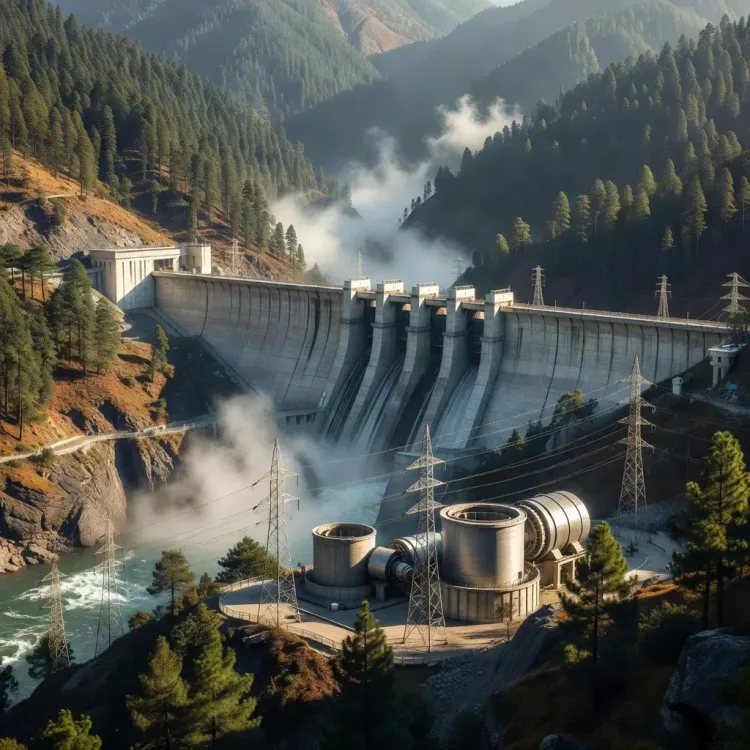
The state's substantial hydroelectric capacity gives it a structural cost advantage for renewable-powered green hydrogen electrolysis.
Formal notification of tariff provisions and state-central coordination on pilot projects remain the key next steps to watch.
The Chief Minister's Office of Himachal Pradesh announced on Sunday, 19 July 2026 that the state government is introducing a new industrial policy aimed at ensuring round-the-clock uninterrupted power supply, attracting investment, and keeping electricity tariffs low. The office also stated that Himachal Pradesh is advancing rapidly toward becoming the country's leading state in green hydrogen production.
Context
The Chief Minister's Office posted in Hindi, stating: 'चौबीसों घंटे निर्बाध विद्युत आपूर्ति सुनिश्चित करने और निवेश आकर्षित करने के लिए राज्य सरकार नई औद्योगिक नीति ला रही है, जिसके तहत बिजली की दरें कम रखी जाएंगी' ('The state government is bringing a new industrial policy to ensure 24-hour uninterrupted electricity supply and attract investment, under which power tariffs will be kept low'). The second announcement noted that the state is moving rapidly to become the nation's leading state in green hydrogen production. Both commitments signal an attempt to position Himachal Pradesh as a competitive destination for clean-energy-linked industrial investment.
Policy Backdrop
The announcements align with the National Green Hydrogen Mission, launched by the Government of India in January 2023, which targets an annual domestic green hydrogen production capacity of 5 million tonnes by 2030 as part of India's net-zero commitments. Himachal Pradesh's substantial hydroelectric capacity gives it a structural advantage in producing the cheap, renewable electricity that green hydrogen electrolysis requires. The new industrial policy, as described, would institutionalise concessional power tariffs to make this advantage commercially attractive to investors.
Several Indian states with hydropower or renewable energy surpluses — including Rajasthan and Gujarat — have already moved to bundle low-cost electricity with investment incentives to attract green hydrogen projects. Himachal Pradesh's stated approach mirrors this competitive dynamic, where states are racing to align local energy assets with national decarbonisation targets and production-linked incentive frameworks.
Stakeholders and Impact
The primary beneficiaries of the proposed policy would be industrial investors and renewable energy firms seeking locations with reliable, affordable power. Reduced electricity tariffs under a formal industrial policy framework would lower the operational cost of energy-intensive manufacturing and green hydrogen production facilities. For the state, attracting such investment could translate into employment generation, infrastructure development, and enhanced tax revenues.
Existing industrial units in Himachal Pradesh — particularly in pharmaceutical, food processing, and light manufacturing sectors that have historically benefited from power and tax incentives — could also see a recalibration of their cost structures under the new framework. The green hydrogen push, if realised, would add a new industrial vertical to the state's economic profile.
What's Next
The formal notification of the new industrial policy, including specific power-tariff provisions and eligibility criteria, will be the key document to watch. State-central coordination on green hydrogen pilot projects — particularly under the National Green Hydrogen Mission framework — will determine how quickly Himachal Pradesh can translate its stated ambition into commissioned capacity. Investor response at upcoming state investment summits or sector-specific conclaves will serve as an early indicator of policy credibility.
As India's clean energy transition accelerates, states that move earliest with credible, low-tariff industrial frameworks are likely to capture a disproportionate share of green hydrogen investment — making the formal rollout of Himachal Pradesh's policy a closely watched development for both industry and policymakers.
Point of View
States that lock in concessional tariff frameworks earliest are best placed to attract anchor projects. For Himachal Pradesh, which has historically relied on pharmaceutical and food-processing industries drawn by earlier incentive regimes, the pivot toward green hydrogen signals an attempt to move up the industrial value chain. The credibility of the policy, however, will ultimately rest on the specific tariff numbers and enforcement mechanisms in the formal notification — details that are yet to be made public.
NationPress
20 Jul 2026
Frequently Asked Questions
What is Himachal Pradesh's new industrial policy about?
The new industrial policy announced by the Himachal Pradesh government on 19 July 2026 aims to ensure 24-hour uninterrupted electricity supply and attract industrial investment by keeping power tariffs low. It also positions the state as a leader in green hydrogen production.
How does Himachal Pradesh plan to become a green hydrogen leader?
Himachal Pradesh intends to leverage its substantial hydroelectric capacity to supply cheap, renewable electricity for green hydrogen electrolysis, aligning with the central government's National Green Hydrogen Mission that targets 5 million tonnes of annual production by 2030.
What is the National Green Hydrogen Mission?
The National Green Hydrogen Mission is a Government of India programme launched in January 2023 to scale domestic production and use of green hydrogen, with a target of 5 million tonnes of annual capacity by 2030 as part of India's net-zero commitments.
Which states are competing with Himachal Pradesh for green hydrogen investment?
States such as Rajasthan and Gujarat, which also have renewable energy surpluses, have been bundling low-cost electricity with investment incentives to attract green hydrogen projects, making the sector increasingly competitive among Indian states.
When will Himachal Pradesh's new industrial policy be formally notified?
The formal notification of the new industrial policy, including specific power-tariff provisions and eligibility criteria, has not yet been announced. The policy details are expected to be released by the state government in the coming weeks or months.