HP CM Office Pays Tribute to Revolutionary Batukeshwar Dutt
Synopsis
The Chief Minister's Office of Himachal Pradesh honoured revolutionary Batukeshwar Dutt on his death anniversary on 20 July 2026, recalling his 1929 Central Legislative Assembly protest alongside Bhagat Singh and his lifelong sacrifice for India's freedom.
Key Takeaways
The Chief Minister's Office of Himachal Pradesh posted a tribute to Batukeshwar Dutt on his death anniversary on 20 July 2026 .
Batukeshwar Dutt was a member of the Hindustan Socialist Republican Association (HSRA) who threw smoke bombs in the Central Legislative Assembly on 8 April 1929 alongside Bhagat Singh .
The act was a protest against the Public Safety Bill and the Trade Disputes Bill under British colonial rule.
Dutt was sentenced to transportation for life and imprisoned in the Cellular Jail, Andaman and Nicobar Islands , before being released in 1938 .
He passed away on 20 July 1965 in New Delhi .
Indian state government offices routinely mark such anniversaries as part of efforts to preserve the collective memory of the freedom struggle.
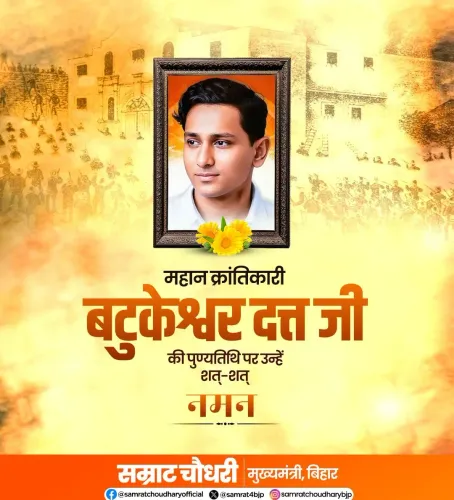
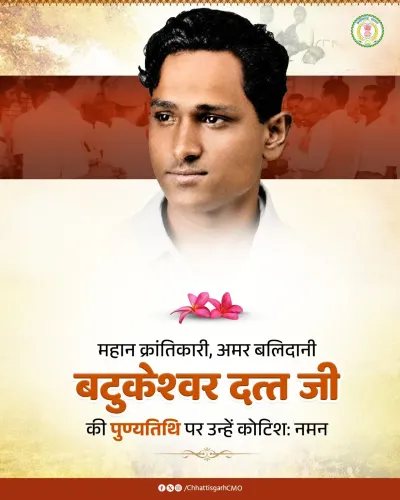
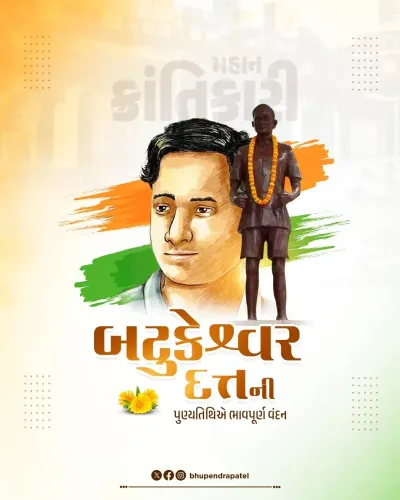
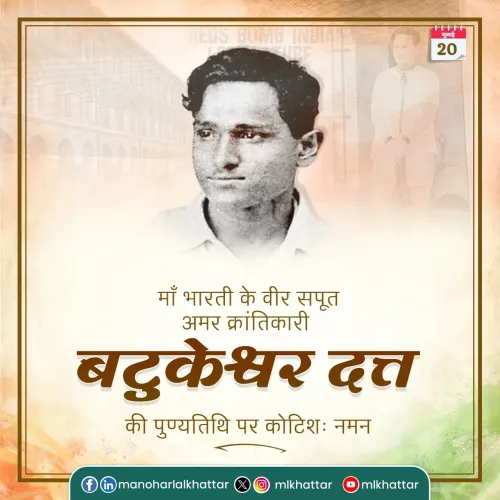
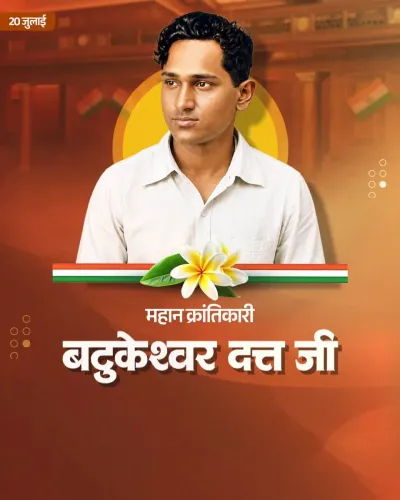
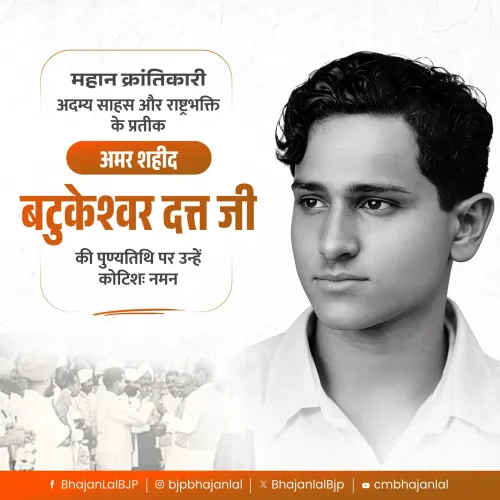
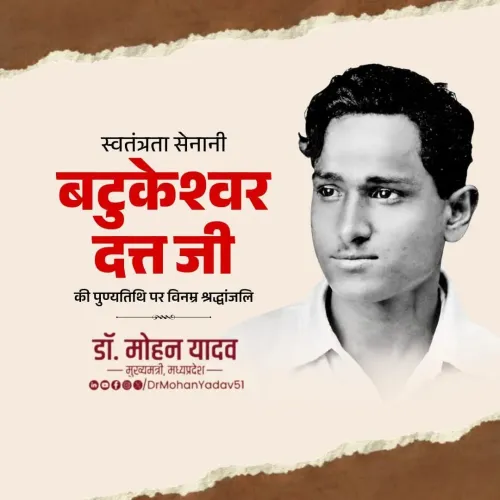
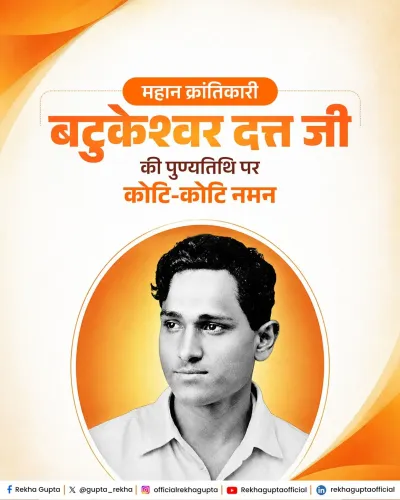
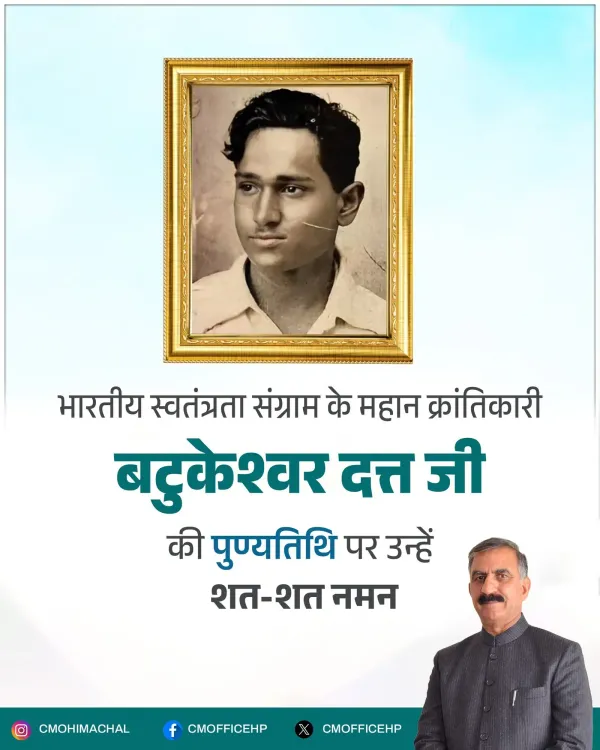
The Chief Minister's Office of Himachal Pradesh on Monday, 20 July 2026 paid homage to freedom fighter Batukeshwar Dutt on his death anniversary, honouring his role in India's independence struggle.
The post, shared in Hindi, read: 'महान क्रांतिकारी बटुकेश्वर दत्त जी की पुण्यतिथि पर उन्हें सादर नमन।' — ('Respectful homage to the great revolutionary Batukeshwar Dutt on his death anniversary.') It added that his 'indomitable courage, sacrifice, and struggle for India's freedom will always inspire the people of this country.'
Context
Batukeshwar Dutt was a prominent member of the Hindustan Socialist Republican Association (HSRA), the clandestine revolutionary organisation that sought to overthrow British colonial rule through direct action. On 8 April 1929, Dutt, alongside fellow revolutionary Bhagat Singh, threw smoke bombs inside the Central Legislative Assembly in Delhi to protest the Public Safety Bill and the Trade Disputes Bill — legislation the revolutionaries condemned as tools of imperial repression. The act was intended not to cause casualties but to 'make the deaf hear,' as the two later stated in court.Policy Backdrop
Both Batukeshwar Dutt and Bhagat Singh were subsequently arrested and tried. Dutt was sentenced to transportation for life and was imprisoned in the Cellular Jail in Andaman and Nicobar Islands, where he undertook prolonged hunger strikes to protest the treatment of political prisoners. He was released in 1938 following sustained public pressure. He passed away on 20 July 1965 in New Delhi. Indian central and state government offices routinely issue public tributes on social media to mark birth and death anniversaries of independence-era revolutionaries, forming part of broader institutional efforts to preserve collective memory of the freedom struggle.Stakeholders and Impact
Such commemorations are directed primarily at the general public and students, reinforcing civic consciousness around the sacrifices made during the independence movement. The Himachal Pradesh government's acknowledgement of Dutt's legacy — a figure not specifically associated with the hill state — reflects the pan-Indian character of such tributes, which are issued by government offices across multiple states regardless of a revolutionary's regional origin.What's Next
With Independence Day on 15 August approaching, state governments across India are likely to intensify commemorations of freedom fighters. Educational initiatives, memorial events, and school programmes in Himachal Pradesh highlighting the contributions of revolutionaries such as Batukeshwar Dutt may be announced in the weeks ahead. Such observances serve as institutional anchors for younger generations to engage with the history of India's independence movement.Point of View
Particularly as Independence Day approaches. Dutt's legacy — intertwined with Bhagat Singh's — carries enduring symbolic weight in Indian political culture across party lines, making such tributes broadly uncontroversial and politically safe. The gesture also signals the state's alignment with a national commemorative calendar that elevates armed resistance figures alongside the mainstream non-cooperation tradition. As governments compete to demonstrate patriotic credentials, the frequency and visibility of such digital tributes have grown steadily in recent years.
NationPress
21 Jul 2026
Frequently Asked Questions
Who was Batukeshwar Dutt?
Batukeshwar Dutt was an Indian revolutionary and member of the Hindustan Socialist Republican Association (HSRA) who, alongside Bhagat Singh, threw smoke bombs inside the Central Legislative Assembly in Delhi on 8 April 1929 to protest British colonial legislation. He was sentenced to transportation for life and released in 1938. He died on 20 July 1965.
Why did Batukeshwar Dutt throw bombs in the Central Legislative Assembly?
Batukeshwar Dutt and Bhagat Singh threw smoke bombs in the Central Legislative Assembly on 8 April 1929 to protest the Public Safety Bill and the Trade Disputes Bill, which they viewed as tools of British repression. The act was intended to be symbolic — to 'make the deaf hear' — and was designed not to cause casualties.
When did Batukeshwar Dutt die?
Batukeshwar Dutt died on 20 July 1965 in New Delhi. His death anniversary is observed annually by government offices and organisations across India.
Why is the Himachal Pradesh CM Office paying tribute to Batukeshwar Dutt?
The Chief Minister's Office of Himachal Pradesh posted a tribute on Batukeshwar Dutt's death anniversary on 20 July 2026 as part of the routine practice of Indian state governments honouring freedom fighters on their birth and death anniversaries through official social media channels.
What was the Hindustan Socialist Republican Association?
The Hindustan Socialist Republican Association (HSRA) was a revolutionary organisation active during India's independence movement that advocated armed resistance against British colonial rule. Its members included Bhagat Singh, Batukeshwar Dutt, Chandrashekhar Azad, and others who carried out acts of protest and resistance against the colonial administration.