HP CM Office: Rs 591 Crore for Chamba Roads
Synopsis
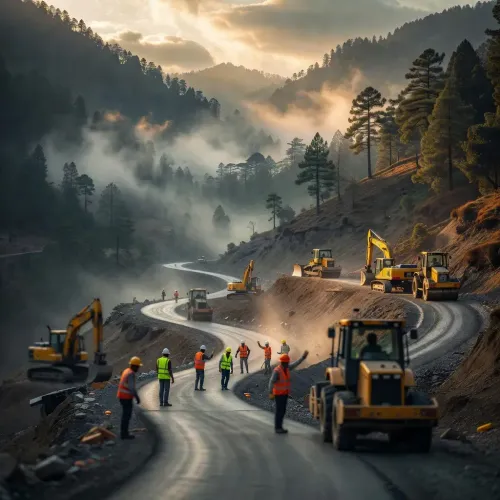
The Himachal Pradesh Chief Minister's Office announced Rs 591 crore for road repair and new road construction in Chamba district on 3 August 2026, describing it as the largest such outlay in the district's history.
Key Takeaways
The Chief Minister's Office of Himachal Pradesh announced Rs 591 crore for roads in Chamba district on 3 August 2026 .
The funds cover both repair of existing roads and construction of new roads.
The government described this as the highest road expenditure in Chamba's history — a claim that is unverified from independent public records.
Chamba is one of HP's most remote districts, with terrain that makes road infrastructure costly and critical for farmers, traders, and connectivity to interior villages.
Central schemes like PMGSY have funded rural road connectivity in HP since the early 2000s, alongside state PWD budgets.
Key milestones to watch include tender awards, fund disbursement timelines, and progress reports in the next state fiscal cycle.
For a district defined by steep gorges, river crossings, and villages that monsoon landslides can cut off for weeks, road money is not an abstraction — it is a lifeline. The Chief Minister's Office of Himachal Pradesh announced on Monday, 3 August 2026 that the state government is committing Rs 591 crore to road repair and new road construction in Chamba district, calling it an unprecedented level of investment in the region's road network.
The post, shared on the official CMO account, stated in Hindi: 'चंबा जिला का विकास हमारी सरकार की प्राथमिकताओं में है' — 'The development of Chamba district is among our government's priorities.' It further claimed this is the first time in history that such a large sum has been directed at both repair of existing roads and construction of new ones in the district.
Chamba's road deficit — why Rs 591 crore matters here
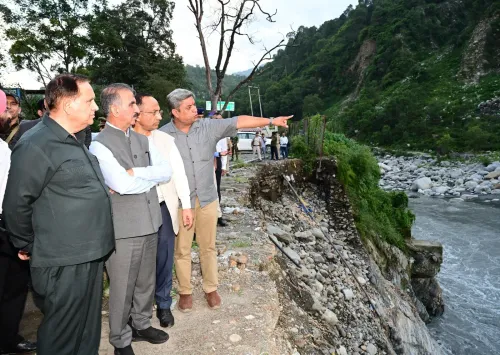
Chamba is one of Himachal Pradesh's most remote districts, tucked into the northwestern corner of the state and bordered by Jammu and Kashmir and Lahaul-Spiti. Its terrain — deep valleys, high passes, and the Ravi and Chenab river systems — makes road-building and maintenance among the most expensive and technically demanding in the country. Seasonal landslides routinely sever connections to interior villages, cutting off farmers, traders, and schoolchildren alike.
The district has historically received road funding through the state Public Works Department and central schemes such as the Pradhan Mantri Gram Sadak Yojana (PMGSY), launched in the early 2000s to connect unlinked rural habitations. But the scale of investment has often lagged behind the scale of need, leaving a persistent connectivity gap that successive governments have acknowledged.
A pattern of hill-road pledges — and the test of delivery
Himachal Pradesh governments across party lines have made road infrastructure in remote and border districts a recurring political and administrative priority, tying it to tourism growth, horticulture supply chains, and national security access. The announcement fits that longer pattern — but the size of the stated figure, Rs 591 crore, is notable even against that backdrop.
What will matter next is whether tender awards follow quickly, whether funds flow within the current fiscal cycle, and whether the work reaches the interior blocks of Chamba that have waited the longest. The government's own framing — 'first time in history' — sets a high bar against which progress will be measured.
For Chamba's farmers moving apples to market and families waiting on all-weather roads, the number on the government's announcement is only the beginning of the story.
Point of View
Geographically punishing districts receive infrastructure announcements that double as political outreach ahead of budget cycles or electoral seasons. What distinguishes this claim is the 'first in history' framing, which raises the political stakes of delivery — any visible shortfall in execution will be measured against the government's own benchmark. For Chamba specifically, road investment is not merely developmental but strategic, given its proximity to sensitive border areas. The real test is whether this translates into contracted, on-ground work within the fiscal year rather than remaining a headline figure.
NationPress
3 Aug 2026
Frequently Asked Questions
How much is the Himachal Pradesh government spending on Chamba roads?
The HP Chief Minister's Office announced Rs 591 crore for road repair and new road construction in Chamba district.
Is this the first time so much money has been spent on Chamba roads?
The government has claimed this is the highest road expenditure in Chamba's history, but this specific claim has not been independently verified from public records.
Which schemes fund road construction in Chamba, Himachal Pradesh?
Road connectivity in Chamba has been funded through the state Public Works Department and central schemes such as the Pradhan Mantri Gram Sadak Yojana (PMGSY) , which has operated since the early 2000s.
Why is road infrastructure so important for Chamba district?
Chamba is one of HP's most remote districts, with steep terrain and river crossings that make roads expensive to build and maintain. Seasonal landslides can cut off interior villages, affecting farmers, traders, and daily commuters.
When did the HP government announce the Rs 591 crore Chamba road investment?
The announcement was made on Monday, 3 August 2026 , via the official Chief Minister's Office account on X.