HP CM Sukhu: Chamba's Road Links Will Power Rural Economy

Synopsis
Chief Minister Sukhvinder Singh Sukhu says Chamba, long classified as an aspirational district, is transforming through better road connectivity that will link it to the rest of Himachal Pradesh and strengthen its rural economy.
Key Takeaways
CM Thakur Sukhvinder Singh Sukhu stated on 3 August 2026 that improved road connectivity is central to Chamba's development push.
Chamba was included in NITI Aayog's Aspirational Districts Programme , launched in January 2018 , covering 112 under-developed Indian districts.
Better roads are expected to link Chamba to other parts of Himachal Pradesh , enabling rural communities, farmers, and local traders to access wider markets.
Himachal Pradesh has pursued all-weather hill road projects under PMGSY since the early 2000s across successive administrations.
Sukhu framed road investment as 'an important step towards empowering the rural economy' of the district.
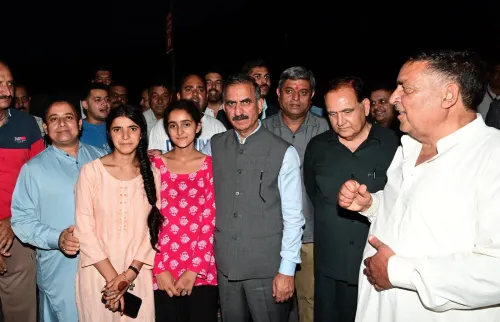
Once labelled an 'aspirational district' — the government's polite term for left behind — Chamba is now at the centre of Himachal Pradesh's push to rewrite its own development story. On Monday, 3 August 2026, the Chief Minister's Office of Himachal Pradesh shared remarks by Chief Minister Thakur Sukhvinder Singh Sukhu underscoring that better road connectivity will finally stitch Chamba into the broader economic fabric of the state.
Speaking directly on the district's trajectory, CM Sukhu said: 'Chamba used to be called an aspirational district, but that picture is now changing rapidly. Better road connectivity will link Chamba to other parts of the state. This is an important step by the government towards empowering the rural economy.'
From 'Aspirational' to Connected: What the Label Meant
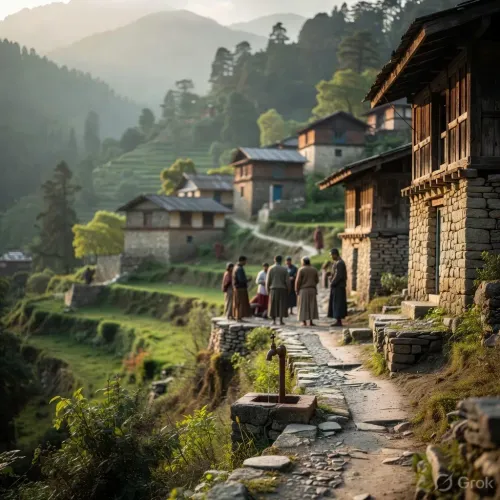
NITI Aayog launched the Aspirational Districts Programme in January 2018, targeting 112 of India's most under-developed districts for focused intervention across health, education, and infrastructure. Chamba was among them — a district of dramatic Himalayan terrain that also meant dramatic isolation. Roads washed out by monsoons, villages cut off for weeks, and local produce unable to reach markets defined everyday life for rural communities here. The programme was designed to change exactly that. But classification alone changes nothing. Physical infrastructure does.Roads as the Hinge of Rural Growth
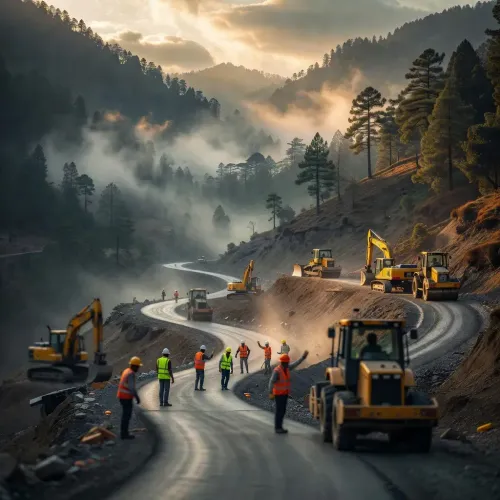
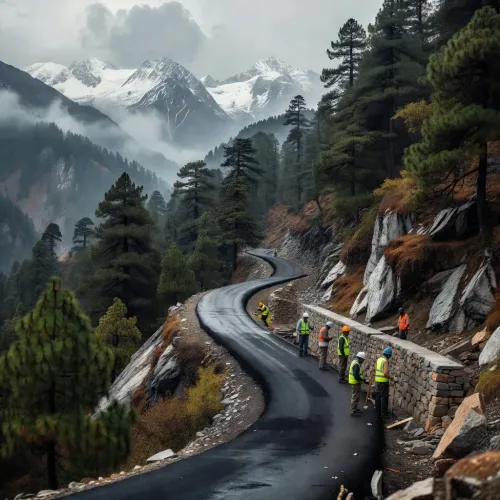
Himachal Pradesh has pursued all-weather hill road projects under national schemes like the Pradhan Mantri Gram Sadak Yojana (PMGSY) since the early 2000s, with successive state governments treating connectivity as the primary lever for unlocking growth in remote districts. The logic is straightforward: a farmer who can get produce to a mandi, a trader who can receive goods reliably, a student who can reach a school without a two-hour trek — these are the micro-economies that aggregate into district-level progress. For Chamba, with its difficult topography and historically thin road density, the gap between aspiration and outcome has been particularly wide. CM Sukhu's remarks signal that the current Congress government intends to close it through sustained investment in road corridors linking the district to the rest of Himachal Pradesh. The rural communities, local farmers, and traders of Chamba are the immediate stakeholders — and the ones who will measure progress not in policy documents but in journey times and market access. Watch the next state budget for specific allocations, and the next monsoon season for the test that Himalayan roads always face.Point of View
Easy to photograph. For the Congress government in Shimla, moving a former aspirational district toward mainstream economic integration is both a governance deliverable and a political narrative ahead of future electoral cycles. The broader signal is that Himachal Pradesh is doubling down on physical infrastructure as the foundation for rural growth, rather than welfare transfers alone. Whether Chamba's road corridors translate into measurable economic indicators will be the real test of this approach.
NationPress
18 Sept 2026
Frequently Asked Questions
Why was Chamba called an aspirational district?
Chamba was included in NITI Aayog's Aspirational Districts Programme launched in 2018 , which identified 112 districts across India with poor socio-economic indicators in areas like health, education, and infrastructure. Chamba's difficult Himalayan terrain contributed to its historically low development metrics.
What did CM Sukhu say about Chamba's development?
CM Thakur Sukhvinder Singh Sukhu said that Chamba, once called an aspirational district, is changing rapidly, and that better road connectivity will link it to the rest of Himachal Pradesh , calling it an important step towards empowering the rural economy.
How will road connectivity help Chamba's rural economy?
Improved roads will allow farmers and traders in Chamba to access wider markets, reduce isolation caused by the district's difficult terrain, and integrate local communities with the state's broader economic network.
What is the Aspirational Districts Programme?
The Aspirational Districts Programme is a NITI Aayog initiative launched in January 2018 to accelerate development in 112 of India's most under-developed districts by targeting improvements in health, education, agriculture, and infrastructure.
Which road scheme covers Himachal Pradesh hill roads?
Himachal Pradesh has used the Pradhan Mantri Gram Sadak Yojana (PMGSY) , a national rural road scheme, since the early 2000s to build and upgrade all-weather roads connecting remote hill districts including Chamba .