HP CM Office: Shanan Project fight continues, Rs 1,000 cr annual target
Synopsis
The Himachal Pradesh CM's Office has declared it will deploy top lawyers to reclaim the Shanan Power Project from Punjab after the 1925 lease expired in 2024, targeting Rs 1,000 crore in annual revenue while also pursuing a parallel water cess battle.
Key Takeaways
The Chief Minister's Office of Himachal Pradesh declared on 6 November 2026 that the state's fight over hydroelectric assets and water revenues is 'not over yet.' A new agreement, if concluded on current benchmark terms, could bring Rs 1,000 crore annually into Himachal Pradesh's treasury.
The Shanan Power Project (110 MW, Jogindernagar) is the primary target — its 99-year lease to Punjab under the 1925 agreement expired in 2024 .
Himachal Pradesh plans to field top national lawyers to press the Shanan reversion case in court.
A parallel water cess battle is also underway, adding a second revenue front to the state's legal strategy.
The move fits a broader pattern of Himalayan upstream states reclaiming control and royalties from colonial-era hydel infrastructure.
A century-old colonial lease, an expired deadline, and Himachal Pradesh's treasury waiting — that is the high-stakes backdrop against which the Chief Minister's Office of Himachal Pradesh posted a pointed assertion on Friday, 6 November 2026: the state's battle over its water and power assets is far from over.
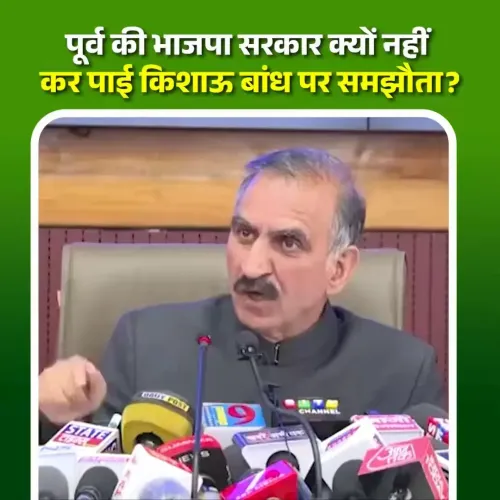
The post, shared on X, quoted the Chief Minister directly: 'यदि इसी हिसाब से अगला समझौता होता है, तो हिमाचल के खजाने में लगभग 1,000 करोड़ रुपये सालाना आने शुरू हो जाएँगे।' ('If the next agreement is concluded on these same terms, approximately Rs 1,000 crore per year will begin flowing into Himachal's treasury.') The statement signals that an earlier revenue settlement has set a benchmark — and that Shimla intends to use it as leverage in every battle ahead.
The Shanan Project: a 99-year lease that Punjab still holds
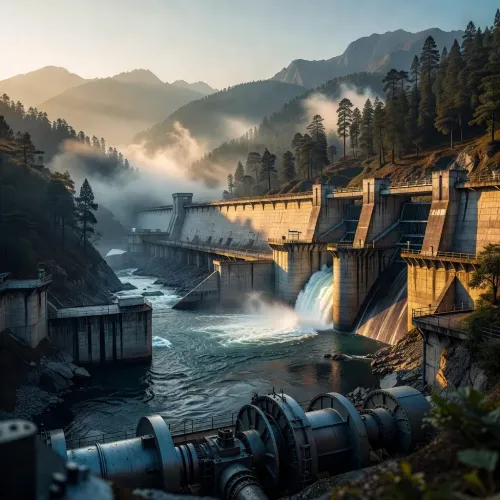
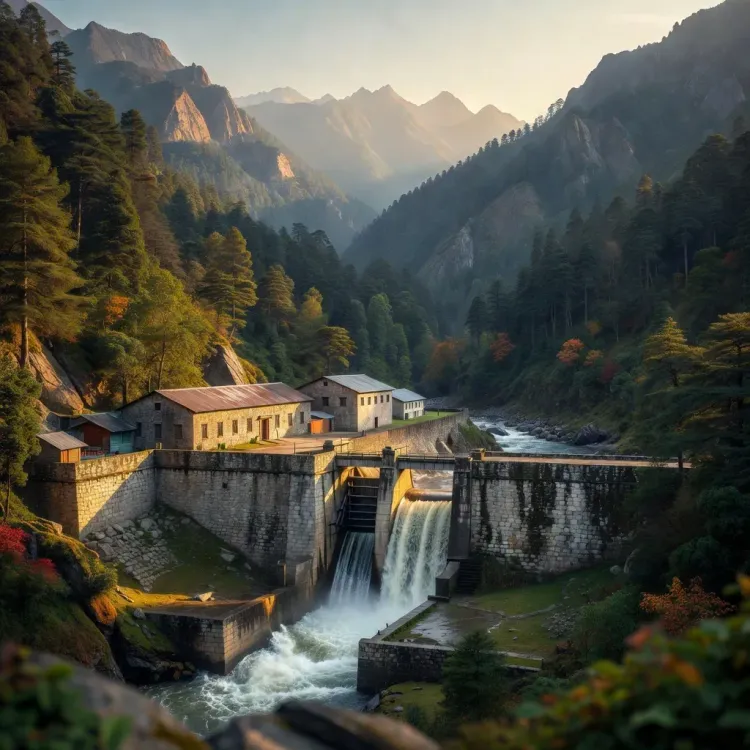
At the centre of the CM's remarks is the Shanan Power Project — a 110 MW hydroelectric installation in Jogindernagar, built in the 1920s and handed to Punjab under the 1925 Shanan Agreement, a colonial-era lease designed to run for 99 years. That lease expired in 2024. Himachal Pradesh insists the project must now revert — along with its revenues — to the upstream state that hosts it.
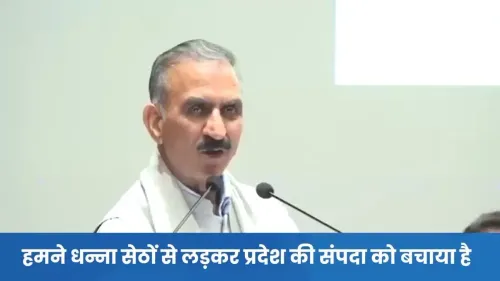
The CMO's post leaves no room for ambiguity: 'हमें शानन पावर प्रोजेक्ट की लड़ाई लड़नी है, जिसके लिए हम देश के बड़े वकीलों को खड़ा करेंगे।' ('We have to fight the battle for the Shanan Power Project, and for this we will deploy the country's top lawyers.') That is a declaration of intent — Shimla is mobilising elite legal firepower, not retreating.
Water cess: a second front in the revenue war
The post also flags a parallel fight: the water cess dispute. 'वाटर सेस की लड़ाई भी पूरी...' ('The water cess battle is also fully...') — the sentence trails off mid-post, but the message is clear. Himachal Pradesh is simultaneously pressing its claim for water charges on rivers that originate within its borders and flow downstream to power plants and irrigation systems in neighbouring states.
Taken together — Shanan reversion plus water cess plus the precedent-setting agreement already secured — the state is building a layered revenue strategy. Each legal win creates a template for the next one. If the Rs 1,000 crore annual figure materialises, it would represent a significant addition to a hill-state treasury that has historically run on tight margins.
A pattern older than independence
Himachal Pradesh is not alone in this fight. Across the Himalayan arc, upstream states have spent decades arguing that colonial-era hydel leases — drafted before state boundaries were drawn and before modern royalty frameworks existed — shortchange the territories that bear the environmental and infrastructural cost of these projects. Courts and inter-state negotiations have slowly shifted the balance, but the pace remains glacial. Shimla is now signalling it will accelerate that timeline through litigation.
The legal strategy announced here — fielding the country's top lawyers — suggests Himachal Pradesh expects a prolonged courtroom contest, not a quick administrative transfer. Watch for the first hearing dates and any formal counter-position from Punjab.
Point of View
000 crore benchmark, framed as a template from an earlier settlement, is a deliberate pressure tactic: it quantifies the cost of delay for Punjab and signals Shimla's willingness to go the distance in court. With both the Shanan project and water cess claims running simultaneously, the state is effectively opening a two-front revenue war. How Punjab responds — and whether the Supreme Court fast-tracks proceedings — will determine whether this becomes a landmark in upstream-state rights or another protracted inter-state stalemate.
NationPress
6 Nov 2026
Frequently Asked Questions
What is the Shanan Power Project and why is Himachal Pradesh claiming it?
The Shanan Power Project is a 110 MW hydroelectric plant in Jogindernagar, Himachal Pradesh, built in the 1920s and leased to Punjab for 99 years under the 1925 Shanan Agreement. That lease expired in 2024, and Himachal Pradesh is now legally demanding its reversion along with the revenues it generates.
How much revenue is Himachal Pradesh expecting from a new power agreement?
The Chief Minister's Office has stated that if the next agreement is finalised on the same terms as a recent settlement, approximately Rs 1,000 crore per year could flow into Himachal Pradesh's state treasury.
What is the water cess dispute mentioned by the Himachal Pradesh government?
The water cess dispute refers to Himachal Pradesh's claim for charges on river water originating within its territory that feeds hydroelectric projects and irrigation systems in downstream states. The CM's Office has indicated this is a separate legal battle running alongside the Shanan fight.
What legal steps is Himachal Pradesh taking over the Shanan project?
The Chief Minister's Office has announced that Himachal Pradesh will engage the country's leading lawyers to contest the Shanan Power Project case, signalling a formal, high-intensity litigation approach rather than administrative negotiation alone.
When did the Shanan Power Project lease with Punjab expire?
The 99-year lease of the Shanan Power Project to Punjab under the 1925 Shanan Agreement expired in 2024, triggering Himachal Pradesh's legal and political campaign for reversion and revenue recovery.