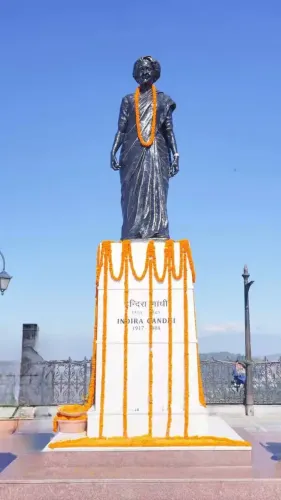
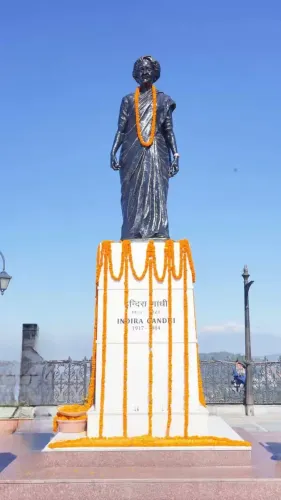
HP CM Office Pays Tribute to Indira Gandhi on Death Anniversary
Synopsis
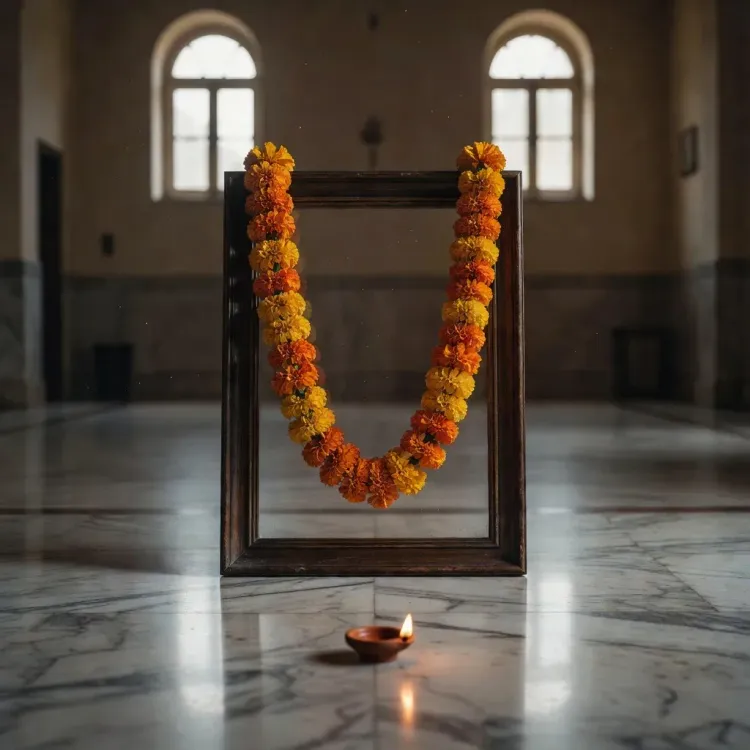
On Indira Gandhi's death anniversary, the Chief Minister's Office of Himachal Pradesh paid tribute, invoking her landmark decisions — bank nationalisation in 1969, abolition of privy purses in 1971, and land reforms — as defining turns in India's social and economic history.
Key Takeaways
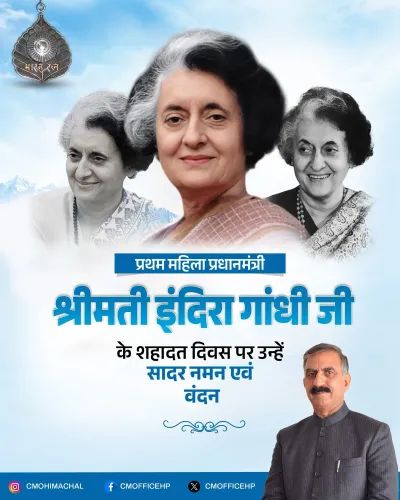
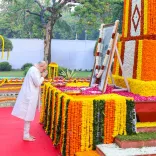
The Chief Minister's Office of Himachal Pradesh posted a formal tribute to Indira Gandhi on her death anniversary, 31 October 2026 .
The post highlights the nationalisation of 14 major commercial banks in July 1969 as one of her defining reforms.
It also recalls the 26th Constitutional Amendment (December 1971) that ended privy purses for former princely rulers.
Land reform is cited as a third pillar of Gandhi's social and economic transformation agenda.
The tribute explicitly frames her 1984 assassination as a sacrifice made in defence of national unity and integrity.
Himachal Pradesh is governed by the Indian National Congress , whose state governments mark 31 October with annual formal commemorations.
Forty-two years after her assassination, Indira Gandhi is remembered on 31 October 2026 — and the Chief Minister's Office of Himachal Pradesh used the occasion to invoke the full weight of her reformist legacy, from the banking system to the palaces of princely India.
Bank nationalisation, privy purses, land reform — the three pillars recalled
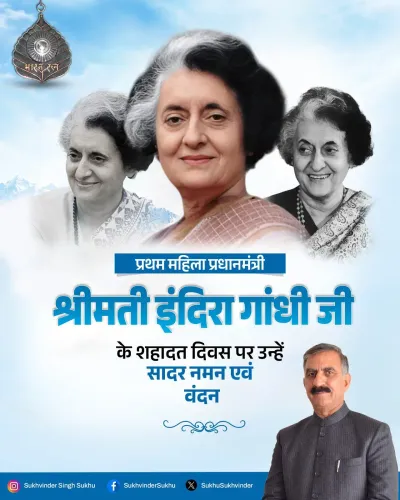
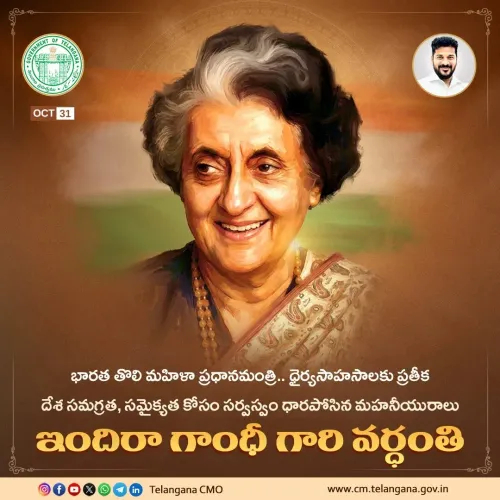
The post, written in Hindi, highlights three landmark decisions as the defining markers of Gandhi's tenure: 'बैंकों का राष्ट्रीयकरण, राजाओं-महाराजाओं के प्रिवी पर्स की समाप्ति और भूमि सुधार' — the nationalisation of banks, the abolition of privy purses of former kings and maharajas, and land reforms. The tribute credits her with attempting to 'change the social and economic direction of the country' through these decisions.
Each of those moves had a precise timestamp in history. In July 1969, Gandhi nationalised 14 major commercial banks, a sweeping intervention aimed at redirecting institutional credit toward agriculture and small industry. Two years later, the 26th Constitutional Amendment of December 1971 ended the privy purses — the state stipends guaranteed to former princely rulers at the time of India's post-independence integration. Both moves were contested fiercely, and both redrew the map of economic power in independent India.
The sacrifice the post does not let pass unnamed
The office closes with a line of deliberate weight: 'देश की एकता और अखंडता की रक्षा करते हुए उन्होंने अपने प्राणों का बलिदान भी दिया' — 'while protecting the unity and integrity of the country, she also sacrificed her life.' The reference is to Gandhi's assassination on 31 October 1984, a date that marks both her death and the annual Sadbhavana Diwas-style commemorations held by Congress-affiliated governments across India's states.
Himachal Pradesh, governed by the Indian National Congress, joins a wider chorus of state governments and party units that mark the day with formal tributes. The framing — sacrifice for national unity — is consistent with how Congress has memorialised Gandhi for four decades, linking her death directly to her decision to order the military operation at the Golden Temple in Amritsar earlier that year.
Why the 31 October tribute still carries political charge
This is not a neutral anniversary. The three reforms cited — bank nationalisation, privy purse abolition, land redistribution — remain the bedrock of Congress's socialist-era identity. Invoking them in 2026 is as much a statement of present-day ideological positioning as it is a historical tribute. For Congress-ruled states, the day is a ritual reaffirmation: this is who we are, this is the lineage we claim.
Indira Gandhi remains, by any measure, one of the most consequential — and most debated — figures in Indian democratic history. The tributes will keep coming. The debates won't stop either.
Point of View
Privy purse abolition and land reforms — all of which redistributed power from elites to the state — the post is as much a contemporary ideological signal as a historical remembrance. The closing invocation of her assassination as 'sacrifice for national unity' is a politically loaded phrase, connecting her death to the 1984 Punjab crisis and subtly positioning Congress as the custodian of India's territorial and social integrity. In an era of competitive nationalism, this framing has renewed relevance.
NationPress
31 Oct 2026
Frequently Asked Questions
Why is 31 October significant in Indian history?
31 October 1984 is the date on which Prime Minister Indira Gandhi was assassinated by her own bodyguards in New Delhi. It is observed annually as her death anniversary, with tributes paid by political parties, state governments, and public institutions across India.
What was the nationalisation of banks by Indira Gandhi?
In July 1969 , Prime Minister Indira Gandhi nationalised 14 major commercial banks , bringing them under government ownership. The move aimed to redirect credit toward agriculture, small businesses, and rural India, and remains one of the most cited examples of India's post-independence socialist policy.
What were privy purses and why were they abolished?
Privy purses were annual state payments guaranteed to former rulers of India's princely states when they acceded to the Indian Union after independence. They were abolished by the 26th Constitutional Amendment in December 1971 under Indira Gandhi's government, ending a financial privilege that critics called a relic of feudal India.
Why is the Himachal Pradesh CM Office posting about Indira Gandhi?
Himachal Pradesh is governed by the Indian National Congress , the party Indira Gandhi led. Annual tributes on 31 October are standard practice for Congress-ruled state governments, which use the occasion to reaffirm the party's ideological lineage rooted in Gandhi's reformist era.
How did Indira Gandhi die?
Indira Gandhi was assassinated on 31 October 1984 at her official residence in New Delhi by two of her security guards. Her death followed her order for a military operation at the Golden Temple in Amritsar earlier that year, and it triggered widespread communal violence across India.