HP CM Office Urges Professors to Build Student Leadership
Synopsis
The Chief Minister's Office of Himachal Pradesh has called on university professors to nurture students' character, leadership and critical thinking alongside academics, framing faculty as the architects of the state's future — a message aligned with the National Education Policy 2020's holistic education goals.
Key Takeaways
The Chief Minister's Office of Himachal Pradesh posted a public appeal to university professors on 22 July 2026 .
Professors were urged to impart right thinking, strong personality and leadership values in addition to academic knowledge.
The message stated that students shaped by faculty will bring glory to their teachers, their university and Himachal Pradesh .
The appeal aligns with the National Education Policy 2020 , which mandates holistic, value-based education at the university level.
Concrete follow-through may include faculty development workshops or revised appraisal norms in the next academic session.
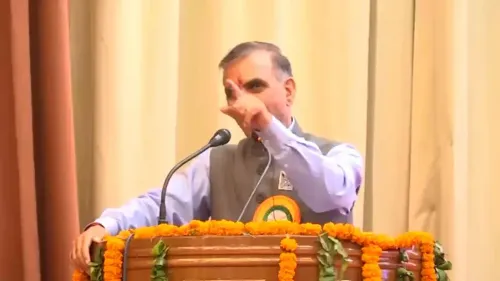
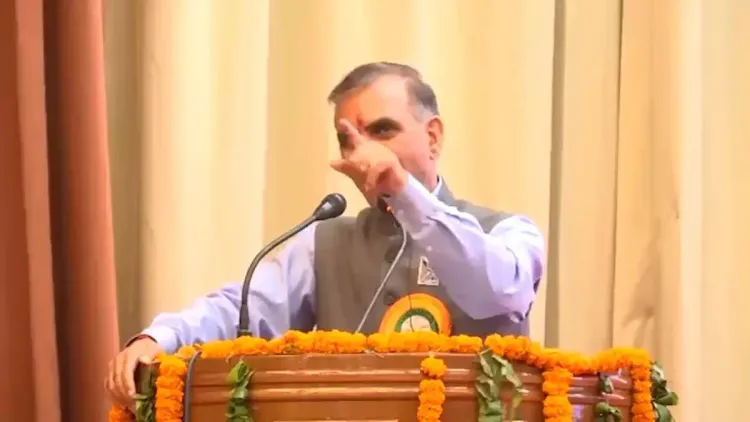
The Chief Minister's Office of Himachal Pradesh on Wednesday, 22 July 2026 called on university professors across the state to go beyond academic instruction and actively shape the character, thinking and leadership qualities of their students, underscoring that young people's futures rest in the hands of their faculty.
The post, shared from the official CMO Himachal Pradesh account, stated: 'विश्वविद्यालय के प्रोफेसरों पर बड़ी जिम्मेदारी है, क्योंकि युवाओं का भविष्य उनके हाथों में है' ('University professors carry a great responsibility, because the future of youth is in their hands'). It urged faculty to impart not just education but also 'the right thinking, a strong personality and the values of leadership,' adding that students nurtured under their guidance would go on to bring glory to their teachers, their university and the state.
Context
Himachal Pradesh maintains a network of state universities and affiliated colleges spread across its hilly terrain, serving a student population drawn largely from rural and semi-urban backgrounds. Access to quality higher education in the state has historically depended on the calibre of faculty at public institutions, making the role of professors particularly consequential for social mobility. The CMO's message reflects an institutional acknowledgement of that dependency.
The appeal arrives at a time when several Indian states have been nudging their higher-education systems to align more closely with the goals of the National Education Policy (NEP) 2020, which places explicit emphasis on holistic, value-based and multidisciplinary learning alongside conventional academic achievement.
Policy Backdrop
The National Education Policy 2020, approved by the Union Cabinet, called for faculty development programmes designed to help teachers instil ethical values, critical thinking and leadership potential in students — a marked shift from the earlier focus on rote learning and examination performance. States were encouraged to design their own implementation roadmaps within this central framework.
Himachal Pradesh, like several other states, has been integrating NEP principles into its university curricula. The CMO's message aligns squarely with the NEP's vision of the teacher as a mentor and character-builder, not merely a content deliverer. Observers note that such public appeals from the highest executive office can carry significant motivational weight for faculty working in under-resourced institutions.
Stakeholders and Impact
The primary audience of the message is university professors employed at state-run higher-education institutions in Himachal Pradesh. Their students — many of whom are first-generation college-goers from the state's mountainous districts — stand to benefit most directly if the appeal translates into changed pedagogical practice. Stronger mentorship at the university level is widely linked to improved graduate employability and civic participation.
Beyond the classroom, the message signals the state government's intent to hold faculty accountable not just for academic outcomes but for the broader development of young citizens. This framing could influence upcoming faculty appraisal norms, professional development workshops or university-level policy revisions in the coming academic session.
What's Next
Attention will now turn to whether the CMO's appeal is followed by concrete institutional measures — such as state budget allocations for faculty development, structured mentorship programmes or revised performance benchmarks for university teachers. The next academic session will be a key indicator of how deeply this directive percolates into Himachal Pradesh's higher-education administration. A sustained push in this direction could position the state as a model for NEP-aligned faculty engagement among smaller Indian states.
Point of View
Where governments are trying to shift faculty mindsets through persuasion rather than mandate alone. For Himachal Pradesh, where public universities serve as primary engines of social mobility in remote districts, the stakes of getting faculty culture right are especially high. Whether this translates into funded programmes or remains rhetorical will define its real policy weight.
NationPress
23 Jul 2026
Frequently Asked Questions
What did the Himachal Pradesh CMO say about university professors?
The Chief Minister's Office of Himachal Pradesh urged university professors to go beyond academics and help students develop the right thinking, a strong personality and leadership values, saying the future of youth rests in the hands of faculty.
How does this relate to the National Education Policy 2020?
The National Education Policy 2020 explicitly calls for holistic, value-based education and faculty development programmes. The CMO's message aligns directly with NEP's vision of teachers as mentors and character-builders, not just content deliverers.
Which universities in Himachal Pradesh are affected by this appeal?
The appeal is directed at professors across state-run universities and affiliated colleges in Himachal Pradesh, though no specific institution was named in the post.
Will there be new programmes for faculty development in HP universities?
No specific programmes have been announced yet. Observers will watch the next academic session for budget allocations or structured faculty development workshops that may follow from this directive.
Why is the role of professors especially important in Himachal Pradesh?
Many students in Himachal Pradesh are first-generation college-goers from rural and mountainous districts. Public university faculty are often their primary — and sometimes only — access to quality mentorship, making the professor's role critical for social mobility.