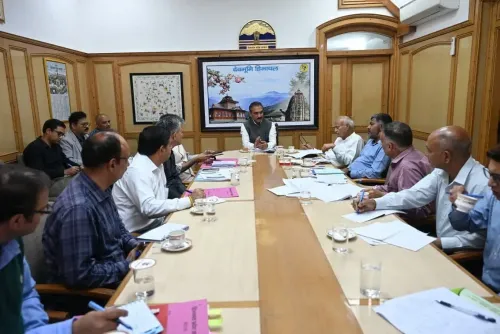
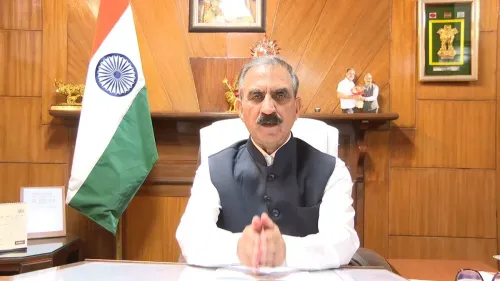
HP CM Office Vows to Make Green Conservation a Mass Movement
Synopsis
The Chief Minister's Office of Himachal Pradesh declared on 14 August 2026 that environmental conservation must become a mass movement, tying the goal to rural development, youth employment, farmer empowerment, and improvements in education and health across the Himalayan state.
Key Takeaways
The Chief Minister's Office of Himachal Pradesh posted its governance priorities on 14 August 2026 .
The government aims to turn environmental conservation into a jan andolan — a people's movement.
Priorities include improving education and health quality across the state.
New employment and self-employment opportunities for youth are a stated focus.
Farmers and horticulturists — the core of Himachal's rural economy — are explicitly named as a key stakeholder group.
No specific scheme details or budget figures have been announced alongside the statement.
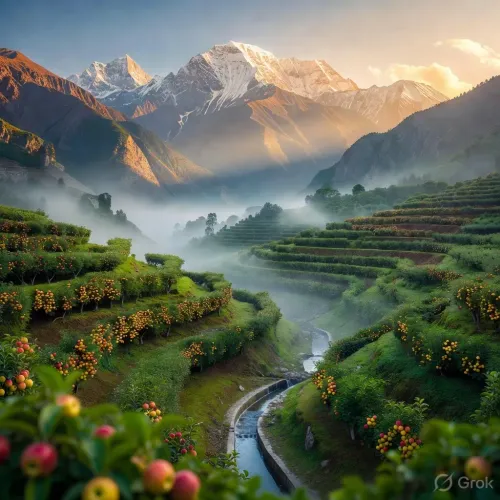
From the peaks of the Himalayas to the apple orchards of Shimla's hinterland, Himachal Pradesh is being asked to go green — not just as policy, but as a people's movement. The Chief Minister's Office of Himachal Pradesh posted on X on Friday, 14 August 2026, outlining a sweeping governance agenda that places environmental conservation at its centre, woven together with promises on jobs, education, health, and rural uplift.
The post, in Hindi, declared: 'हमारा प्रयास है कि पर्यावरण संरक्षण को जन-आंदोलन का स्वरूप दिया जाए' — 'Our endeavour is to give environmental conservation the form of a mass movement.' The statement went on to list the government's priorities: improving quality in education and health, creating new employment and self-employment opportunities for youth, developing rural areas, empowering farmers and horticulturists, and safeguarding the state's natural wealth.Why 'Jan Andolan' framing matters in a Himalayan state
Calling something a jan andolan — a people's movement — is a deliberate political choice. It signals the government wants citizens, not just departments, to own the mission. For Himachal Pradesh, a state whose economy runs on horticulture, tourism, and hydropower, the health of its forests, rivers, and biodiversity is not an abstract concern. It is the foundation of livelihoods for millions of farmers, orchard owners, and rural families across its 12 districts.
Himalayan state governments have historically tied environmental protection to community participation — from van panchayats (forest councils) to watershed management programmes. Framing conservation as a mass movement builds on that tradition while signalling a fresh political push to mainstream it.
Rural jobs and farmer empowerment in the same breath
The post is notable for bundling environmental conservation with economic priorities rather than treating them as separate tracks. Mentioning farmers and horticulturists — the backbone of Himachal's rural economy — alongside youth employment and self-employment signals that the government sees green policy and livelihood policy as inseparable. Apple growers in Kullu and Kinnaur, vegetable farmers in Lahaul-Spiti, and young people in remote valley towns are all named, implicitly, as the audience for this agenda.
The specific mention of swayarozgar (self-employment) alongside formal employment is also pointed — in a hilly, geographically fragmented state where large industrial employers are scarce, self-employment through horticulture, eco-tourism, and allied sectors is the realistic pathway for most rural youth.
The full contours of any new scheme or budget allocation to back these commitments have not yet been announced. What the 14 August statement does is set the political frame — conservation as a civic duty, rural prosperity as its dividend — ahead of what observers will watch for in the next legislative session or state budget.Point of View
Bundling green policy with rural jobs and farmer welfare is a way to make conservation electorally legible. The real test will come when specific programmes and budget lines are announced: whether the 'mass movement' rhetoric translates into funded community forest schemes, eco-tourism cooperatives, or horticulture support packages will determine whether this is agenda-setting or aspiration.
NationPress
14 Aug 2026
Frequently Asked Questions
What did the Himachal Pradesh CM Office announce on 14 August 2026?
The Chief Minister's Office of Himachal Pradesh stated that the government's goal is to make environmental conservation a mass people's movement, while also prioritising rural development, youth employment, farmer empowerment, and improvements in education and health.
What does 'jan andolan' mean in the context of HP's environment policy?
'Jan andolan' means a people's movement. The Himachal Pradesh government used the term to signal that it wants citizens — not just officials — to actively participate in environmental conservation across the state.
How does Himachal Pradesh's economy depend on the environment?
Himachal Pradesh's economy is heavily tied to horticulture (especially apple cultivation), tourism, and hydropower — all of which depend directly on healthy forests, rivers, and biodiversity in the Himalayan region.
What employment opportunities is the HP government promising for youth?
The CM Office's post referenced both formal employment and self-employment (swayarozgar) opportunities for youth, reflecting the reality that in Himachal's hilly terrain, self-employment in sectors like horticulture and eco-tourism is a primary livelihood pathway.
Have any specific schemes or budgets been announced to back these goals?
No specific scheme details or budget allocations have been announced alongside this statement. Observers are watching the next state budget and legislative session for concrete programme announcements.