HP CM Sukhu pays tribute to Lala Har Dayal on birth anniversary
Synopsis
On 14 October 2026, Himachal Pradesh Chief Minister Sukhvinder Singh Sukhu paid tribute to Lala Har Dayal, co-founder of the Ghadar Party, honouring his role in mobilising the Indian diaspora against British colonial rule from San Francisco in 1913.
Key Takeaways
CM Thakur Sukhvinder Singh Sukhu posted a formal tribute to Lala Har Dayal on his birth anniversary on 14 October 2026 .
Lala Har Dayal, born in 1884 , was a co-founder of the Ghadar Party , established in San Francisco in 1913 .
The Ghadar Party mobilised Indian immigrant communities in North America to organise against British colonial rule.
The tribute specifically highlighted Har Dayal's role in igniting the 'flame of independence' among Indians living abroad .
Indian state governments routinely issue such tributes on independence-era anniversaries as part of a broader pattern of affirming continuity with the freedom struggle.
A flame that crossed oceans to ignite a revolution — on Wednesday, 14 October 2026, the Chief Minister's Office of Himachal Pradesh remembered that fire with a formal tribute to Lala Har Dayal, the Indian revolutionary and founding member of the Ghadar Party, on his birth anniversary.
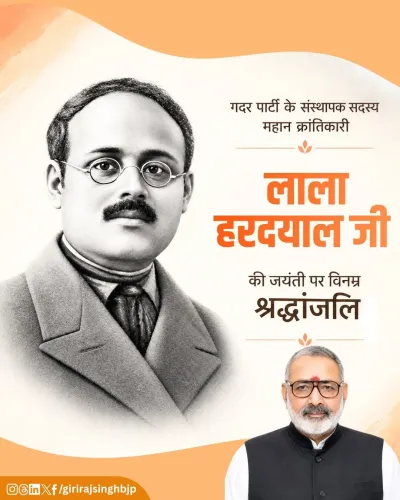
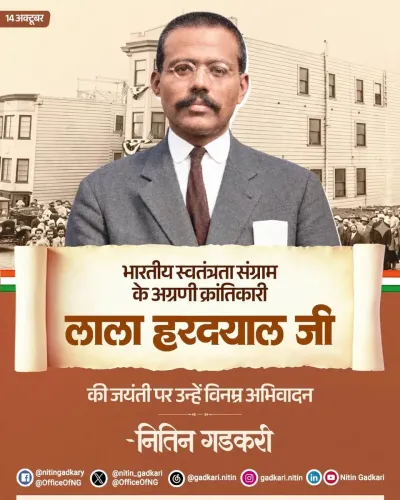
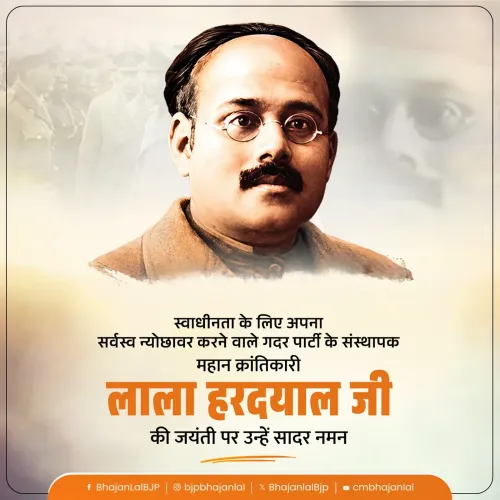
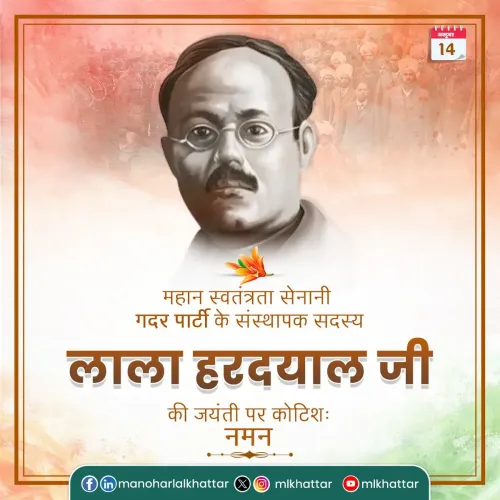
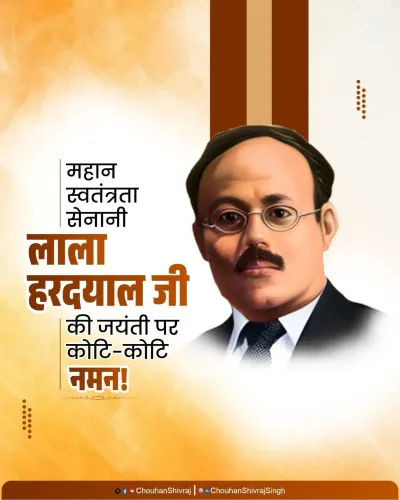
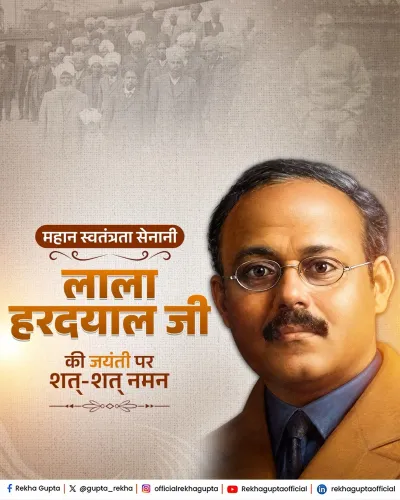
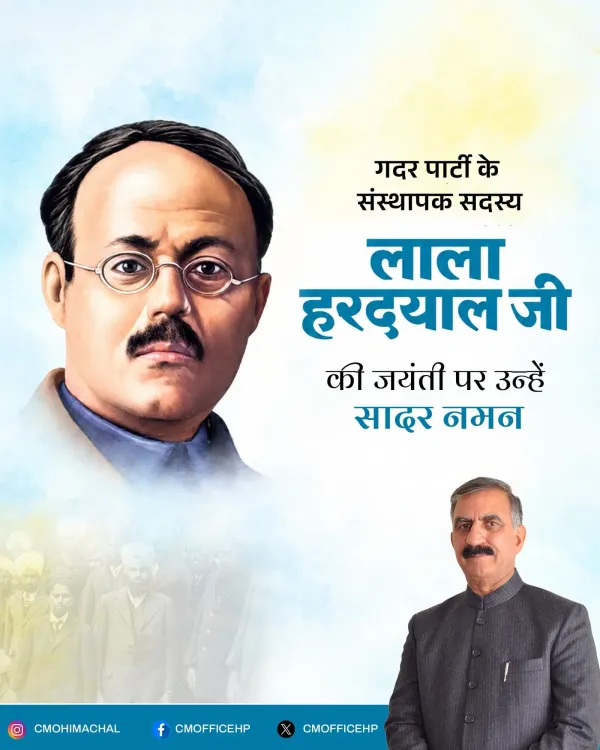
Chief Minister Thakur Sukhvinder Singh Sukhu offered his respects in a post on X, writing: 'महान स्वतंत्रता सेनानी एवं गदर पार्टी के संस्थापक सदस्य लाला हरदयाल जी की जयंती पर उन्हें सादर नमन' — 'Respectful salutations to the great freedom fighter and founding member of the Ghadar Party, Lala Har Dayal ji, on his birth anniversary.' The CM added that Har Dayal's unparalleled contribution in kindling the flame of independence in the hearts of Indians living abroad at that time 'will always be remembered.'
The revolutionary who took the fight to foreign shores
Born in 1884, Lala Har Dayal was among the most intellectually restless figures of India's anti-colonial movement. He abandoned a prestigious scholarship in Britain, renounced material comfort, and eventually made his way to the United States, where Indian immigrant labourers — largely Punjabi workers on the Pacific Coast — were ready for a different kind of conversation about their homeland.
In 1913, Har Dayal co-founded the Ghadar Party in San Francisco, turning the diaspora's frustration with British rule into organised revolutionary energy. The party published multilingual literature, mobilised workers, and attempted — ultimately unsuccessfully, but dramatically — to coordinate an armed uprising in India during World War I. It was one of the earliest sustained attempts to use the Indian overseas community as a lever against empire.
Why state governments keep this memory alive
CM Sukhu's tribute follows a well-established tradition across Indian state governments: marking the birth and death anniversaries of independence-era revolutionaries as a way of affirming continuity with the freedom struggle. The Ghadar movement holds particular resonance because of its overseas dimension — it stands as proof that the resistance to British rule was never confined to the subcontinent alone.
The acknowledgement of Har Dayal's role in reaching Indians living abroad also carries a contemporary undertone: the Indian diaspora today is the world's largest, and the idea of a transnational Indian identity stretching back to 1913 carries symbolic weight that state leaders are rarely reluctant to invoke.
For a government that has consistently used public memory as a bridge to contemporary values, the tribute is brief — but pointed. The Ghadar Party's story is one of sacrifice without guaranteed outcome, of conviction over caution. That, CM Sukhu's message implies, is worth remembering every October.
Point of View
But the specific invocation of the Ghadar Party is notable — it foregrounds the overseas dimension of India's independence movement at a time when the Indian diaspora's global influence is at a historic high. By highlighting Har Dayal's work among Indians abroad rather than on home soil, the tribute implicitly connects a 1913 revolutionary to a 21st-century reality: that Indian identity and aspiration travel far beyond national borders. For a Congress-led state government, the gesture also reinforces the party's historical claim to the inheritance of the anti-colonial movement. The tribute is ceremonial, but its framing is deliberate.
NationPress
14 Oct 2026
Frequently Asked Questions
Who was Lala Har Dayal?
Lala Har Dayal, born in 1884 , was an Indian revolutionary and intellectual who co-founded the Ghadar Party in San Francisco in 1913 . He is celebrated for mobilising Indian immigrant communities in North America to resist British colonial rule.
What was the Ghadar Party?
The Ghadar Party was a revolutionary organisation founded in 1913 in San Francisco by Indian expatriates, primarily Punjabi immigrants, with the goal of ending British rule in India through armed uprising.
Why did CM Sukhu pay tribute to Lala Har Dayal?
Chief Minister Sukhvinder Singh Sukhu of Himachal Pradesh posted the tribute on 14 October 2026 , Lala Har Dayal's birth anniversary, honouring his contribution to India's freedom struggle and his role in the Ghadar Party.
When was the Ghadar Party founded and by whom?
The Ghadar Party was founded in 1913 in San Francisco, United States , with Lala Har Dayal as one of its key founding members, alongside other Indian immigrants in North America.
Who is the current Chief Minister of Himachal Pradesh?
Thakur Sukhvinder Singh Sukhu has been the Chief Minister of Himachal Pradesh since 2022 , heading the state Congress government.