HP CM Sukhu: Apply at Forest Dept for Plant Protection Aid
Synopsis
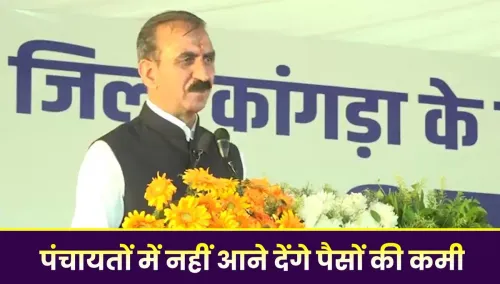
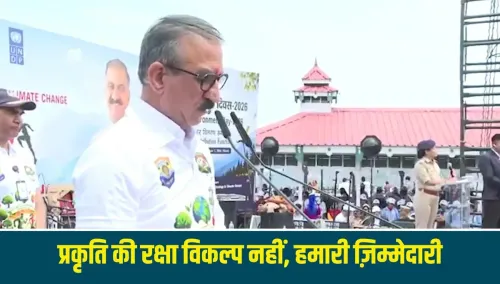
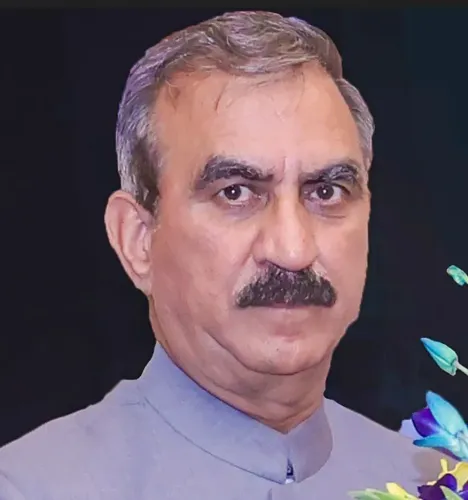
Chief Minister Sukhvinder Singh Sukhu has directed Himachal Pradesh residents to apply at their nearest Forest Department office for state-provided plant protection resources, and warned that officials refusing to accept applications must be reported to the Chief Minister's Office.
Key Takeaways
The Chief Minister's Office of Himachal Pradesh relayed a message from CM Thakur Sukhvinder Singh Sukhu on 25 June 2026 on plant protection resources.
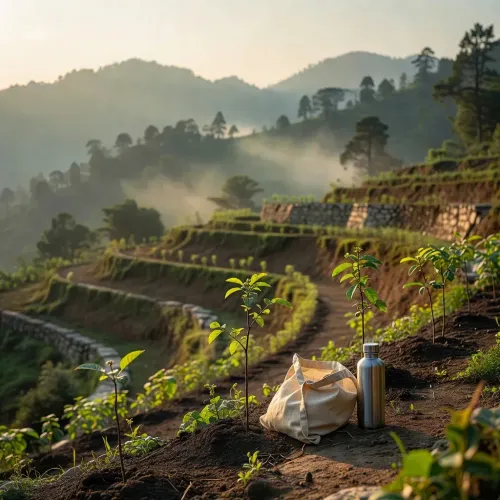
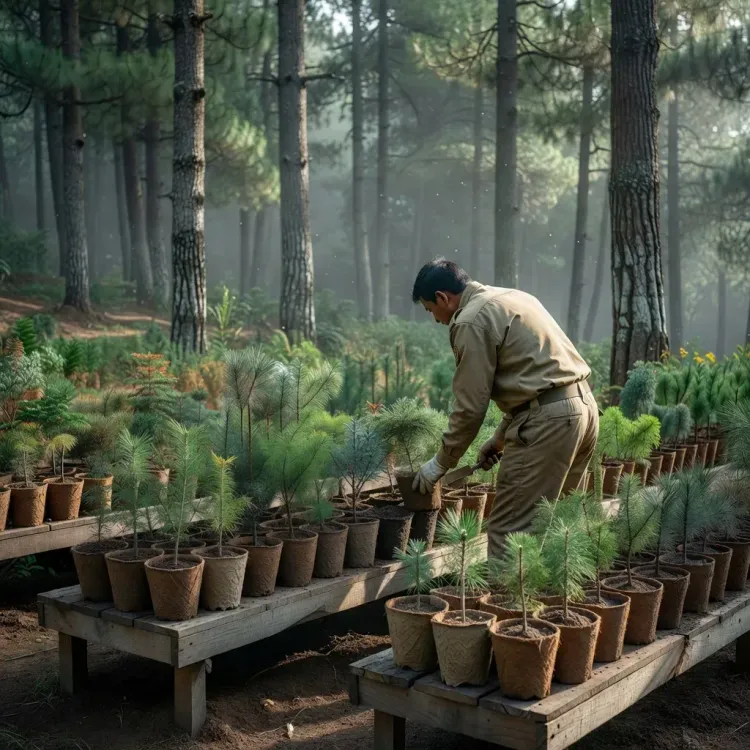
The state government is providing all necessary resources for plant and tree protection to citizens.
Residents can apply for these resources at their nearest Forest Department office .
Any official who refuses to accept an application must be reported directly to the Chief Minister's Office .
The initiative targets rural households and farmers and aligns with broader afforestation goals in the Himalayan state.
Himachal Pradesh has historically leveraged CAMPA funds for community-level afforestation and plant protection support.
The Chief Minister's Office of Himachal Pradesh on 25 June 2026 relayed a direct message from Chief Minister Thakur Sukhvinder Singh Sukhu, assuring citizens that the state government is providing all necessary resources for plant protection and directing those in need to apply at their nearest Forest Department office.
The post, attributed directly to CM Sukhu, stated in Hindi: 'पौधों की सुरक्षा के लिए राज्य सरकार सभी आवश्यक संसाधन भी उपलब्ध करवा रही है' — ('The state government is making all necessary resources available for the protection of plants'). Citizens were advised to visit their nearest Forest Department office to file an application for these resources.
Crucially, the Chief Minister added a grievance-redressal directive: if any official refuses to accept an application, residents are asked to report the matter directly to the Chief Minister's Office. This signals a zero-tolerance stance on bureaucratic obstruction at the ground level.
Context
Himachal Pradesh is a Himalayan state with significant forest cover, where biodiversity protection and afforestation have long been governance priorities. The Forest Department serves as the nodal agency for conservation drives, distribution of seedlings, fencing materials, and technical support to communities engaged in tree and plant protection.
The post appears to be a reply — marked 'R to @CMOFFICEHP' — suggesting it was a response to a citizen's query or complaint directed at the official account, a format increasingly used by state governments to demonstrate real-time responsiveness on social media.
Policy Backdrop
Himachal Pradesh has periodically drawn on CAMPA (Compensatory Afforestation Fund Management and Planning Authority) funds since the early 2010s to support community-level tree protection and afforestation activities. These funds are meant to compensate for forest land diverted for development projects, and states are mandated to deploy them for green-cover expansion.
State governments across the Himalayan region have increasingly used social media platforms to publicise grievance-redressal mechanisms for forestry schemes, aiming to bridge the gap between policy announcements and last-mile delivery of resources to rural households and farmers.
Stakeholders and Impact
Rural households and farmers across Himachal Pradesh stand to benefit most directly from this directive. Access to plant protection resources — including seedlings, protective materials, and technical guidance — can meaningfully support both livelihoods and local ecology, particularly in areas vulnerable to soil erosion and deforestation.
The explicit instruction to report uncooperative officials is significant: it places accountability on Forest Department staff at the district level, and positions the Chief Minister's Office as an accessible escalation point for ordinary citizens facing bureaucratic hurdles.
What's Next
Attention will now turn to whether district-level Forest Department offices see a measurable uptick in applications, and whether the state follows up with compliance monitoring or supplementary budget allocations for plant protection resources in the next assembly session. The effectiveness of this social-media-driven grievance channel will depend on how swiftly the administration processes complaints about officials who refuse applications.
If the mechanism proves effective, it could serve as a model for other Himalayan states looking to strengthen last-mile delivery of environmental scheme benefits to rural communities.
Point of View
A persistent pain point in Himalayan states where Forest Department access can be geographically and procedurally difficult. By attaching a grievance-redressal warning directly to the resource announcement, the Chief Minister's Office is attempting to convert a routine scheme communication into an accountability signal. This fits a wider pattern of Indian state governments using social media not merely for outreach but as a parallel governance channel that bypasses traditional administrative bottlenecks. The real test will be whether backend compliance mechanisms exist to act on the complaints the CM's Office is now inviting.
NationPress
25 Jun 2026
Frequently Asked Questions
How can I apply for plant protection resources in Himachal Pradesh?
You can apply for plant protection resources at your nearest Forest Department office in Himachal Pradesh, as directed by Chief Minister Sukhvinder Singh Sukhu.
What should I do if a Forest Department official refuses my application in Himachal Pradesh?
CM Sukhu has directed citizens to report any official who refuses to accept their application directly to the Chief Minister's Office of Himachal Pradesh.
What resources does the Himachal Pradesh government provide for plant protection?
The state government has stated it is making all necessary resources available for plant protection, though the precise list of materials — such as seedlings, fencing, or technical support — has not been specified in the announcement.
What is CAMPA and how does it relate to Himachal Pradesh's afforestation efforts?
CAMPA, or the Compensatory Afforestation Fund Management and Planning Authority, provides funds to states to compensate for forest land diverted for development. Himachal Pradesh has used these funds for community-level afforestation and plant protection since the early 2010s.
Who is the Chief Minister of Himachal Pradesh in 2026?
Thakur Sukhvinder Singh Sukhu is the Chief Minister of Himachal Pradesh, having assumed office in December 2022.