CM Sukhu calls for year-round environment action in HP
Synopsis
On World Environment Day, Himachal Pradesh Chief Minister Sukhvinder Singh Sukhu called for conservation to become a daily lifestyle commitment, urging citizens to plant trees, save water, and cut plastic use as climate pressures on the Himalayan state intensify.
Key Takeaways
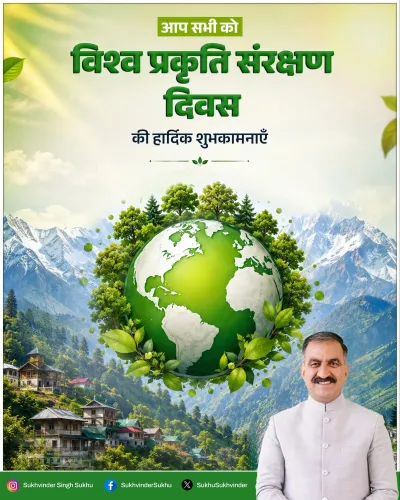
CM Sukhvinder Singh Sukhu posted his World Environment Day message on 5 June 2026 , calling conservation a year-round lifestyle commitment.
He cited global warming , changing weather, and rising natural disasters as evidence that environmental protection is now the state's most urgent need.
Himachal Pradesh introduced one of India's first state-wide plastic carry-bag bans in 2009 .
The state is covered under the National Mission for Sustaining the Himalayan Ecosystem , part of India's NAPCC framework launched in 2008 .
Key sectors at risk include tourism , hill farming , and hydropower , all vulnerable to accelerating climate change in the Himalayas.
The statement sets a public benchmark ahead of the 2026 monsoon plantation season and any upcoming state budget allocations for environment.
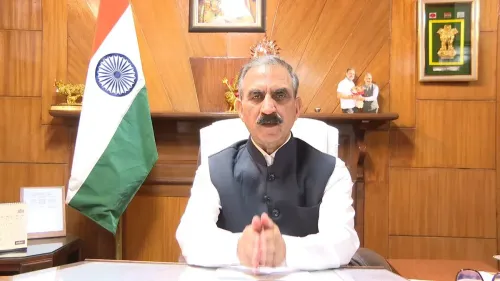
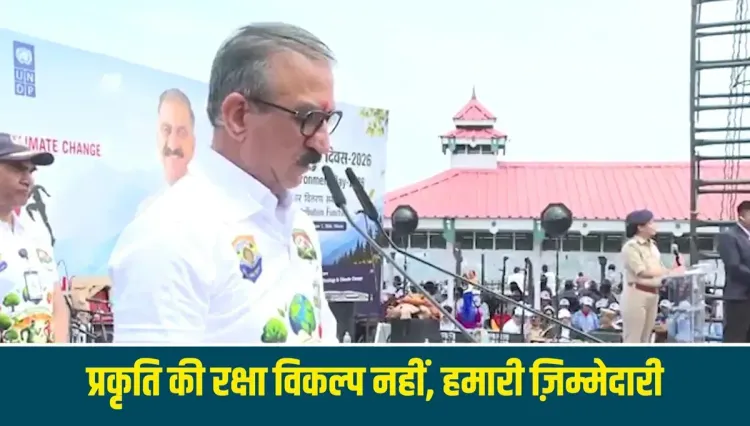
Himachal Pradesh Chief Minister Sukhvinder Singh Sukhu on Friday, 5 June 2026 — World Environment Day — called on citizens to treat environmental conservation not as a single-day observance but as a permanent part of daily life, urging collective action on tree planting, water conservation, and plastic reduction.
Context
Posting in Hindi on World Environment Day, CM Sukhu wrote that 'हिमाचल प्रदेश अपनी प्राकृतिक सुंदरता, घने जंगलों, स्वच्छ नदियों और पर्वतों के लिए जाना जाता है' ['Himachal Pradesh is known for its natural beauty, dense forests, clean rivers and mountains']. He framed this natural wealth as the foundation of the state's identity and livelihoods, arguing that it makes environmental protection especially vital for Himachal Pradesh.
The Chief Minister pointed to global warming, shifting weather patterns, and rising natural disasters as clear signals that conservation has become 'the greatest need of the present'. He appealed to residents to plant as many trees as possible, save water, and avoid plastic in everyday life.
Policy Backdrop
Himachal Pradesh has a long record of environmental legislation, having introduced one of India's first state-wide bans on plastic carry bags as early as 2009. The state also falls under the purview of the National Mission for Sustaining the Himalayan Ecosystem, one of eight missions under India's National Action Plan on Climate Change (NAPCC), launched in 2008 to address the particular vulnerabilities of Himalayan states.
Despite this legislative foundation, enforcement of plastic bans and the pace of afforestation remain ongoing challenges across hill states. CM Sukhu's appeal reinforces the state's stated policy direction and signals the administration's intent ahead of the 2026 monsoon plantation season, when tree-planting drives are typically scaled up.
Stakeholders and Impact
Himachal Pradesh's economy rests heavily on tourism, hill agriculture, and hydropower — all of which are directly exposed to climate risk. Local residents, farmers, and the tourism sector stand to bear the heaviest costs from accelerating glacial retreat, erratic monsoons, and increased flooding and landslide events that scientists link to regional warming trends.
Himalayan states have faced a surge in climate-driven disasters in recent years, prompting repeated calls from state governments for community-level behaviour change to complement national policy. CM Sukhu's message — emphasising that conservation must become a 'lifestyle' rather than a single-day gesture — reflects a broader regional push to embed environmental responsibility in public culture.
What's Next
Attention will now turn to whether the Himachal Pradesh government follows the Chief Minister's statement with concrete administrative action — including expanded plastic-ban enforcement, new tree-plantation targets for the 2026 monsoon season, or dedicated budget allocations in the next state assembly session.
As climate pressures on the Himalayas intensify, the Chief Minister's World Environment Day appeal sets a public benchmark against which the state government's environmental record will be measured in the months ahead.
Point of View
Environmentally conscious state — a narrative with direct economic stakes given the state's dependence on tourism and hydropower. By framing conservation as a lifestyle rather than a policy event, he shifts moral responsibility toward citizens while signalling administrative intent ahead of the monsoon plantation season. The appeal also slots into a broader pattern among Himalayan chief ministers who use high-visibility international observances to align state messaging with national and global climate commitments. Whether the rhetoric translates into tighter plastic enforcement or measurable afforestation targets will determine how the statement is judged beyond the news cycle.
NationPress
20 Sept 2026
Frequently Asked Questions
What did CM Sukhu say on World Environment Day 2026?
CM Sukhvinder Singh Sukhu called on Himachal Pradesh residents to make environmental conservation a permanent part of daily life, urging them to plant more trees, conserve water, and avoid plastic use, warning that global warming and rising natural disasters make this the state's most urgent need.
Does Himachal Pradesh have a plastic ban?
Yes. Himachal Pradesh introduced one of India's first state-wide bans on plastic carry bags in 2009, making it an early mover on plastic regulation among Indian states.
Why is environment protection especially important for Himachal Pradesh?
Himachal Pradesh's economy and identity are built on its forests, rivers, and mountains. These natural assets underpin tourism, hill agriculture, and hydropower, all of which face growing threats from glacial retreat, erratic monsoons, floods, and landslides driven by climate change.
What is the National Mission for Sustaining the Himalayan Ecosystem?
It is one of eight national missions under India's National Action Plan on Climate Change (NAPCC), launched in 2008 specifically to address the climate vulnerabilities of Himalayan states including Himachal Pradesh.
What action is expected from the Himachal Pradesh government after CM Sukhu's environment post?
Observers will watch for concrete follow-through such as expanded plastic-ban enforcement, new tree-plantation targets for the 2026 monsoon season, and dedicated environmental allocations in the next state budget session.