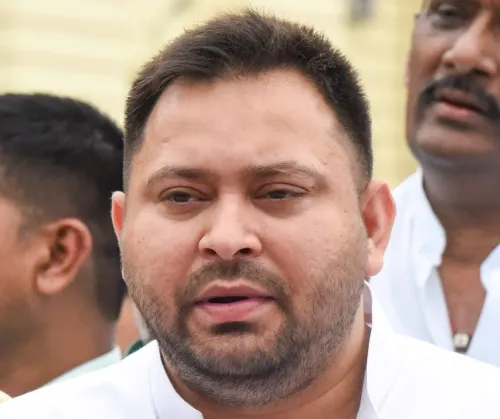
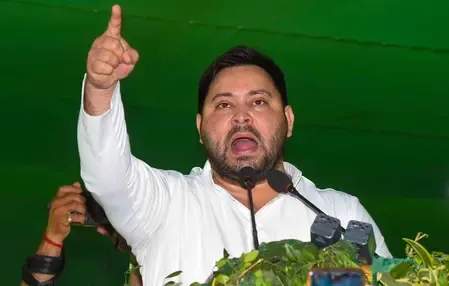
Tejashwi visits Begusarai gang-rape victim, slams Bihar govt
Synopsis
RJD leader Tejashwi Yadav visited a gang-rape survivor at Begusarai hospital on 25 June 2026, alleging police delayed the FIR, health authorities failed to provide timely care, and several accused remain at large, while sharply attacking Chief Minister Nitish Kumar over Bihar's deteriorating law-and-order situation.
Key Takeaways
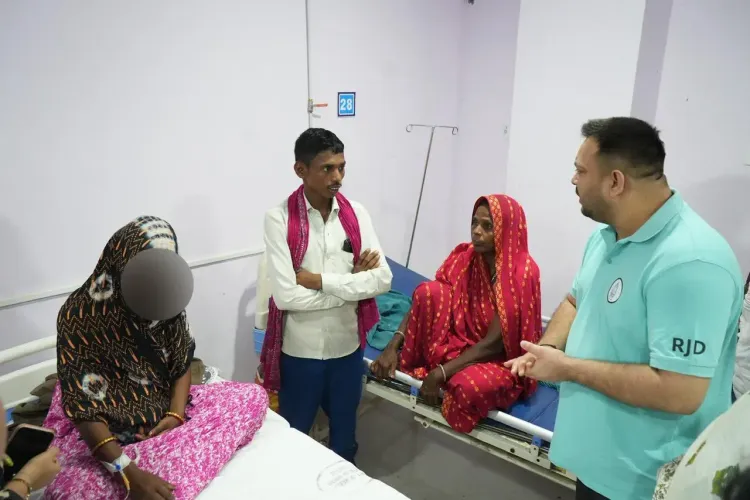
Tejashwi Yadav visited the alleged gang-rape survivor and her family at Begusarai hospital on 25 June 2026 .
He alleged multiple men forcibly entered the woman's home, restrained her, inflicted blade injuries, and committed gang rape.
Doctors reportedly retrieved a roughly four-inch piece of wood , a cartridge shell, and other objects during medical examination, according to Yadav's account.
Yadav accused police of delaying FIR registration and the health department of failing to provide timely medical care.
Several accused are alleged to still be at large as of the date of the post.
Yadav directly blamed Chief Minister Nitish Kumar , accusing him of making 'baseless statements' to hide governance failures on women's safety.
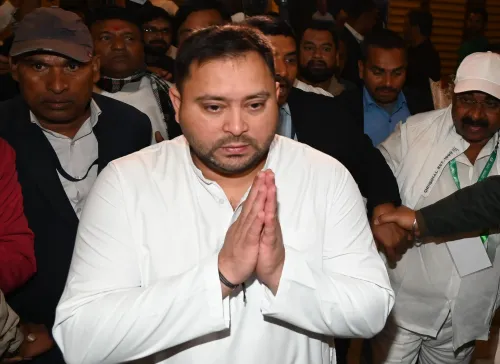
RJD leader Tejashwi Yadav on Thursday, 25 June 2026 visited the survivor of an alleged gang rape in Begusarai, Bihar, meeting her and her family at a local hospital to draw attention to what he described as the 'appalling, alarming, and shameful truth' of the state's law-and-order situation.
What Tejashwi alleged
In his post, Yadav described the attack in graphic terms, alleging that multiple men forcibly entered the woman's home, restrained her by binding her mouth and hands, inflicted injuries with a blade, and subjected her to gang rape. He further alleged that doctors retrieved a roughly four-inch piece of wood, a cartridge shell, and other objects during medical examination — details he presented as evidence of the severity of the assault.
Yadav accused the police of delaying registration of the First Information Report (FIR) and alleged that the health department failed to provide timely medical care. He noted that several of the accused remain at large.
Context: Opposition spotlight on Bihar crime
The visit follows an established pattern in Bihar politics, where opposition leaders — particularly from the Rashtriya Janata Dal (RJD) — visit victims of violent crime to highlight alleged administrative failure under the incumbent government. Tejashwi, who serves as Leader of the Opposition in the Bihar Legislative Assembly, has used such interventions repeatedly to question the Nitish Kumar-led administration's record on women's safety.
Yadav's post directly attacked the Chief Minister, accusing him of making 'baseless statements' to distract from governance failures rather than addressing the root causes of violence against women. 'बड़बोले मुख्यमंत्री अपनी नाकामी छुपाने व ध्यान भटकाने के लिए अनर्गल बयानबाजी करना ही अपना दायित्व समझ बैठे है' ('The boastful Chief Minister considers making irrelevant statements his only duty, to hide his failures and divert attention'), he wrote.
Policy backdrop: Fast-track courts and persistent gaps
Bihar, like other states, was mandated under the 2012 Criminal Law Amendment to establish fast-track courts for sexual offence cases. Successive state governments have periodically announced special mechanisms for expediting such trials. However, opposition parties have consistently argued that ground-level implementation — particularly in FIR registration, timely medical care for survivors, and swift arrest of accused — remains inconsistent.
Yadav's allegations of police 'gross negligence, indifference, and insensitivity' echo a broader national debate about the gap between legislative intent and administrative delivery in cases of sexual violence.
Stakeholders and impact
The immediate stakeholders are the survivor and her family, who Yadav met at Begusarai hospital. Women's rights groups and civil society organisations in Bihar have previously demanded accountability in such cases, and incidents of this nature often prompt renewed calls for police reform and survivor-support infrastructure.
Politically, the episode intensifies pressure on the Nitish Kumar government ahead of any legislative session where crime data and women's safety are likely to feature as flashpoint issues. The RJD, as the principal opposition force, is expected to press for a government response on the status of the investigation and the arrest of the remaining accused.
What's next
With several accused still reportedly at large, the pace of arrests will be closely watched. Any government statement on the investigation, a magisterial inquiry, or a response from the state's Director General of Police could follow given the political attention the case has now attracted. The Bihar assembly is likely to see questions on this incident and broader crime statistics against women in the state.
Point of View
Inadequate medical response, accused still at large — rather than the crime alone, Yadav is building a cumulative narrative of systemic institutional collapse rather than isolated incident. The direct attack on the Chief Minister's rhetoric signals that the RJD intends to carry this issue into legislative proceedings and campaign messaging. For the ruling alliance, the political cost of a delayed or inadequate official response to such a case is significant, particularly given the sensitivity of women's safety as a voting issue in Bihar.
NationPress
25 Jun 2026
Frequently Asked Questions
What happened in the Begusarai gang rape case in 2026?
According to RJD leader Tejashwi Yadav, multiple men allegedly forced their way into a woman's home in Begusarai, Bihar, restrained her, inflicted injuries with a blade, and subjected her to gang rape. Yadav visited the survivor at Begusarai hospital on 25 June 2026 and alleged serious medical and police failures in the case.
Why did Tejashwi Yadav visit Begusarai hospital?
Tejashwi Yadav visited to meet the gang-rape survivor and her family, expressing solidarity and drawing public attention to alleged police negligence in registering the FIR and the health department's failure to provide timely medical care.
What did Tejashwi Yadav say about Nitish Kumar and Bihar's law and order?
Yadav accused Chief Minister Nitish Kumar of making 'baseless and irrelevant statements' to hide his government's failures on women's safety and law and order, rather than taking concrete action. He said such cases of cruelty against women are occurring daily in Bihar.
Have the accused in the Begusarai gang rape case been arrested?
Tejashwi Yadav stated in his post on 25 June 2026 that several of the accused remain at large, and that police were slow to even register the FIR in the case.
What is Tejashwi Yadav's political role in Bihar?
Tejashwi Yadav is the Leader of the Opposition in the Bihar Legislative Assembly and a senior leader of the Rashtriya Janata Dal (RJD). He previously served as Deputy Chief Minister of Bihar.