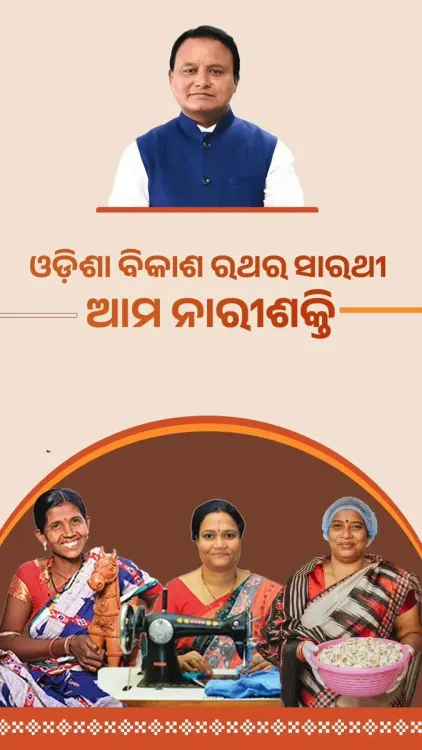
Odisha CMO Marks New Chapter in Women's Empowerment via Subhadra, Lakhpati Didi Yojana
Synopsis
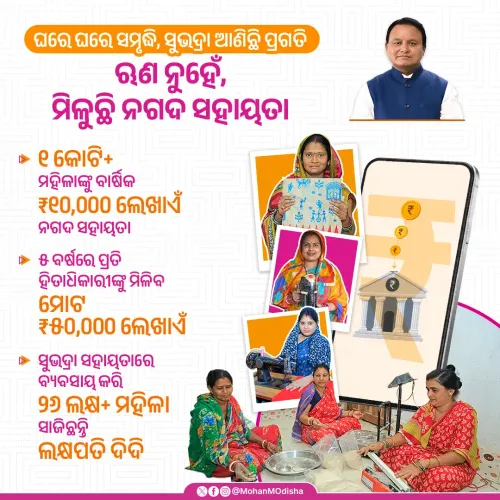
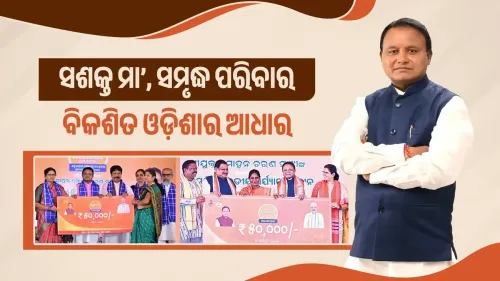
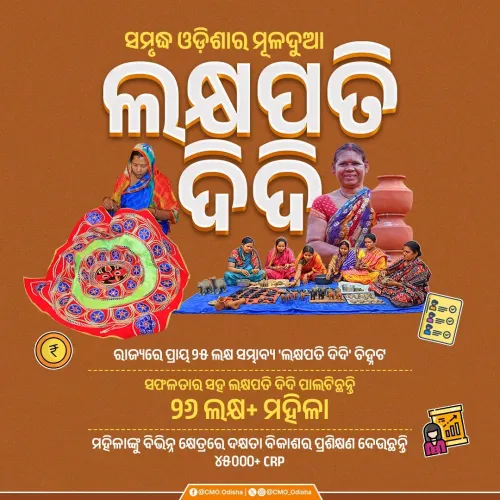
The Chief Minister's Office of Odisha on 25 June 2026 announced that more than 26 lakh women have become Lakhpati Didis under the Subhadra Yojana and Lakhpati Didi Yojana, marking two years of the state government's women's economic empowerment drive.
Key Takeaways
The Chief Minister's Office of Odisha announced a new milestone in women's empowerment on 25 June 2026 .
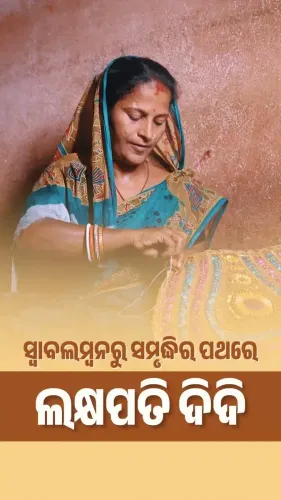
More than 26 lakh women have reportedly achieved 'Lakhpati Didi' status — earning at least Rs 1 lakh annually — through state and central schemes.
The Subhadra Yojana (state) and Lakhpati Didi Yojana (central, under DAY-NRLM) are the two primary vehicles cited.
The announcement coincides with 2 years of the Lokanka Sarakar (people's government) under the hashtag #2YearsofLokankaSarakar .
Odisha has long relied on self-help group (SHG) models as the backbone of rural women's economic participation.
The government described its effort toward an 'Atmanirbhar Odisha' (self-reliant Odisha) as ongoing and continuous.
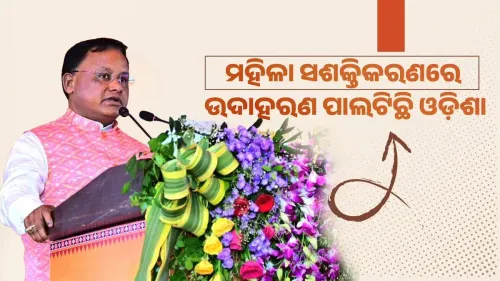
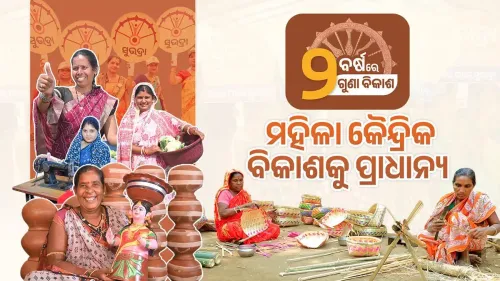
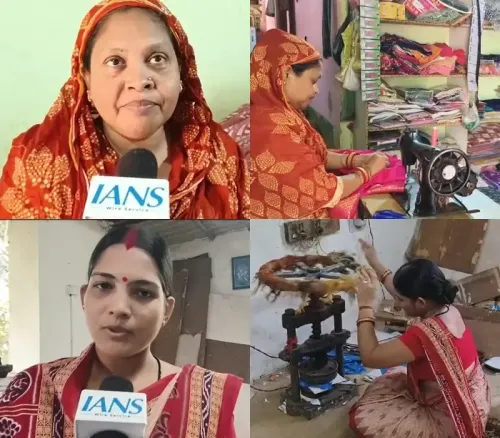
The Chief Minister's Office of Odisha declared on 25 June 2026 that the state has entered a new chapter of women's empowerment through the Subhadra Yojana and the Lakhpati Didi Yojana, citing the success stories of more than 26 lakh beneficiaries who have achieved the 'Lakhpati Didi' milestone.
Context
The post, shared in Odia, states: 'Subhadra Yojana o Lakhpati Didi Yojana madhyamre aaji Odisha mahila sasaktikaran ra nua adhyaya rachichi' — 'Through the Subhadra Yojana and Lakhpati Didi Yojana, Odisha has today written a new chapter in women's empowerment.' The CMO added that the success of more than 26 lakh Lakhpati Didis proves that 'when opportunity and support are provided, our women can turn the impossible into possible.'
The announcement was made under the hashtags #2YearsofLokankaSarakar and #BikasharaDharaOdishaSara, marking two years of the current state government, colloquially referred to as the 'people's government' (Lokanka Sarakar).
Policy Backdrop
The Lakhpati Didi Yojana is a component of the centrally sponsored Deendayal Antyodaya Yojana – National Rural Livelihoods Mission (DAY-NRLM), first introduced in 2011 to organise rural women into self-help groups (SHGs) and link them to credit and livelihood opportunities. The 'Lakhpati Didi' target — enabling each enrolled woman to earn at least Rs 1 lakh annually through skill-based livelihood activities — was formally scaled up under the central mission around 2023.
The Subhadra Yojana is an Odisha state-level scheme designed to provide financial assistance and support to women, complementing the central mission with direct cash transfers and credit linkages. Together, the two schemes represent a layered model — central mission infrastructure combined with state-specific financial support — that Odisha has deployed to accelerate female economic participation.
Stakeholders and Impact
The primary beneficiaries are rural women organised under SHGs across Odisha. The CMO's claim of more than 26 lakh women reaching the Lakhpati Didi threshold, if sustained, would represent one of the larger state-level outcomes under the national mission framework. The government described its efforts as 'continuous' (nirantar prayas), signalling that enrolment and livelihood-linking drives remain active.
SHG-based models have historically served as the primary vehicle for poverty alleviation and female entrepreneurship in Odisha, and the state has consistently ranked among the active implementers of the central rural livelihoods mission. The dual-scheme approach is intended to bridge gaps in household income and reduce dependence on informal credit.
What's Next
With the two-year governance milestone as the backdrop, the state government is expected to report further on beneficiary numbers under the Subhadra Yojana and its integration with central NRLM targets in upcoming budget and policy sessions. Analysts will watch whether the 26 lakh figure is independently verified and how the state plans to deepen livelihood support — particularly in skill development and market linkage — to sustain incomes above the one-lakh-per-year threshold beyond initial enrolment.
Point of View
Framing welfare delivery as a political achievement. The invocation of more than 26 lakh Lakhpati Didis signals that the state is leaning into the central government's flagship rural women's income target as a shared success metric. This dual-attribution model — crediting both state and central schemes — is increasingly common in BJP-ruled states where aligning with New Delhi's flagship missions carries both political and fiscal advantages. The key test will be whether independent verification of beneficiary numbers and sustained income levels above Rs 1 lakh annually can be established beyond the government's own claims.
NationPress
25 Jun 2026
Frequently Asked Questions
What is the Subhadra Yojana in Odisha?
The Subhadra Yojana is an Odisha state government scheme that provides financial assistance and support to women to promote economic empowerment and self-reliance, complementing central rural livelihood missions.
What is the Lakhpati Didi Yojana?
The Lakhpati Didi Yojana is a component of the central government's Deendayal Antyodaya Yojana – National Rural Livelihoods Mission (DAY-NRLM) that aims to help women in self-help groups earn at least Rs 1 lakh per year through skill-based livelihood activities.
How many Lakhpati Didis has Odisha produced?
According to the Chief Minister's Office of Odisha, more than 26 lakh women have achieved Lakhpati Didi status in the state as of June 2026. This figure has been stated by the government but has not been independently verified.
What is the significance of #2YearsofLokankaSarakar?
#2YearsofLokankaSarakar marks two years of the current Odisha state government, which calls itself the 'people's government' (Lokanka Sarakar). The hashtag was used to highlight welfare and development achievements over this period.
What is DAY-NRLM and how does it relate to Odisha women's schemes?
DAY-NRLM, or Deendayal Antyodaya Yojana – National Rural Livelihoods Mission, is a central government mission launched in 2011 to organise rural women into self-help groups and link them to credit and livelihoods. Odisha's Lakhpati Didi Yojana operates under this framework, supplemented by the state's own Subhadra Yojana.