HP CM Sukhu expands Sukhi Parivar Yojana income cap to ₹75,000
Synopsis
The Himachal Pradesh government has raised the annual income ceiling under the Mukhyamantri Apna Sukhi Parivar Yojana from ₹50,000 to ₹75,000 and announced the removal of an MGNREGA wage-work condition, widening the welfare scheme's reach during an ongoing state-wide survey.
Key Takeaways
The Mukhyamantri Apna Sukhi Parivar Yojana income eligibility ceiling has been raised from ₹50,000 to ₹75,000 per annum .
A condition tied to MGNREGA wage work (minimum one day's labour) is being removed from the scheme's eligibility or benefit structure.
A state-wide survey is currently underway across Himachal Pradesh to identify and enrol eligible families under the scheme.
The revisions were announced by the Chief Minister's Office of Himachal Pradesh on 26 September 2026 .
CM Sukhvinder Singh Sukhu has led the Congress government in Himachal Pradesh since December 2022 .
Exact benefit amounts and a formal government order on the MGNREGA change are yet to be publicly confirmed.
A state-wide survey is already underway across Himachal Pradesh, and the government is moving fast to make sure more families qualify before it concludes. The Chief Minister's Office of Himachal Pradesh announced on Saturday, 26 September 2026 that the income ceiling under the 'Mukhyamantri Apna Sukhi Parivar Yojana' (Chief Minister's Own Happy Family Scheme) has been raised from ₹50,000 to ₹75,000 per annum — and that a long-standing MGNREGA work-condition clause is being scrapped.
What changed — and who gains from the revised income ceiling
The ₹25,000 upward revision in the annual income limit directly widens the scheme's net. Families who were previously excluded because their declared income edged just above ₹50,000 now fall within the eligible bracket. In a hill state where informal and seasonal earnings are common, that margin matters enormously — a small bump in agricultural income or remittance money was enough, under the old rules, to push a household off the beneficiary list.
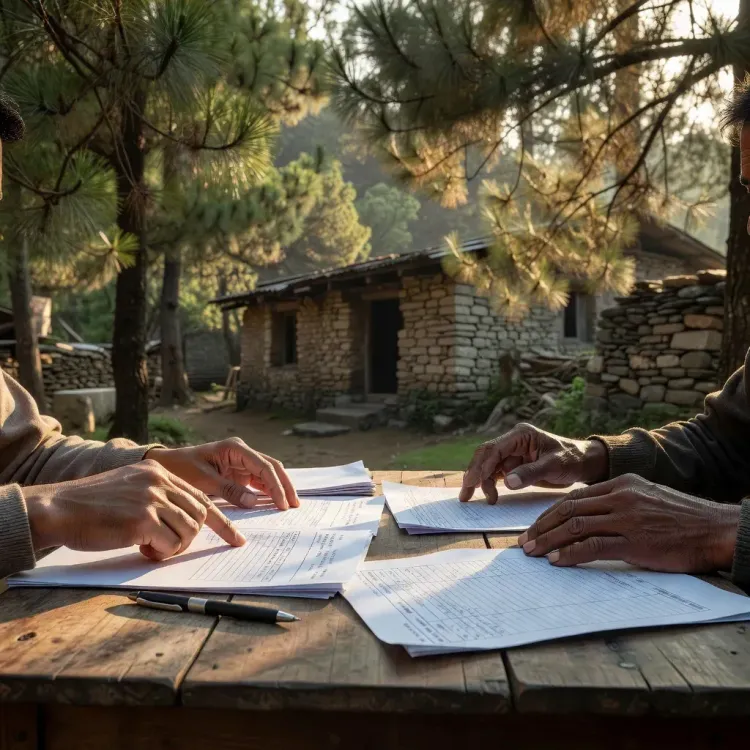
The survey currently running across all districts is the mechanism through which the government identifies and enrols eligible families. Revising the ceiling mid-survey means the data being collected right now will capture a broader universe of beneficiaries, avoiding the delay of a second enumeration exercise.
The MGNREGA clause being removed
Equally significant is the announcement on MGNREGA — the Mahatma Gandhi National Rural Employment Guarantee Act, 2005, the central government's landmark rural employment law guaranteeing up to 100 days of wage work per year to rural households. The Mukhyamantri Apna Sukhi Parivar Yojana had carried a condition linked to MGNREGA wage work — specifically, a requirement of at least one day's labour — as part of its eligibility or benefit structure. Chief Minister Sukhvinder Singh Sukhu's government says that condition is now being dropped.
Removing it matters because MGNREGA participation is not uniform. Elderly members, persons with disabilities, and households in areas where work demand is not officially sanctioned on a given day may struggle to fulfil even a single-day work requirement. Dropping it eliminates a bureaucratic friction point that had nothing to do with genuine need.
Himachal Pradesh's pattern of welfare recalibration
This is part of a recognisable pattern across Indian states: periodic upward revisions to income thresholds to keep pace with inflation and rural wage growth, ensuring that schemes designed for the poor do not quietly exclude the poor over time. Himachal Pradesh, a state with a large rural population spread across difficult terrain, has used both state and centrally-sponsored welfare architecture to extend social protection — and the Sukhu government has consistently framed welfare expansion as a Congress governance priority since December 2022.
What remains to be confirmed is the full benefit structure of the scheme and the formal government order operationalising the MGNREGA clause removal. The survey's completion will be the next bellwether — its results will determine how many households are added to the rolls.
Every number revised upward in a welfare threshold is a family that gets counted in. The real test now is how fast the paperwork follows the promise.
Point of View
But it also carries reputational risk if implementation lags behind the announcement. Linking a state scheme to MGNREGA conditionality was always a design tension; removing it aligns the scheme more purely with need-based targeting. Whether this translates into measurable household coverage gains will depend entirely on the speed and rigour of survey completion and benefit disbursal.
NationPress
26 Sept 2026
Frequently Asked Questions
What is the Mukhyamantri Apna Sukhi Parivar Yojana in Himachal Pradesh?
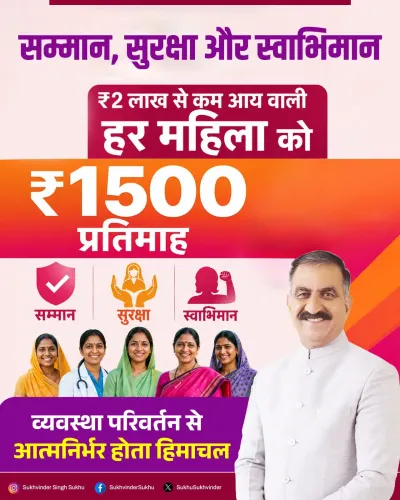
It is a Himachal Pradesh state welfare scheme designed to provide support to low-income families meeting defined eligibility criteria, including an annual income ceiling which has now been revised upward to ₹75,000.
What is the new income limit under the Sukhi Parivar Yojana?
The annual income limit has been increased from ₹50,000 to ₹75,000, as announced by the Chief Minister's Office of Himachal Pradesh on 26 September 2026.
What MGNREGA condition is being removed from the Sukhi Parivar Yojana?
The government announced the removal of a condition linked to at least one day of MGNREGA wage work, which had been part of the scheme's eligibility or benefit structure. Exact details of the formal order are yet to be confirmed.
What is the current status of the Sukhi Parivar Yojana survey?
A state-wide survey is currently underway across all districts of Himachal Pradesh to identify and register eligible beneficiary families under the scheme.
Who is the Chief Minister of Himachal Pradesh announcing these welfare changes?
Sukhvinder Singh Sukhu is the Chief Minister of Himachal Pradesh, leading the Congress government since December 2022. The announcement was made via the official Chief Minister's Office account.