HP CM Sukhu Pays Tribute to Chhatrapati Shahu Maharaj on Jayanti
Synopsis
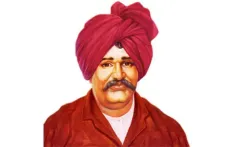
Chief Minister Sukhvinder Singh Sukhu, through the Himachal Pradesh CMO, paid tribute to Rajarshi Chhatrapati Shahu Maharaj on his birth anniversary on 26 June 2026, saluting the reformer's pioneering 1902 reservation decree and his lifelong work for the upliftment of backward, Dalit, and marginalised communities.
Key Takeaways
CM Sukhvinder Singh Sukhu issued a formal tribute to Rajarshi Chhatrapati Shahu Maharaj on his birth anniversary, 26 June 2026 .
Shahu Maharaj ruled Kolhapur from 1894 to 1922 and is credited with introducing one of India's earliest affirmative-action measures.
In 1902 , he reserved 50 per cent of state service and educational institution posts for backward classes in Kolhapur.
The tribute specifically highlighted his contributions to the upliftment of backward classes, Dalits, the deprived, and the exploited, and to the spread of education.
Himachal Pradesh administers active welfare and scholarship programmes for SC, ST, and OBC communities that align with the reform tradition Shahu Maharaj established.
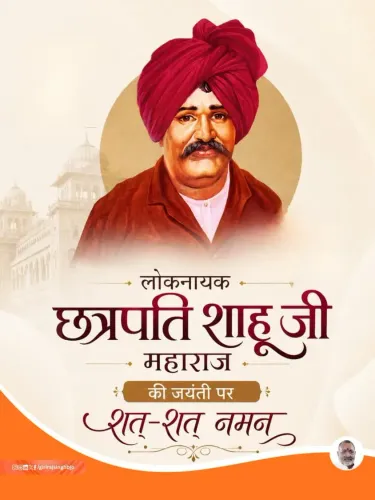
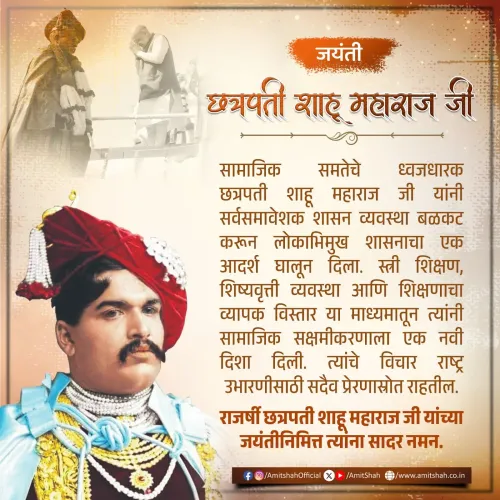
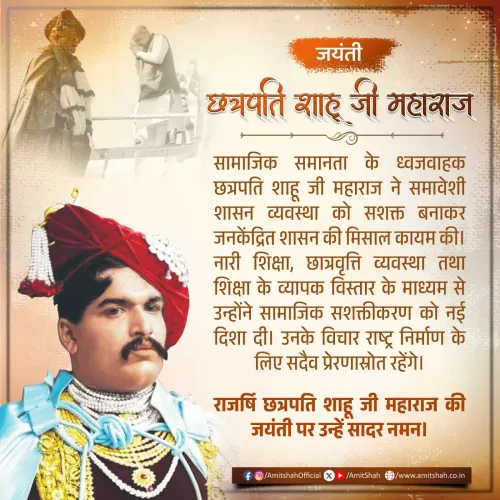
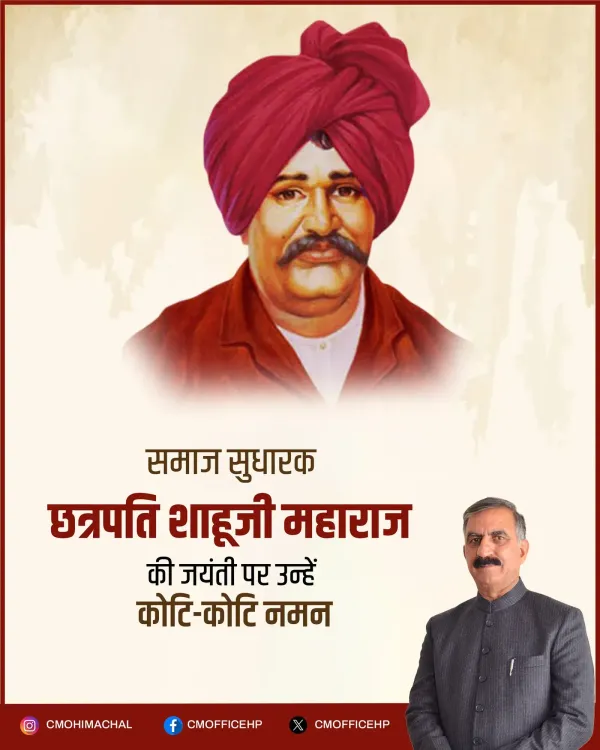
The Chief Minister's Office of Himachal Pradesh, on behalf of Chief Minister Thakur Sukhvinder Singh Sukhu, on Friday, 26 June 2026, paid tribute to Rajarshi Chhatrapati Shahu Maharaj on his birth anniversary, honouring the 19th-century ruler's enduring legacy in advancing social justice, education, and equality for the marginalised.
Context
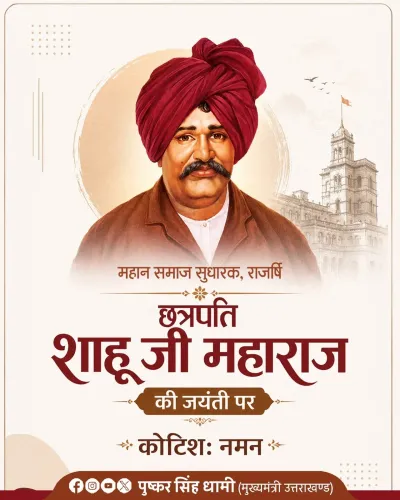
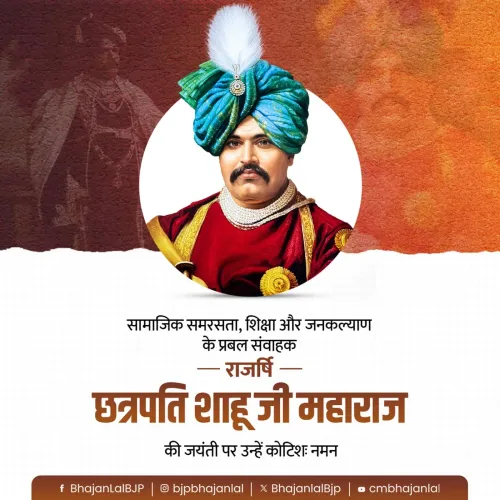
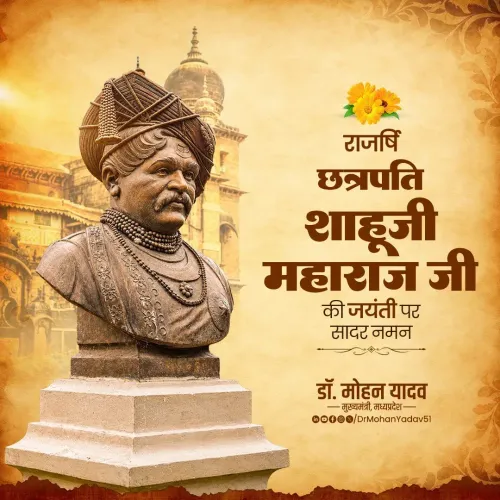
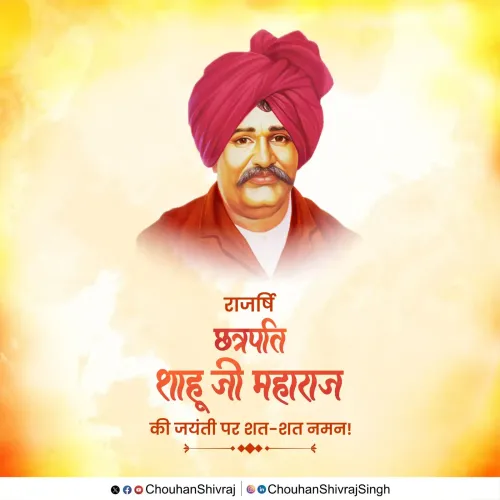
The official post, shared in Hindi, reads: 'Mahan samaj sudharak 'Rajarshi' Chhatrapati Shahujī Mahārāj kī jayantī par unhe sādar naman' — 'Respectful salutations to the great social reformer Rajarshi Chhatrapati Shahu Maharaj on his birth anniversary.' CM Sukhu noted that Shahu Maharaj's contributions to the upliftment of the backward classes, Dalits, the deprived, and the exploited, to the establishment of social justice and equality, and to the spread of education, 'will remain forever inspiring and memorable.'
The tribute was issued directly under the Chief Minister's name, a practice that signals personal and institutional endorsement of the values associated with Shahu Maharaj's reform movement.
Policy Backdrop
Rajarshi Chhatrapati Shahu Maharaj ruled the princely state of Kolhapur from 1894 to 1922. In 1902, he issued a landmark decree reserving 50 per cent of posts in state services and educational institutions for backward classes — one of the earliest formal affirmative-action measures in the Indian subcontinent, predating the constitutional framework of independent India by nearly five decades.
He also promoted the education of women and lower-caste communities, established boarding schools and hostels for students from disadvantaged backgrounds, and actively worked to dismantle caste-based discrimination within his jurisdiction. These measures have made him a foundational figure in the social-justice tradition that informs modern reservation policy across India.
Stakeholders and Impact
Shahu Maharaj's 26 June birth anniversary is observed widely across India, particularly by communities belonging to Other Backward Classes (OBC), Scheduled Castes, and Scheduled Tribes, who regard him as a patron saint of affirmative action. Political leaders across the spectrum routinely mark the day with public statements linking his legacy to contemporary commitments on reservations and welfare.
For Himachal Pradesh, a northern hill state with active welfare and scholarship programmes targeting SC, ST, and OBC students, such tributes carry institutional weight. The state government administers post-matric scholarships, hostel facilities, and educational grants for students from historically disadvantaged groups — programmes that trace their philosophical lineage to the reform tradition Shahu Maharaj exemplified.
What's Next
Observers of Himachal Pradesh's social-welfare agenda will watch for any new policy announcements or budget allocations targeting SC, ST, and OBC beneficiaries in the coming financial cycle, particularly around post-matric scholarships and hostel infrastructure. Tributes of this nature from a sitting Chief Minister often precede or accompany concrete programmatic commitments, lending political salience to the anniversary.
The Sukhu government's consistent messaging on social justice and equity suggests that Shahu Maharaj's legacy will continue to serve as a reference point for the administration's affirmative-action narrative in Himachal Pradesh.
Point of View
SC, and ST voters who form a significant constituency in the state. Marking the anniversary through the official CMO handle, and attributing the statement directly to the Chief Minister, elevates it beyond routine ceremonial messaging into an institutional reaffirmation of affirmative-action values. For a Congress government that came to power in late 2022 partly on welfare and equity promises, invoking Shahu Maharaj's 1902 reservation legacy is a way of anchoring contemporary policy commitments to a pre-constitutional moral authority. The pattern is consistent with a broader Congress strategy of reclaiming the social-reform narrative at the state level.
NationPress
26 Jun 2026
Frequently Asked Questions
Who was Rajarshi Chhatrapati Shahu Maharaj?
Rajarshi Chhatrapati Shahu Maharaj was the ruler of the princely state of Kolhapur from 1894 to 1922. He is celebrated as a pioneering social reformer who in 1902 reserved 50 per cent of government posts and educational seats for backward classes, making him one of the earliest proponents of affirmative action in the Indian subcontinent.
Why is Chhatrapati Shahu Maharaj's jayanti celebrated on 26 June?
Chhatrapati Shahu Maharaj was born on 26 June 1874, and his birth anniversary — known as jayanti — is observed on this date each year. Political leaders, social organisations, and communities associated with OBC, Dalit, and social-justice movements mark the day with tributes and public events.
What did CM Sukhu say about Shahu Maharaj?
CM Sukhvinder Singh Sukhu, through the official Himachal Pradesh Chief Minister's Office account, offered respectful salutations to Shahu Maharaj and stated that his contributions to the upliftment of backward classes, Dalits, the deprived, and the exploited, to social justice and equality, and to the spread of education, 'will remain forever inspiring and memorable.'
What is the significance of Shahu Maharaj's 1902 reservation decree?
In 1902, Shahu Maharaj issued a decree reserving 50 per cent of posts in Kolhapur's state services and educational institutions for backward classes. This is considered one of the earliest formal affirmative-action measures in the subcontinent, predating India's constitutional reservation framework by nearly five decades.
What welfare programmes does Himachal Pradesh run for SC, ST, and OBC communities?
Himachal Pradesh administers post-matric scholarships, hostel facilities, and educational grants for students from Scheduled Caste, Scheduled Tribe, and Other Backward Class backgrounds. These programmes reflect the broader affirmative-action tradition that Shahu Maharaj's reforms helped establish in Indian public policy.