HP CM Office Highlights State's Natural Heritage on World Environment Day
Synopsis
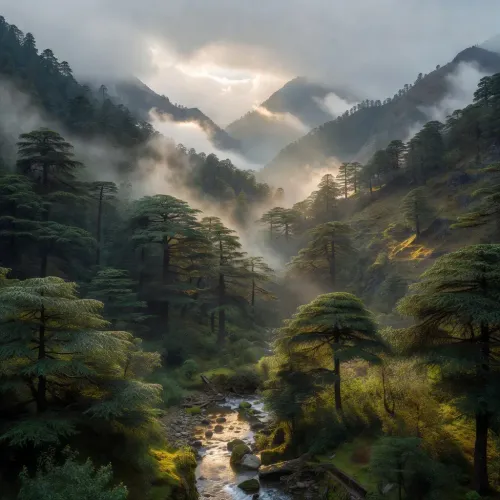
On World Environment Day 2026, the Himachal Pradesh Chief Minister's Office called the state's forests, rivers and mountains the bedrock of its identity, reinforcing conservation as both a policy priority and a civilisational commitment for the Himalayan state.
Key Takeaways
The Chief Minister's Office of Himachal Pradesh posted a World Environment Day message on 5 June 2026 emphasising the state's natural heritage.
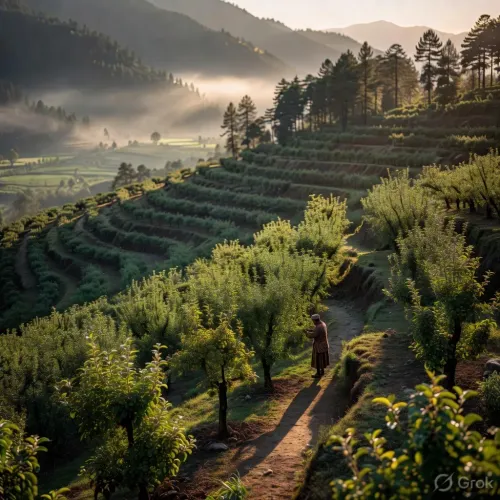
The post described Himachal Pradesh's dense forests, clean rivers, and mountains as the foundation of the state's identity and the basis of its people's lives.
Himachal Pradesh adopted a State Action Plan on Climate Change in 2012 to guide forest and river conservation.
Forests cover roughly two-thirds of the state's geographical area, consistent with the national National Forest Policy benchmark for hill states.
Local communities and the tourism sector are the primary stakeholders dependent on the health of the state's ecosystems.
Policy watchers will monitor the next budget session for concrete conservation schemes following this public commitment.
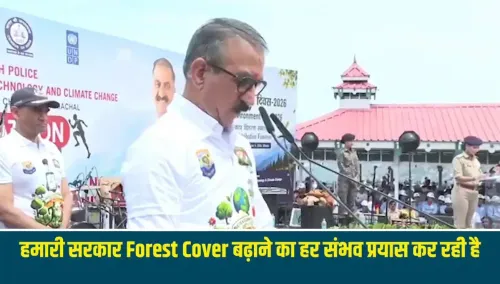
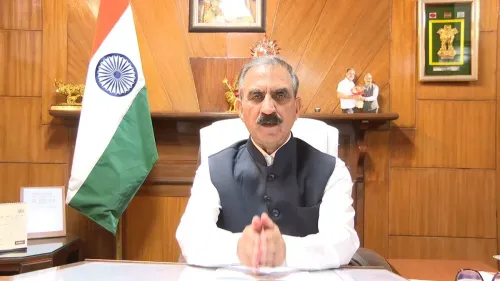
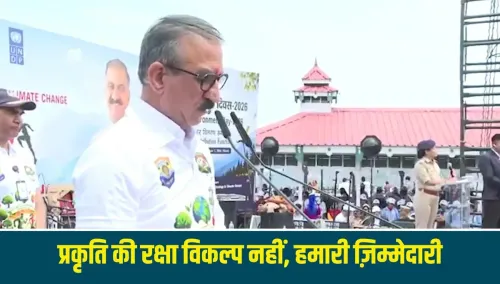
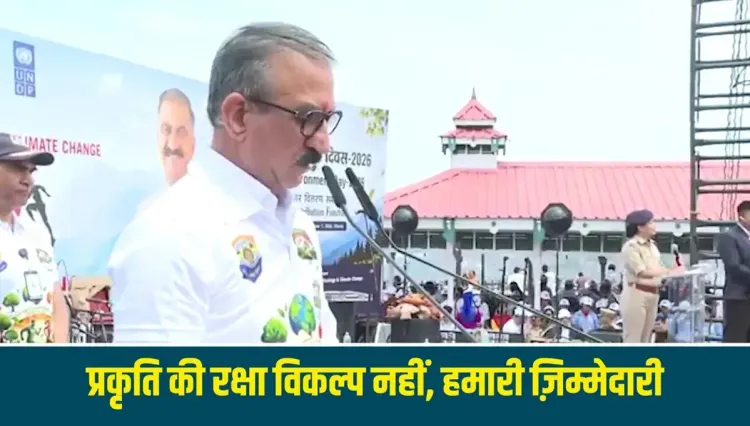
The Chief Minister's Office of Himachal Pradesh on Friday, 5 June 2026 — World Environment Day — underscored the state's identity as a land of dense forests, clean rivers, and majestic mountains, calling environmental conservation central to the lives and livelihoods of its people.
The post, shared on the official CMO account, stated in Hindi: 'हिमाचल प्रदेश अपनी प्राकृतिक सुंदरता, घने जंगलों, स्वच्छ नदियों और पर्वतों के लिए जाना जाता है।' ('Himachal Pradesh is known for its natural beauty, dense forests, clean rivers, and mountains.') It added that this natural wealth is the foundation of the state's identity and existence, making environmental protection all the more significant here.
Context
World Environment Day, observed annually on 5 June, is the United Nations' principal platform for promoting global environmental awareness. For a Himalayan state like Himachal Pradesh, the occasion carries particular weight: forests cover roughly two-thirds of the state's geographical area, and rivers originating in its ranges feed millions of people downstream across northern India.
The CMO's message arrives at a time when Himalayan ecosystems face mounting pressure from infrastructure expansion, tourism footfall, and climate-induced changes such as erratic snowfall and glacial retreat. By anchoring the post in the language of identity — calling natural heritage 'hamari pehchaan aur jeevan ka aadhar' ('the foundation of our identity and life') — the government signals that conservation is not merely a policy goal but a civilisational commitment.
Policy Backdrop
Himachal Pradesh adopted its State Action Plan on Climate Change in 2012, laying out a framework for forest conservation, water resource management, and climate-resilient development. The plan has guided successive forest department initiatives aimed at maintaining and expanding green cover in the state's ecologically sensitive zones.
At the national level, India's National Forest Policy mandates that hill states maintain at least two-thirds of their area under forest and tree cover — a benchmark Himachal Pradesh has historically worked to uphold. The state's messaging on World Environment Day aligns with India's broader international climate commitments, including targets submitted under the Paris Agreement to increase the nation's carbon sink through additional forest and tree cover.
Stakeholders and Impact
The communities most directly affected by the health of Himachal Pradesh's forests and rivers are the roughly 7 million residents who depend on these ecosystems for water, agriculture, and pastoral livelihoods. Forest-dwelling and tribal communities in districts such as Kinnaur, Lahaul and Spiti, and Chamba are particularly reliant on intact ecosystems for subsistence.
The state's tourism sector — a significant contributor to its economy — is equally tied to the quality of its natural landscape. Degradation of forests or contamination of rivers directly translates to reduced visitor footfall, affecting hotels, homestays, and local guides. The CMO's emphasis on natural wealth as an economic and cultural asset reinforces the argument for conservation as smart fiscal policy, not just ecological obligation.
What's Next
Observers will watch whether the World Environment Day message is followed by concrete announcements in the upcoming budget session, including new conservation schemes, enhanced allocations for the State Forest Department, or fresh guidelines on regulating tourism in ecologically fragile zones.
Annual forest cover change data from the State Forest Department will be a key metric for assessing whether the government's stated commitment to environmental protection translates into measurable outcomes on the ground. Any new policy initiative emerging from this signal will likely draw on the 2012 State Action Plan on Climate Change as its foundational document.
Point of View
The message subtly pushes back against narratives that prioritise rapid construction over ecological integrity. It also positions the state government as a responsible steward aligned with India's international climate commitments, which carries political value in a state where natural tourism is an economic lifeline. Whether this rhetorical commitment is backed by new policy action will be the real test of its significance.
NationPress
20 Oct 2026
Frequently Asked Questions
Why did the Himachal Pradesh CMO post about environment on 5 June 2026?
5 June is World Environment Day , the United Nations' annual global platform for environmental awareness. The Chief Minister's Office of Himachal Pradesh used the occasion to highlight the state's forests, rivers, and mountains as the foundation of its identity and the basis of its people's livelihoods.
What is Himachal Pradesh's policy on environmental conservation?
Himachal Pradesh adopted a State Action Plan on Climate Change in 2012 that guides forest conservation, water resource management, and climate-resilient development. The state also operates under the national National Forest Policy , which requires hill states to maintain at least two-thirds of their area under forest and tree cover.
How do forests and rivers affect livelihoods in Himachal Pradesh?
The roughly 7 million residents of Himachal Pradesh depend on the state's forests and rivers for water, agriculture, and pastoral livelihoods. The tourism sector , a major economic contributor, is also directly tied to the quality of the natural landscape.
What challenges does Himachal Pradesh face on the environment front?
Himachal Pradesh faces pressure from infrastructure expansion, high tourism footfall, and climate-driven changes such as erratic snowfall and glacial retreat, all of which threaten its Himalayan ecosystems and the communities that depend on them.
What should we watch for after the HP CMO's environment day message?
Policy observers will track whether the World Environment Day statement is followed by concrete conservation schemes or enhanced forest department allocations in the next budget session, and will monitor annual forest cover change data as a measure of actual progress.