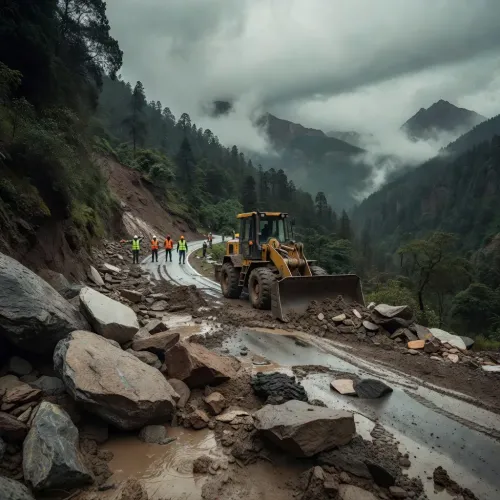
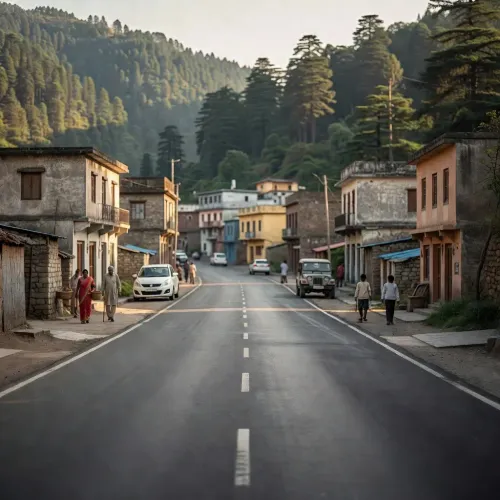
HP CM Office Orders Forest Land Transfer Plan for Rural Roads
Synopsis
The Chief Minister's Office of Himachal Pradesh has directed the formulation of a comprehensive forest land diversion plan to improve rural road connectivity in remote and far-flung areas of the state, signalling a push to streamline central forest clearance processes.
Key Takeaways
The Chief Minister's Office of Himachal Pradesh issued a directive on 19 June 2026 to prepare a comprehensive forest land transfer plan.
The plan is aimed at strengthening rural connectivity infrastructure and improving access to remote and far-flung areas of the state.
Forest land diversion for roads requires clearance under the Forest Conservation Act, 1980 from the central government.
Himachal Pradesh has historically sought forest clearances for rural roads under the Pradhan Mantri Gram Sadak Yojana , active since 2000 .
A consolidated plan could allow the state to batch multiple project proposals, potentially reducing administrative delays in securing Stage-I and Stage-II clearances .
The Chief Minister's Office of Himachal Pradesh, on Friday, 19 June 2026, directed the preparation of a comprehensive plan for forest land diversion (vann bhoomi hastaantaran) aimed at strengthening rural connectivity infrastructure and ensuring better access to remote areas of the state.
Context
The directive, shared via the official CMO Himachal Pradesh account on X, states that instructions have been issued to formulate a 'comprehensive plan for forest land transfer' (ek vyaapak yojana taiyaar karne ke nirdesh diye). The state government reaffirmed its commitment to 'strengthening rural contact infrastructure and ensuring better reach to far-flung areas' (graameen sampark avsanrachna ko sudridh karne tatha door-daraaz ke kshetron tak behtar pahunch sunishchit karne ke liye pratibaddh hai).
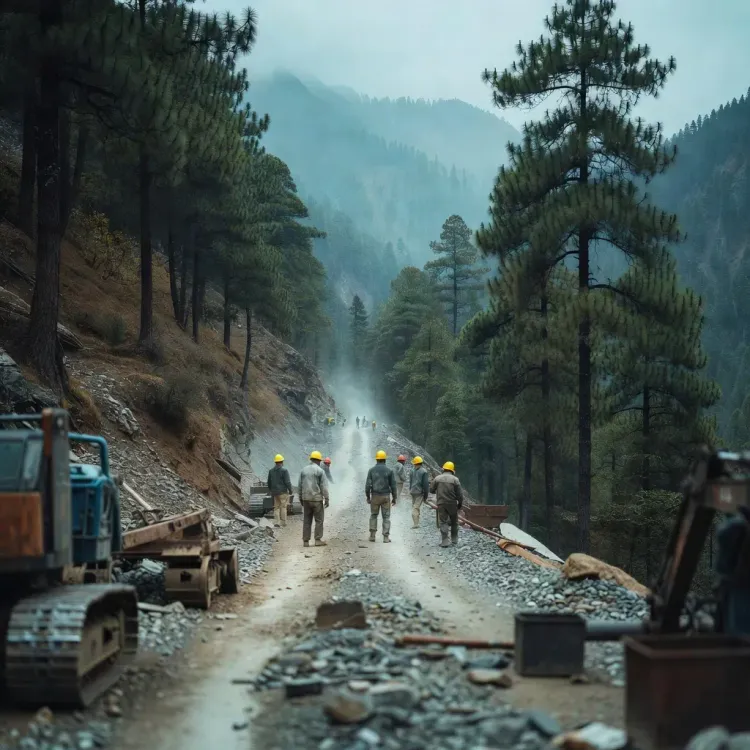
The announcement signals a coordinated push to address a long-standing challenge in Himachal Pradesh: connecting dispersed habitations across difficult Himalayan terrain where forest cover is dense and road-building requires formal diversion of protected land.
Policy Backdrop
Any diversion of forest land for non-forest uses — including rural roads and bridges — requires prior approval under the Forest Conservation Act, 1980, a central law that mandates clearances from the Ministry of Environment, Forest and Climate Change along with compensatory afforestation obligations.
Himachal Pradesh has historically sought such clearances to extend rural road networks under schemes including the Pradhan Mantri Gram Sadak Yojana (PMGSY), operational since 2000, which targets unlinked habitations in tribal and remote blocks. Himalayan states routinely navigate a tension between accelerating infrastructure delivery and complying with the layered forest diversion process that requires both Stage-I and Stage-II central clearances before work can begin.
The state's move to prepare a single comprehensive plan — rather than processing individual project proposals in isolation — suggests an intent to batch and streamline submissions to the central government, potentially reducing administrative delays.
Stakeholders and Impact
The communities most directly affected are remote rural populations in Himachal Pradesh's higher-altitude and tribal blocks, where seasonal road closures and the absence of all-weather connectivity limit access to health services, markets, and emergency response.
A consolidated forest land diversion plan, if approved by the centre, could unlock road projects across multiple districts simultaneously, reducing the piecemeal clearance cycle that has historically slowed delivery in hill states. Compensatory afforestation requirements will also determine the environmental footprint of the eventual approvals.
What's Next
The immediate next step is the finalisation and submission of the comprehensive forest land transfer plan to the central government for review. Projects will then need to clear the two-stage forest clearance process — Stage-I (in-principle) and Stage-II (final) — before construction can proceed.
The pace of central approvals and the scope of habitations targeted will be the key indicators of whether this directive translates into on-ground connectivity gains for Himachal Pradesh's most isolated communities.
Point of View
But the real test will be how swiftly the Ministry of Environment, Forest and Climate Change processes the eventual submission. The announcement also carries political weight, positioning the state government as proactively addressing the connectivity deficit in its most remote constituencies.
NationPress
19 Sept 2026
Frequently Asked Questions
Why does Himachal Pradesh need forest land for rural roads?
Much of Himachal Pradesh's terrain is covered by protected forest land, and building rural roads in remote or tribal areas often requires legally diverting portions of this land, which needs central government approval under the Forest Conservation Act, 1980.
What is the Forest Conservation Act 1980 and how does it affect road construction?
The Forest Conservation Act, 1980 is a central law that prohibits the use of forest land for non-forest purposes — including roads and bridges — without prior approval from the Ministry of Environment, Forest and Climate Change, typically granted in two stages.
What is Pradhan Mantri Gram Sadak Yojana and does it apply to Himachal Pradesh?
Pradhan Mantri Gram Sadak Yojana (PMGSY) is a central scheme launched in 2000 to provide all-weather road connectivity to unlinked rural habitations. Himachal Pradesh has used the scheme extensively, though forest clearance requirements often delay project execution in the state.
What does a comprehensive forest land diversion plan mean for villagers in remote HP areas?
If approved by the central government, a consolidated plan could accelerate the construction of rural roads connecting isolated habitations, improving access to health services, markets, and emergency response for communities in Himachal Pradesh's higher-altitude and tribal blocks.
What are Stage-I and Stage-II forest clearances in India?
Stage-I is an in-principle approval from the central government indicating conditional consent for forest diversion, while Stage-II is the final clearance granted after conditions — including compensatory afforestation — are met, after which actual construction can legally begin.