HP Govt Moves Pre-2003 Recruits Back to Old Pension Scheme

Synopsis
The Himachal Pradesh government has decided to restore CCS (Pension) Rules, 1972 coverage to employees recruited against vacancies advertised before 15 May 2003, and will transfer their existing NPS contributions into GPF accounts, ending their exposure to market-linked retirement risk.
Key Takeaways
The Himachal Pradesh government will bring employees recruited against posts advertised before 15 May 2003 under the CCS (Pension) Rules, 1972 .
These employees were previously enrolled under the National Pension System (NPS) despite their posts pre-dating the NPS rollout.
Employee contributions currently held in NPS accounts will be transferred to individual GPF (General Provident Fund) accounts.
The move restores a defined-benefit, guaranteed pension to an affected cohort of serving state government employees.
The Himachal Pradesh Finance Department is expected to issue detailed notifications on transfer mechanics and eligibility criteria.
The decision follows a broader national pattern of states correcting pension anomalies caused by recruitment delays at the time of the 2004 NPS transition .
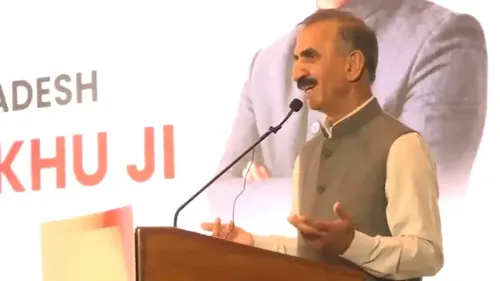
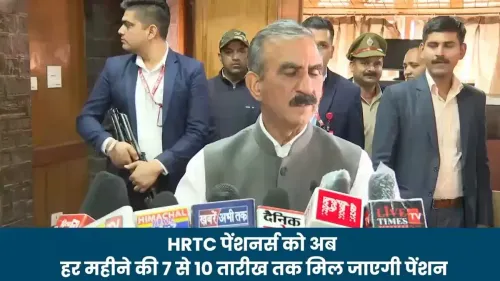
The Chief Minister's Office of Himachal Pradesh announced on Friday, 10 July 2026 that the state government has decided to bring employees recruited against posts advertised before 15 May 2003 under the CCS (Pension) Rules, 1972, restoring defined-benefit pension coverage to a category of workers caught in a policy transition gap.
Context
The official post stated: 'प्रदेश सरकार ने निर्णय लिया है कि 15 मई, 2003 से पहले विज्ञापित पदों/रिक्तियों के विरुद्ध सरकारी विभागों में भर्ती हुए कर्मचारियों को सीसीएस (पेंशन) नियम, 1972 के अंतर्गत लाया जाएगा' — meaning the state government has decided that employees recruited in government departments against posts or vacancies advertised before 15 May 2003 will be brought under the CCS (Pension) Rules, 1972. Additionally, the employee contributions currently deposited in their National Pension System (NPS) accounts will be transferred to their General Provident Fund (GPF) accounts.
The announcement directly addresses a long-standing grievance: employees whose recruitment was tied to pre-2003 vacancy notifications but who were eventually absorbed into service after the NPS cutoff had been placed under a market-linked, defined-contribution scheme rather than the guaranteed pension framework their contemporaries enjoyed.
Policy Backdrop
The central government introduced the National Pension System effective 1 January 2004, replacing the CCS (Pension) Rules, 1972 for all fresh recruits. The transition created an administrative grey zone: employees recruited against vacancies notified before the NPS rollout but who joined service after the cutoff were enrolled in NPS by default, even though the posts they filled pre-dated the new regime.
The CCS (Pension) Rules, 1972 guarantee a defined benefit — typically 50 per cent of last drawn basic pay — funded entirely by the employer. The NPS, by contrast, pools employee and employer contributions into individual accounts invested in market instruments, with retirement payouts dependent on fund performance. For lower-cadre employees, the shift represented a significant reduction in retirement security certainty.
Multiple Indian states have undertaken similar corrective exercises over the years, reclassifying employees recruited against pre-NPS vacancies back to the old pension framework after sustained representations from staff unions. Himachal Pradesh's decision follows this broader national pattern of plugging gaps created by recruitment delays at the time of the pension-system transition.
Stakeholders and Impact
The beneficiaries are state government employees currently in service who were recruited in Himachal Pradesh government departments against posts advertised before 15 May 2003 but were enrolled under NPS. For these employees, the shift to CCS (Pension) Rules, 1972 means their retirement income will no longer be subject to market risk.
The NPS employee contributions already accumulated in their individual accounts will be transferred into their GPF accounts, preserving the savings while aligning the instrument with the old-pension framework. The GPF is a statutory provident fund that earns a government-declared interest rate, insulating balances from equity market volatility.
From a fiscal standpoint, the state will assume the unfunded liability characteristic of defined-benefit pensions for this cohort, a consideration that the Himachal Pradesh finance department will need to account for in forward budget projections.
What's Next
Implementation will require detailed notifications from the Himachal Pradesh Finance Department specifying the mechanics of the NPS-to-GPF contribution transfer, eligibility verification procedures, and any supplementary budget provisions. Employees and departments will await formal gazette notification to initiate individual account migrations.
The decision is likely to intensify similar demands from employee associations in other states where recruitment-delay anomalies persist, and could prompt a review of how state governments standardise the NPS applicability cutoff against actual date of advertisement rather than date of joining.
Point of View
Not joining date, which is legally and logically defensible. The move reflects sustained pressure from state employee unions who have long argued that market-linked pension outcomes are inappropriate for workers who had no agency over recruitment timelines. By coupling the policy shift with a GPF transfer mechanism, the government signals fiscal prudence while managing political optics ahead of any upcoming electoral cycle. Nationally, such state-level corrections continue to chip away at NPS's intended universal applicability in the public sector, raising questions about long-term pension architecture uniformity across India.
NationPress
9 Oct 2026
Frequently Asked Questions
Who is eligible for the old pension scheme in Himachal Pradesh under this new decision?
Employees who were recruited in Himachal Pradesh government departments against posts or vacancies that were advertised before 15 May 2003 are eligible to be brought under the CCS (Pension) Rules, 1972, provided they are currently in service.
What will happen to NPS contributions already deposited by these HP government employees?
The employee contributions currently deposited in their NPS accounts will be transferred to their General Provident Fund (GPF) accounts as part of the transition to the old pension framework.
What is the difference between CCS Pension Rules 1972 and NPS?
CCS (Pension) Rules, 1972 provide a defined-benefit pension — typically 50 per cent of last drawn basic pay — funded entirely by the employer with no market risk. NPS is a defined-contribution scheme where both employee and employer contribute to an individual account invested in market instruments, making the final payout dependent on fund performance.
Why were some pre-2003 vacancy recruits placed under NPS in the first place?
The central government introduced NPS from 1 January 2004 for all fresh recruits. Employees whose posts were advertised before the NPS cutoff but who actually joined service after that date were enrolled in NPS by default, creating an anomaly that this Himachal Pradesh decision now seeks to correct.
Is Himachal Pradesh the only state to restore old pension to pre-NPS vacancy recruits?
No. Multiple Indian states have undertaken similar corrective measures over the years, reclassifying employees recruited against pre-NPS vacancies back to defined-benefit pension rules after sustained representations from staff unions, making this part of a broader national pattern.