Pallatt Brahmadathan, Kerala's beloved tusker, mourned by hundreds in Kottayam
Synopsis
Kerala's much-loved tusker Pallatt Brahmadathan — known for crossing community lines, shielding his mahout from a rogue elephant, and raising his trunk at Guruvayur — died when lightning struck him at his Kottayam home. The 54-year-old's passing drew hundreds to Melambara in silent grief, closing the chapter on one of the state's most distinctive festival personalities.
Key Takeaways
Pallatt Brahmadathan , aged 54 , died on Sunday, 5 October 2026 after lightning struck him at his shed in Melambara , near Kottayam , Kerala.
Hundreds of mourners, including Christian priests and elephant enthusiasts, gathered on Monday for a final farewell.
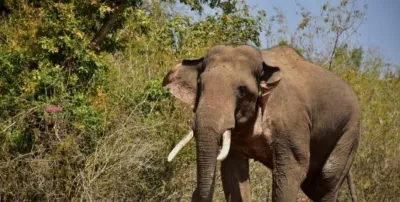
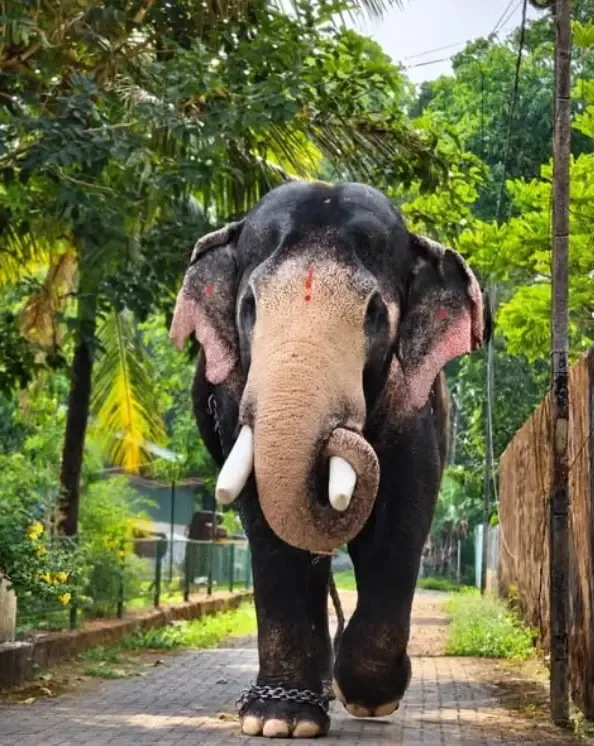
Standing 10 feet 2 inches tall, he was known as much for his gentle temperament as for his imposing presence.
He was bonded for nearly 25 years with mahout Kunnakkattu Damodaran Nair (Omanachettan) , who died in June 2021 .
Brahmadathan arrived in Kerala in 1999 from Arunachal Pradesh and Assam , and was acquired by the Pallatt family in 2010 .
He participated in Thrissur Pooram 2015 and carried the sacred idol at the Paramekkavu night Pooram 2018 .
Pallatt Brahmadathan, one of Kerala's most celebrated captive elephants, was mourned by hundreds of grief-stricken admirers on Monday, 5 October 2026, at Melambara near Kottayam, a day after the 54-year-old tusker died when lightning struck him while resting in a shed on the property of his owner, advocate Rajesh Pallatt. The outpouring cut across communities, with Christian priests, temple devotees, and elephant enthusiasts all making their way to bid a final farewell to an animal known as much for his gentleness as for his grandeur.
A Death That Silenced the Festival Grounds
Brahmadathan died at around 6.30 pm on Sunday after lightning struck him as he rested in his shed at Melambara. The news spread quickly, drawing mourners who arrived not with the usual percussion and festival lights but with tearful eyes and folded hands. Standing 10 feet 2 inches tall, the tusker had combined an imposing physical presence with a temperament so calm that his mahout rarely found cause to restrain him with chains. His broad forehead, heavy tusks, sandalwood-coloured temples, and majestic bearing had made him a fixture — and a favourite — on Kerala's festival circuit for over two decades.
The Bond with His Mahout
For nearly 25 years, Brahmadathan was accompanied by his mahout, Kunnakkattu Damodaran Nair of Lakkattoor, affectionately known as Omanachettan. Their relationship transcended the conventional mahout-elephant dynamic. Omanachettan was so confident of the elephant's temperament that he allowed him to remain unchained at the Pallatt family home as long as he could keep the animal in sight. The stick the mahout carried at temple festivals was, reportedly, more for the reassurance of spectators than for controlling the elephant.
The bond had its own legend. Brahmadathan did not initially understand Malayalam, so Omanachettan learned Hindi to communicate with him, before gradually teaching the elephant Malayalam commands. On one occasion at the Ganeshmangalam Temple in Vadanappally, when another elephant turned unruly and moved toward Omanachettan, Brahmadathan reportedly stepped between them, shielding his mahout from harm. When Omanachettan died in June 2021, Brahmadathan was brought to his home, where the elephant raised his trunk in what those present described as a final tribute — a sight that left onlookers in tears.
From Arunachal Pradesh to Kerala's Festival Stage
Brahmadathan arrived in Kerala in 1999 from the forests of Arunachal Pradesh and Assam, where he had served as a kumki elephant. He was initially brought to Puthuppally in Kottayam by Pothen Varghese and his brother Chacko, and was known then as Puthuppally Brahmadathan. The Pallatt family acquired him in 2010, after which he took the name by which most of Kerala came to know him. He went on to participate in the prestigious Thrissur Pooram in 2015 and carried the sacred idol during the Paramekkavu night Pooram in 2018. He was also a sought-after presence at Ettumanoor Ezhara Ponnana, Vaikom Ashtami, Thirunakkara, Sakthikulangara, and Thodupuzha festivals.
He had a ritual of his own: on returning from festivals, he was often taken before Lord Krishna at Guruvayur, where he would raise his trunk in what devotees regarded as a respectful salutation. Fans called him 'Saayippu', 'Pallatte Kutty', and simply 'Brahman'. His popularity extended online, where an Instagram page dedicated to him drew a steady following of admirers.
Beyond the Temple Grounds
What set Brahmadathan apart, those who knew him say, was not merely his impressive physical stature but his ability to cross community lines. He was a presence not only at Hindu temple festivals but occasionally at churches as well, earning affection from people regardless of faith. This is the dimension of his legacy that many mourners at Melambara on Monday chose to emphasise — that he was not just a festival elephant but a shared symbol of gentle strength.
As Kerala processes the loss, the state's festival circuit will mark the absence of a familiar, beloved face when the season resumes.
Point of View
But it is also a story about what captive elephants mean to Kerala's social fabric — crossing caste, community, and faith in a way few human institutions manage. The outpouring from Christians and Hindus alike points to the elephant as a rare shared symbol in a state that is otherwise deeply fissured along those lines. What mainstream coverage tends to miss is the labour dimension: the mahout-elephant relationship here lasted 25 years, involved cross-language learning on both sides, and produced a degree of trust that arguably made the animal safer than most. That model — and its practitioners — deserves more institutional attention than it typically receives when the conversation turns to elephant welfare.
NationPress
5 Oct 2026
Frequently Asked Questions
How did Pallatt Brahmadathan die?
Brahmadathan died at around 6.30 pm on Sunday, 5 October 2026, after lightning struck him while he was resting in a shed near the home of his owner, advocate Rajesh Pallatt, at Melambara near Kottayam, Kerala. He was 54 years old.
Who was Brahmadathan's mahout and what was their bond like?
His mahout for nearly 25 years was Kunnakkattu Damodaran Nair of Lakkattoor, known as Omanachettan. Their bond was extraordinary — Omanachettan learned Hindi to communicate with the elephant, and Brahmadathan reportedly once stepped in front of a rogue elephant to protect his mahout at a festival. Omanachettan died in June 2021.
Which major festivals did Brahmadathan participate in?
Brahmadathan was a prominent presence at the Thrissur Pooram in 2015 and carried the sacred idol during the Paramekkavu night Pooram in 2018. He also featured at Ettumanoor Ezhara Ponnana, Vaikom Ashtami, Thirunakkara, Sakthikulangara, and Thodupuzha festivals.
Where did Brahmadathan come from before arriving in Kerala?
Brahmadathan came from the forests of Arunachal Pradesh and Assam, where he had been a kumki elephant. He arrived in Kerala in 1999 and was brought to Puthuppally in Kottayam by Pothen Varghese and his brother Chacko. The Pallatt family acquired him in 2010.
Why did people from multiple communities mourn Brahmadathan?
Beyond Hindu temple festivals, Brahmadathan was known to visit churches as well, earning affection across communities. His gentle temperament and cross-community presence made him a shared symbol, drawing Christian priests and people of various faiths to his final farewell at Melambara on Monday.