Tata Sons Chairman N Chandrasekaran: India economy robust despite global uncertainty
Synopsis
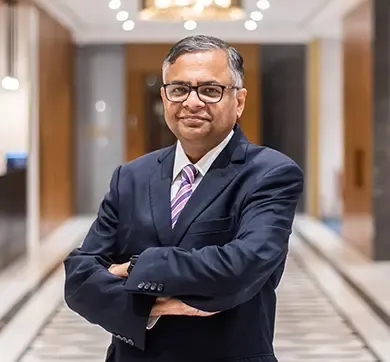
At a quality management symposium in New Delhi, Tata Sons Chairman N Chandrasekaran delivered a pointed message: India's economy is holding firm against global turbulence — but sustaining that requires a Germany-style manufacturing overhaul, with quality, precision, and SME ecosystems at its core. The combination of macroeconomic confidence and a structural challenge is what sets this address apart.
Key Takeaways
Tata Sons Chairman N Chandrasekaran called India's economy robust and stable at the Indian Foundation for Quality Management Symposium 2026 on 5 October 2026 .
Key positive indicators cited: automobile sales , credit growth , power demand , cement sales , and healthy bank NPA ratios.
India's current account deficit has stayed below 1% of GDP ; services exports stand at around 11% of GDP .
Chandrasekaran called for a manufacturing transformation modelled on Germany , focusing on quality, precision, and a strong SME ecosystem .
He identified energy security , advanced manufacturing , and human capital investment as critical for the Viksit Bharat 2047 vision.
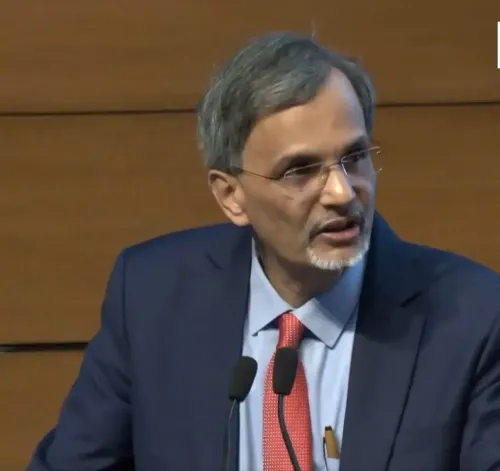
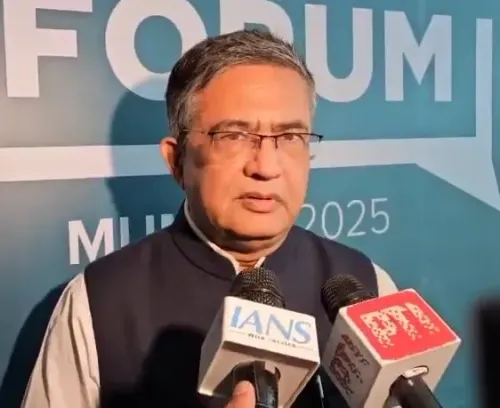
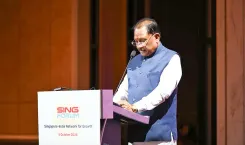
Tata Sons Chairman N Chandrasekaran on Monday, 5 October 2026 described India's economy as robust and stable, even as global headwinds continue to cloud the outlook for many emerging markets. Speaking at the Indian Foundation for Quality Management Symposium 2026 in New Delhi, Chandrasekaran said the country had consistently outpaced expectations and remained on a strong growth trajectory.
Key Indicators Backing the Optimism
Chandrasekaran pointed to a broad range of demand-side signals as evidence of underlying economic strength. Automobile sales, credit growth, power consumption, and cement demand were among the indicators he cited as signs of resilience.
On the external front, he highlighted a current account deficit that has remained consistently below 1% of GDP, services exports running at approximately 11% of GDP, robust foreign exchange reserves, and healthy bank non-performing asset ratios as further pillars of macroeconomic stability. 'The Indian economy is doing very well,' he said.
Viksit Bharat 2047 and Long-Term Growth Imperatives
Chandrasekaran framed India's longer-term ambitions within the Viksit Bharat 2047 vision, arguing that realising it would demand inclusive and sustainable development underpinned by world-class infrastructure, strong institutions, and a serious commitment to intellectual property. He identified energy security, advanced and precision manufacturing, and investment in human capital as the three critical pillars for sustaining growth over the long run.
The Manufacturing Transformation Imperative
A significant portion of Chandrasekaran's address focused on the need for a fundamental shift in India's manufacturing culture. He called for greater emphasis on quality, innovation, productivity, and competitiveness, arguing that the sector cannot simply scale on existing foundations.
He held up Germany as a model worth studying — a country that built durable competitive advantage through engineering precision, robust standards, and a strong ecosystem of small and medium enterprises (SMEs) and suppliers. 'I think in India, we need such a transformation,' he said.
Chandrasekaran also stressed that sustainable manufacturing must be embedded in India's broader industrial ambitions rather than treated as an afterthought. This transformation, he argued, could strengthen not only large corporations but the entire middle-tier business ecosystem, while producing experts capable of contributing to global manufacturing standards.
Why This Matters
The remarks come at a time when India is navigating a mixed global environment — slowing demand from key trading partners, volatile commodity prices, and geopolitical fragmentation of supply chains. That a top Indian industrialist with direct exposure to global markets is projecting confidence carries weight beyond routine corporate optimism. This is also consistent with recent official data points that have shown India holding its growth momentum even as peers in Asia moderate.
Analysts will now watch whether the policy environment Chandrasekaran praised continues to support the investment cycle, particularly in manufacturing, where India has repeatedly set ambitious targets but faces persistent structural bottlenecks in logistics, land acquisition, and labour skilling.
Point of View
But the manufacturing call deserves scrutiny. India has flirted with a Germany-style SME and precision-manufacturing model for years without achieving it — partly because land, logistics, and labour policy have not kept pace with industrial ambition. The current account deficit remaining below 1% of GDP is genuinely reassuring, but services exports at 11% of GDP also illustrate how lopsided India's growth story remains: services thrive while manufacturing stagnates near 17% of GDP. The Viksit Bharat 2047 framing is the right horizon, but the distance between ambition and execution has rarely been India's strong suit in manufacturing.
NationPress
5 Oct 2026
Frequently Asked Questions
What did N Chandrasekaran say about India's economy at the IFQM Symposium 2026?
Tata Sons Chairman N Chandrasekaran said India's economy is robust and stable despite global uncertainty, citing strong domestic demand signals — including automobile sales, credit growth, and cement demand — alongside a current account deficit below 1% of GDP and services exports at around 11% of GDP.
What indicators did Chandrasekaran cite to support India's economic stability?
He pointed to strong automobile sales, credit growth, power consumption, and cement demand as demand-side signals, complemented by healthy foreign exchange reserves, bank NPA ratios in good shape, services exports at roughly 11% of GDP, and a current account deficit consistently below 1% of GDP.
What is the Viksit Bharat 2047 vision Chandrasekaran referred to?
Viksit Bharat 2047 is India's government-backed vision of becoming a developed nation by 2047, the centenary of independence. Chandrasekaran argued it would require inclusive and sustainable development backed by world-class infrastructure, strong institutions, and intellectual property development.
Why did Chandrasekaran hold up Germany as a model for India?
He cited Germany as an example of a country that built durable competitive advantage through engineering precision, strong quality standards, and a deep ecosystem of SMEs and suppliers. He argued India needs a similar transformation in its manufacturing sector to become globally competitive.
What are the critical long-term growth requirements Chandrasekaran identified?
He identified three pillars: energy security, advanced and precision manufacturing, and sustained investment in human capital. He also stressed that sustainable manufacturing must be embedded in India's industrial ambitions, not treated as an add-on.