CM Samrat Choudhary highlights India's infra leap since 2014

Synopsis
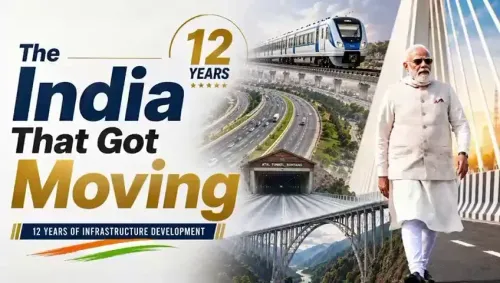
Bihar CM Samrat Choudhary invoked India's infrastructure surge — 164+ train routes, 155+ airports, Atal Setu and Chenab Bridge — crediting PM Modi's leadership and the 'Viksit Bharat' mission in a post under the BJP's SevaSankalpAbhiyan outreach.
Key Takeaways
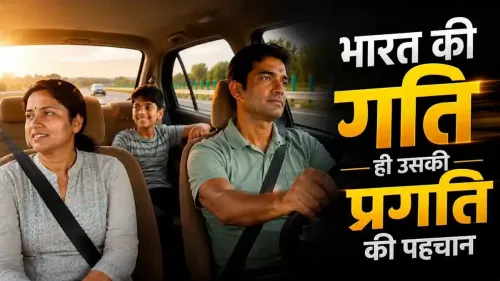
Bihar Chief Minister Samrat Choudhary posted on October 5, 2026 highlighting India's infrastructure growth from 2014 to 2026 .
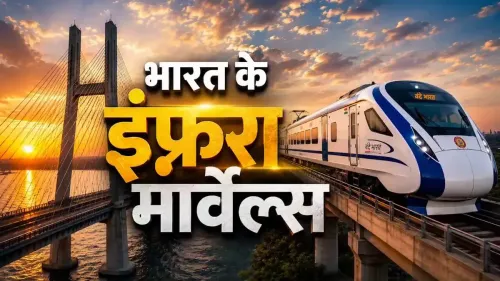
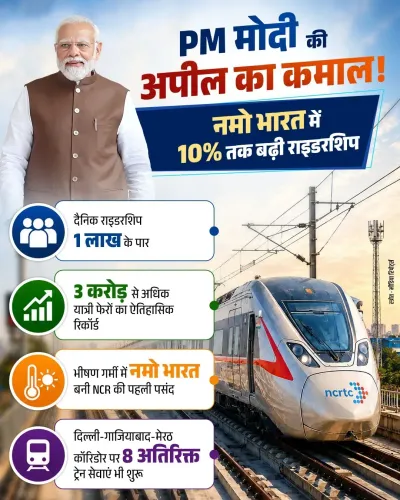
He cited 164-plus routes served by Vande Bharat and Namo Bharat trains as a marker of rail expansion.
India now has 155-plus active airports , up sharply from a decade ago, according to his post.
The Atal Setu (Mumbai's sea bridge) and the Chenab Bridge (world's highest railway arch bridge) were named as flagship engineering achievements.
The post was tagged #SevaSankalpAbhiyan , a coordinated BJP campaign amplifying the central government's development record.
Choudhary framed the push as central to Prime Minister Narendra Modi 's 'Viksit Bharat' — Developed India — mission.
From expressways slicing through heartland plains to a railway bridge defying the Himalayas, India's infrastructure story since 2014 has been rewritten at a pace few anticipated. Bihar Chief Minister Samrat Choudhary invoked that transformation on Monday, October 5, 2026, marshalling a string of headline projects to argue that the country is now engineering its own future — on roads, rails, and runways alike.
The numbers behind the claim
Choudhary's post, shared under the hashtag #SevaSankalpAbhiyan, cited 164-plus routes now served by Vande Bharat and Namo Bharat trains, and 155-plus active airports across the country — figures that frame India's connectivity ambition in hard numbers rather than slogans. He also named two marquee engineering achievements: the Atal Setu, India's longest sea bridge linking Mumbai to Navi Mumbai, and the Chenab Bridge in Jammu and Kashmir, the world's highest railway arch bridge, as proof of the nation's growing technical capability.
Expressways, self-reliance, and the 'Viksit Bharat' arc
The Bihar CM framed the infrastructure push as inseparable from Prime Minister Narendra Modi's broader 'Viksit Bharat' — or Developed India — vision, describing rapidly built expressways and homegrown technology as twin engines of that ambition. The #SevaSankalpAbhiyan tag signals this post is part of a coordinated BJP outreach, translating as 'Service and Resolve Campaign', through which party leaders have been amplifying the central government's development record ahead of key political cycles. Choudhary's framing positions infrastructure not merely as concrete and steel but as a statement of national self-reliance — a theme that resonates especially in Bihar, a state that has itself seen significant road and bridge investment in recent years.
Why Bihar's CM is carrying this message
As a senior BJP leader and the head of a state that historically ranked low on physical connectivity, Choudhary's voice on national infrastructure carries a particular charge. Bihar's development narrative — long dominated by conversations about floods, poverty, and lagging investment — has in recent years been reframed around bridge-building and highway expansion. By anchoring his post to pan-India milestones from 2014 to 2026, he connects Bihar's own trajectory to the larger national arc, reinforcing both the party's record and his own political positioning.
The Chenab Bridge and Atal Setu are not rhetorical flourishes — they are verifiable engineering firsts, and invoking them grounds an otherwise celebratory post in concrete achievement. Whether the full scope of India's infrastructure expansion has translated equally across all regions remains a live policy debate, but the direction of travel — more airports, faster trains, longer bridges — is difficult to dispute.
For a country that spent decades watching its infrastructure deficit widen, the pivot to delivery at scale is the real headline. The question now is whether the momentum holds — and whether every corner of India gets to feel it.
Point of View
Atal Setu, airport numbers — he grounds a political message in hard facts, making it harder to dismiss as rhetoric. The #SevaSankalpAbhiyan tag reveals this is coordinated amplification, not a spontaneous endorsement, suggesting the party is in active consolidation mode ahead of electoral cycles. For a Bihar CM whose state has historically been a symbol of underdevelopment, championing national infrastructure also subtly reframes his own governance story. The real test of this narrative will be whether granular data on regional equity — which states gained the most airports, which corridors got the new expressways — holds up to scrutiny.
NationPress
5 Oct 2026
Frequently Asked Questions
What did Bihar CM Samrat Choudhary say about India's infrastructure?
Samrat Choudhary highlighted India's infrastructure growth from 2014 to 2026, citing 164-plus Vande Bharat and Namo Bharat train routes, 155-plus active airports, and landmark projects like the Atal Setu sea bridge and the Chenab Bridge in Jammu and Kashmir.
What is the Chenab Bridge and why is it significant?
The Chenab Bridge in Jammu and Kashmir is the world's highest railway arch bridge, spanning the Chenab river. It is a flagship project of India's push to connect the Kashmir valley by rail and is frequently cited as a symbol of the country's engineering ambition.
What is the SevaSankalpAbhiyan hashtag used in Samrat Choudhary's post?
SevaSankalpAbhiyan — meaning 'Service and Resolve Campaign' — is a coordinated BJP outreach initiative through which party leaders amplify the central government's development and welfare record across social media platforms.
How many airports does India have as of 2026 according to Samrat Choudhary's post?
According to Choudhary's post, India has more than 155 active airports as of 2026, reflecting a significant expansion in aviation infrastructure compared to the pre-2014 period.