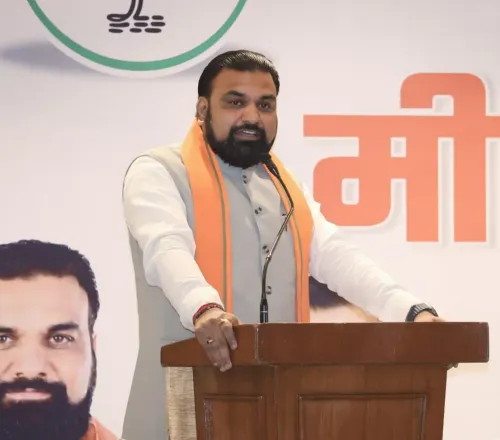
CM Samrat Choudhary hails 12 years of Modi-led infrastructure push
Synopsis
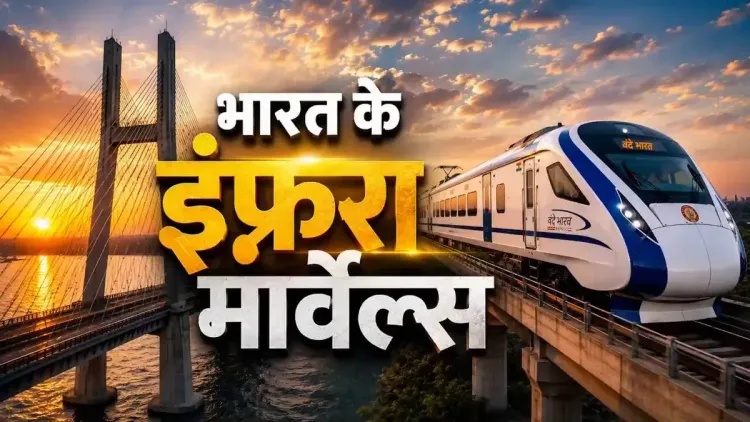
Bihar Chief Minister Samrat Choudhary marked 12 years of PM Modi's governance on June 16, 2026, listing landmark infrastructure projects — from the Zojila Tunnel and Bogibeel Bridge to Kashi Vishwanath Dham and the new Parliament building — as proof of a transformed India.
Key Takeaways
Bihar CM Samrat Choudhary posted on June 16, 2026 to mark 12 years of PM Modi's governance under the hashtag #12YearsOfNayaBharatNirman .
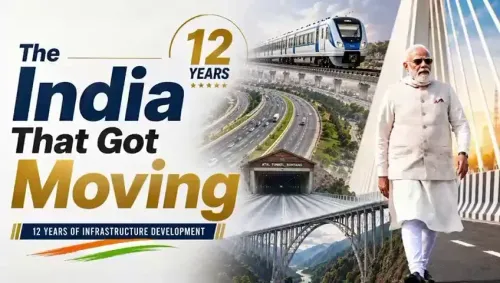
The post cites connectivity projects including the Zojila Tunnel , Bogibeel Bridge , Bhupen Hazarika Setu , Atal Setu , and multiple expressways across Uttar Pradesh .
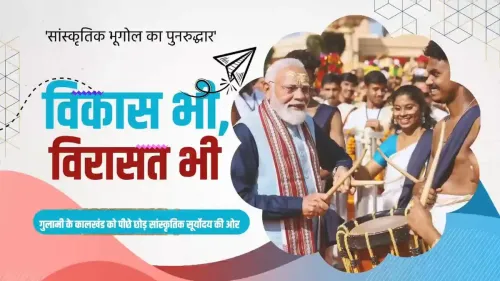
Cultural and civic landmarks named include Kashi Vishwanath Dham , Sudarshan Setu , the new Parliament building , Bharat Mandapam (host of the 2023 G20 summit ), and Yashobhoomi .
The Bharatmala Pariyojana (launched 2015 ) and the Central Vista redevelopment (approved 2019 ) underpin several projects cited.
The post frames these projects as building 'the trust of every citizen' ahead of a broader BJP anniversary messaging campaign.
Upcoming project inaugurations and the 2029 general elections are expected to keep infrastructure at the centre of BJP's political narrative.
Bihar Chief Minister Samrat Choudhary on Tuesday, June 16, 2026, took to X to mark 12 years of infrastructure development under Prime Minister Narendra Modi, citing a sweeping list of projects — from high-altitude tunnels and long-span bridges to expressways, religious corridors, and national civic landmarks — as evidence of a transformed India.
Context
Posting under the hashtag #12YearsOfNayaBharatNirman ('12 years of building a new India'), Choudhary invoked a broad range of projects to frame the occasion as a milestone in national renewal. His post names the Zojila Tunnel, Atal Setu, Bogibeel Bridge, and Bhupen Hazarika Setu alongside the Delhi-Mumbai Expressway, Ganga Expressway, Purvanchal Expressway, Bundelkhand Expressway, and the Namo Bharat rapid-rail service. He also highlights Kashi Vishwanath Dham, Sudarshan Setu, the new Parliament building, the G20 summit at Bharat Mandapam, and Yashobhoomi as 'symbolic constructions' that have 'taken the development story of a new India to new heights.'
Policy Backdrop
The projects cited span multiple flagship programmes. The Bharatmala Pariyojana, launched in 2015, anchored the expressway push, aiming to build thousands of kilometres of national corridors. The Bogibeel Bridge in Assam — India's longest rail-cum-road bridge — was opened in 2018 under the Special Accelerated Road Development Programme for the Northeast, cutting travel time between Dibrugarh and Dhemaji significantly. The Zojila Tunnel, a strategic all-weather link connecting Ladakh to the rest of India, has been a priority project given its defence and civilian importance. The Central Vista redevelopment, approved in 2019, delivered the new Parliament building — inaugurated in 2023 — and the Bharat Mandapam convention centre, which hosted the G20 Leaders' Summit in September 2023.
The Kashi Vishwanath Dham corridor in Varanasi, completed in 2021, redeveloped the precinct around the ancient Shiva temple and became a widely cited example of the government's parallel focus on cultural infrastructure. Sudarshan Setu, a signature bridge in Gujarat, and Yashobhoomi, a convention and exhibition complex in Dwarka, Delhi, round out the list of civic and symbolic landmarks the post references.
Stakeholders and Impact
The connectivity projects cited have direct implications for diverse groups. Commuters and traders in the Northeast benefit from the Bogibeel Bridge and Bhupen Hazarika Setu, which reduced isolation of the region. Residents of Ladakh and defence personnel stand to gain most from the Zojila Tunnel's all-weather access. Pilgrims visiting Varanasi and Dwarka are the primary beneficiaries of the religious-corridor and infrastructure upgrades. Expressway networks across Uttar Pradesh — including the Purvanchal and Bundelkhand corridors — have improved freight movement and reduced road fatalities on those stretches.
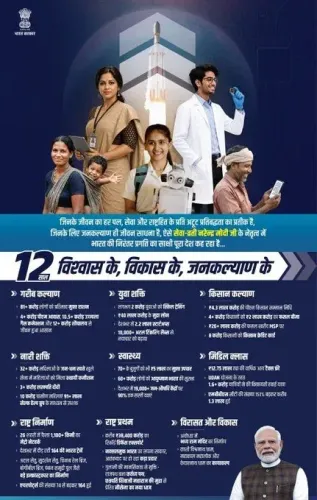
The post's framing is explicitly political, positioning these projects as evidence that Modi's leadership has built 'the foundation of the trust of every citizen' (jann-jann ke vishwas ka aadhar). As a senior BJP leader in Bihar — a state that has itself received significant national highway investment — Choudhary is amplifying a party-wide messaging exercise tied to the 12-year anniversary of the Modi government.
What's Next
With the 2029 general elections on the horizon, the BJP is expected to intensify the narrative of infrastructure delivery as a core electoral argument. Several Himalayan tunnel projects and expressway stretches remain under construction, and upcoming inaugurations are likely to be used as political milestones. Bihar itself awaits key road and river-bridge projects that could feature in future messaging by CM Choudhary. How opposition parties counter this infrastructure narrative — and whether project timelines and quality hold up to scrutiny — will shape the political conversation in the months ahead.
Point of View
Emotionally resonant anniversary narrative. By spanning the Himalayas, the Northeast, the Gangetic plains, and national civic symbols in one sweep, the post is designed to project geographic and sectoral breadth rather than granular delivery data. As a Bihar CM with his own state's infrastructure deficit to manage, Choudhary's amplification of national projects also serves to align his political identity with Modi's legacy ahead of the next electoral cycle. The absence of opposition voices or independent assessments in such messaging leaves the performance claims largely uncontested in the public sphere.
NationPress
16 Sept 2026
Frequently Asked Questions
What is the Zojila Tunnel and why is it important?
The Zojila Tunnel is a strategic all-weather tunnel project connecting Ladakh to the rest of India through the Zoji La mountain pass. It is important because it will provide uninterrupted road access to Ladakh even during winter when the pass is snowbound, benefiting both civilians and defence logistics.
What is #12YearsOfNayaBharatNirman?
It is a BJP hashtag campaign marking 12 years of Prime Minister Narendra Modi's government, launched around June 2026. Party leaders and supporters used it to highlight infrastructure, cultural, and governance achievements since 2014.
What is Bharat Mandapam?
Bharat Mandapam is a large convention and exhibition centre in New Delhi built as part of the Central Vista redevelopment project. It hosted the G20 Leaders' Summit in September 2023 and has since been used for major national and international events.
What infrastructure projects has the Modi government built in Northeast India?
Key projects in Northeast India include the Bogibeel Bridge in Assam — India's longest rail-cum-road bridge, opened in 2018 — and the Bhupen Hazarika Setu, also known as the Dhola-Sadiya Bridge. Both significantly improved connectivity across the Brahmaputra river and reduced travel times in the region.
Who is Samrat Choudhary?
Samrat Choudhary is the Chief Minister of Bihar and a senior leader of the Bharatiya Janata Party (BJP). He is known for his close alignment with the party's national leadership and frequently amplifies central government initiatives on social media.