Can a Robust Manufacturing Sector Elevate India's GDP Growth Above 7%?
Synopsis
Discover how a thriving manufacturing sector could significantly impact India's GDP growth, pushing it above 7%. Chief Economic Adviser V. Anantha Nageswaran shares insights on economic strategies that could lead to a more robust financial future.
Key Takeaways
Manufacturing sector growth can elevate GDP beyond 7%.
Strong exports reduce current account deficit .
Government support for indigenisation is crucial.
Strategic resilience is essential for global integration.
Banking sector strength fosters economic stability.
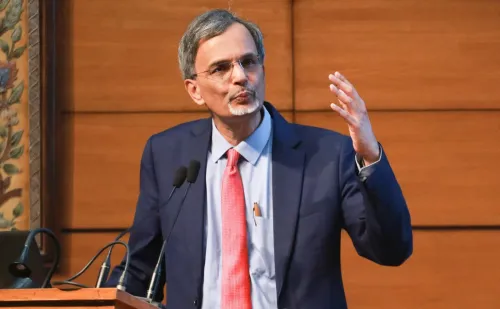
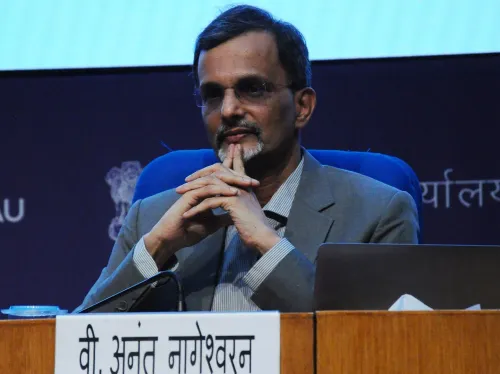
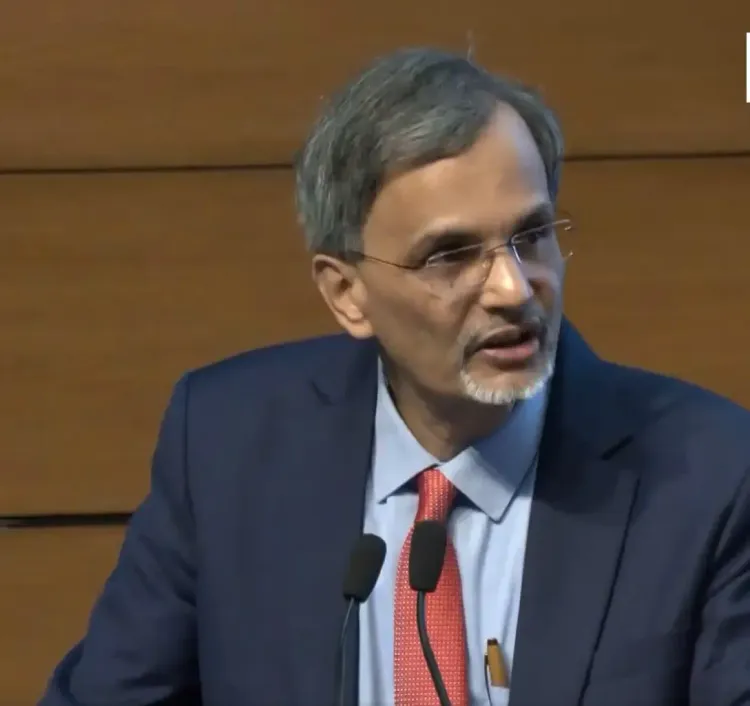
New Delhi, Jan 29 (NationPress) A robust manufacturing sector has the potential to elevate India’s medium-term economic growth to between 7.5% and 8%, surpassing the 7% forecasted in the Economic Survey, stated Chief Economic Adviser V. Anantha Nageswaran on Thursday.
During a media briefing following the presentation of the Economic Survey in Parliament, the CEA emphasized that a vigorous manufacturing sector, which enhances exports, would also mitigate the current account deficit and strengthen the rupee.
He noted that the sector is currently stable, as India’s foreign exchange reserves are strong, and he alleviated concerns regarding the rupee's depreciation.
Nageswaran pointed out that currency depreciation isn't unique to India; all nations with current account deficits experience a weakening of their currencies.
He remarked that countries like Switzerland, Japan, South Korea, and Singapore, which maintain strong manufacturing bases, are not facing currency depreciation, which boosts their exports.
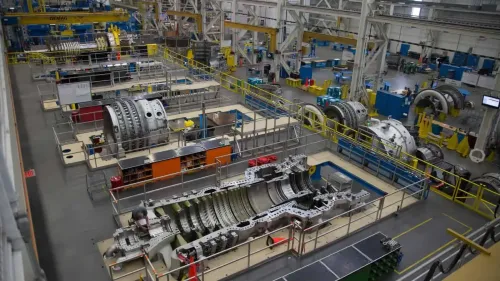
Nageswaran emphasized the necessity for India to enhance its manufacturing sector to sustain exports, which would eventually transition the current account from a deficit to a surplus, ultimately resulting in a stronger rupee.
He underscored the government’s focus on indigenisation and swadeshi as crucial for advancing manufacturing in the nation. However, he stated that industry protection should be contingent on increasing competitiveness and boosting exports—not indefinite.
Nageswaran advocated for India to aim for strategic resilience, allowing the country to endure global economic disruptions while becoming an integral part of the global supply chain.
He also highlighted the significant strengthening of India’s banking sector in recent years, with NPAs at historic lows and credit to the commercial sector growing by 29% year-on-year.
He argued that domestic demand continues to be a pillar of India’s economic growth amid global uncertainties. This robust consumption is indicative of a favorable macroeconomic environment characterized by low inflation, stable employment, and rising real purchasing power. Additionally, steady rural consumption, supported by strong agricultural performance, along with gradual improvements in urban consumption—thanks to tax rationalization—confirm that the demand for consumption is broadly based.
Point of View
It's imperative to note that a thriving manufacturing sector is not just a goal but a necessity for India's economic resilience. The focus on indigenisation and strategic resilience could position India favorably in the global market, ensuring sustained growth and stability.
NationPress
14 Oct 2026
Frequently Asked Questions
What is the projected GDP growth for India according to the Economic Survey?
The Economic Survey projects India's GDP growth at 7%.
How can the manufacturing sector affect the rupee's value?
A strong manufacturing sector can enhance exports, which helps reduce the current account deficit and strengthens the rupee.
What role does domestic demand play in India's economic growth?
Domestic demand underpins India's economic growth by providing a stable environment characterized by low inflation and rising purchasing power.