Rahul Gandhi Calls Out Delhi Police Over Jantar Mantar Detentions
Synopsis
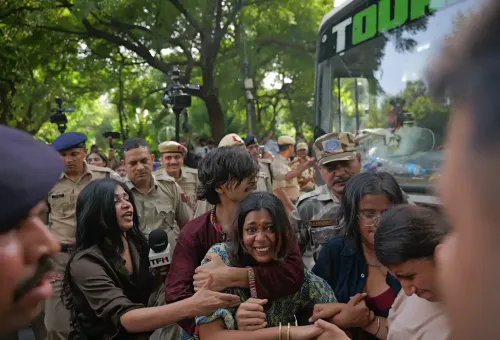
Congress leader Rahul Gandhi flagged a crackdown at Jantar Mantar on October 5, 2026, alleging hundreds detained, women protesters manhandled by male officers, and female journalists physically dragged and stripped of their cameras — framing it as a deliberate pattern of silencing women.
Key Takeaways
Hundreds of people were reportedly detained at Jantar Mantar , Delhi, on October 5, 2026 .
Female protesters alleged they were manhandled by male police personnel , which would violate Section 46 of the CrPC.
Female journalists reportedly had their cameras seized and were physically dragged at the protest site.
Gandhi framed the incidents as a deliberate, gendered pattern: silence any woman who asks questions.
Delhi Police, under the Union Home Ministry , had not publicly responded to the specific allegations at time of publication.
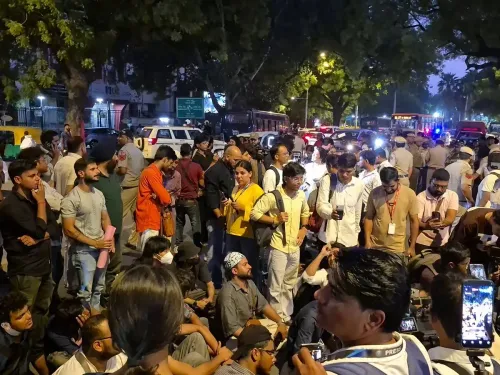
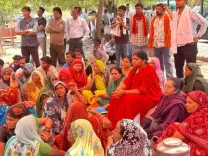
Hundreds detained, cameras snatched, women protesters alleging molestation by male constables — Congress leader Rahul Gandhi on Monday, October 5, 2026, turned the spotlight on a crackdown at Jantar Mantar, Delhi, charging that authorities are running a deliberate pattern: silence any woman who dares to ask questions.
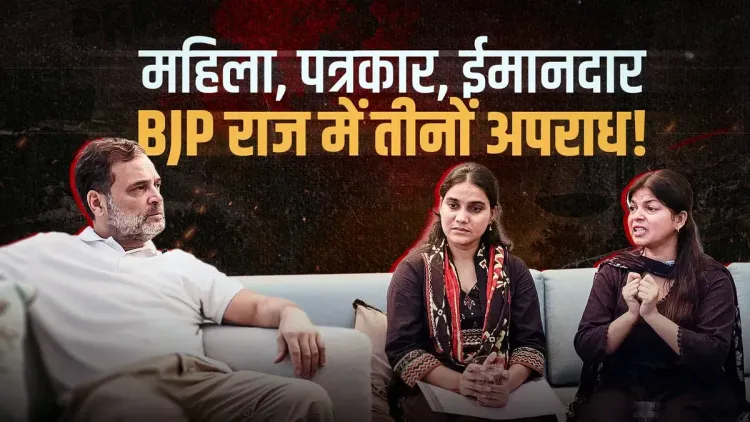
Posting in Hindi, Gandhi wrote: 'दिल्ली में इस वक़्त जो हो रहा है, उसका एक ही पैटर्न है - जो औरत सवाल पूछे, उसे चुप कराओ.' — 'What is happening in Delhi right now follows a single pattern: silence any woman who asks questions.' The post went on to cite three specific incidents at the protest site.
What Happened at Jantar Mantar
According to Gandhi's post, hundreds of people were taken into custody at Jantar Mantar. Women demonstrators alleged that male police personnel manhandled them — a charge that, if verified, would constitute a direct violation of the Code of Criminal Procedure's requirement that only female officers handle female detainees.
The post also describes female journalists having their cameras seized and being physically dragged. A video link attached to the tweet appears to document one such incident involving a journalist — though the specific identity and full context of the clip have not been independently confirmed.
Jantar Mantar as a Flashpoint
Jantar Mantar, a stone's throw from Parliament Street in central Delhi, has historically been the capital's designated open-air protest ground. It has hosted agitations ranging from farmers' marches to anti-corruption sit-ins. Police action at the site invariably draws national attention precisely because of its symbolic proximity to the legislature.
Allegations of male officers detaining or physically handling female protesters are particularly sensitive under Indian law: Section 46 of the Code of Criminal Procedure explicitly bars male officers from arresting a woman after sunset and mandates that female officers be present during any physical restraint. Similar protections extend, by convention and press-freedom norms, to journalists covering public protests.
Gandhi Frames It as a Gendered Pattern
The Leader of the Opposition did not limit his post to cataloguing incidents. His framing was pointed: the common thread running through the detentions, the alleged molestation, and the camera-snatching is gender — specifically, the suppression of women who speak or report. That framing turns a policing story into a civil-liberties argument, and positions the Opposition as the voice demanding accountability.
Delhi Police, which operates under the jurisdiction of the Union Home Ministry, had not issued a public response to the specific allegations at the time of publication.
If the accounts Gandhi cited hold up to scrutiny, the question is not just about crowd management — it is about whether constitutional protections for women and press freedom were suspended for the duration of a single protest morning in the heart of the capital.
Point of View
Alleged molestation, camera confiscation — and threading them under a single gendered narrative, he shifts the political burden onto the Home Ministry to either explain or deny. The move also reinforces a broader Opposition strategy of contesting the government's record on civil liberties and press freedom simultaneously. Whether the specific allegations are corroborated will determine whether this remains a social-media moment or escalates into a parliamentary accountability debate. The invocation of women's safety, a politically sensitive terrain for all parties, ensures the charge will not be easily dismissed.
NationPress
5 Oct 2026
Frequently Asked Questions
What happened at Jantar Mantar on October 5 2026?
According to Rahul Gandhi's post, hundreds of protesters were detained at Jantar Mantar in Delhi. Women demonstrators alleged molestation by male police officers, and female journalists reportedly had their cameras seized and were physically manhandled.
Is it legal for male police officers to detain women in India?
Under Section 46 of the Code of Criminal Procedure, male officers cannot arrest a woman after sunset, and female officers must be present during physical restraint. Allegations of male officers manhandling female detainees would, if confirmed, constitute a legal violation.
Why is Jantar Mantar significant as a protest site?
Jantar Mantar in central Delhi has historically been the capital's designated open-air protest ground, located close to Parliament. Police action there draws particular national attention because of its symbolic proximity to India's legislature.
Who controls Delhi Police?
Delhi Police falls under the jurisdiction of the Union Home Ministry, not the Delhi state government — a distinction that gives the central government direct administrative responsibility for policing in the capital.
What did Rahul Gandhi say about the pattern of detentions?
Gandhi wrote in Hindi that what is happening in Delhi 'follows a single pattern: silence any woman who asks questions,' framing the incidents as a deliberate, gendered attempt to suppress dissent and press freedom.