Section 163 imposed in New Delhi ahead of Jantar Mantar protest against CEC
Synopsis
On Gandhi Jayanti, Delhi Police shut down central Delhi with Section 163 orders and closed 11 metro station gates — all to block student groups from marching on Jantar Mantar to demand the resignation of Chief Election Commissioner Gyanesh Kumar. With 1,500 protesters reportedly undeterred and a parallel 'Jail Bharo' call in Mumbai, the standoff tests both the right to protest and the Election Commission's political insulation.
Key Takeaways
Delhi Police imposed Section 163 BNSS prohibitory orders across New Delhi district on 2 October 2026 , restricting gatherings of five or more people without permission.
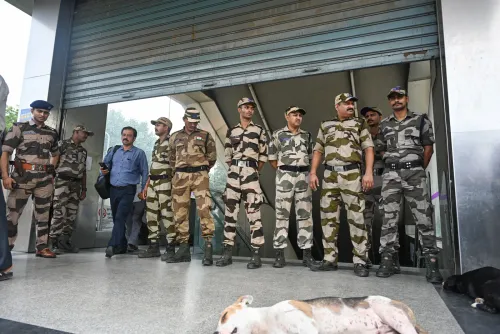
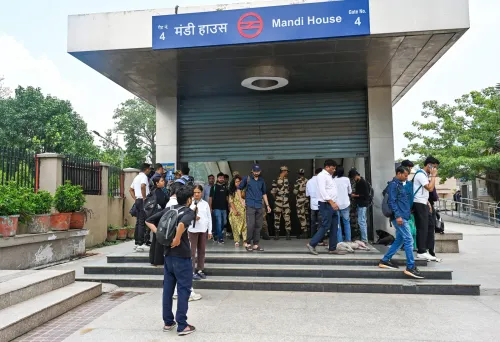
Entry and exit at 11 Delhi Metro stations — including Rajiv Chowk , New Delhi , and Mandi House — were closed until further notice.
AISA , SFI , and DYFI announced a protest demanding the resignation of Chief Election Commissioner Gyanesh Kumar over concerns about the Special Intensive Revision (SIR) exercise.
An estimated 1,500 people were expected; Delhi Police denied permission but organisations said they would proceed regardless.
A parallel 'Jail Bharo Andolan' was announced at Mumbai's Shivaji Park at 4 pm on the same day; Mumbai Police cited a 2013 Bombay High Court order barring gatherings there.
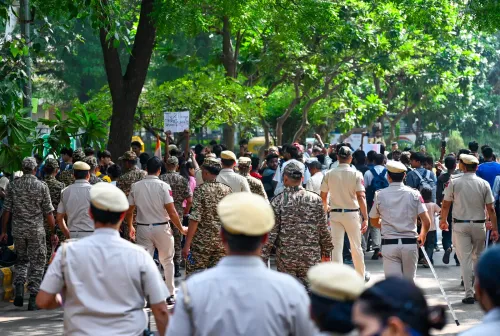
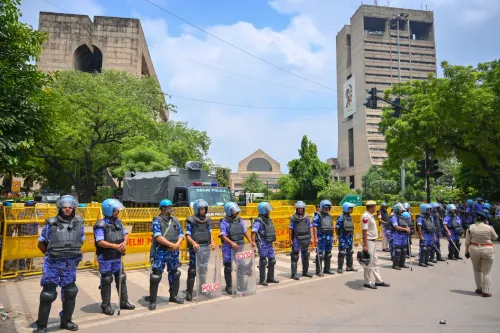
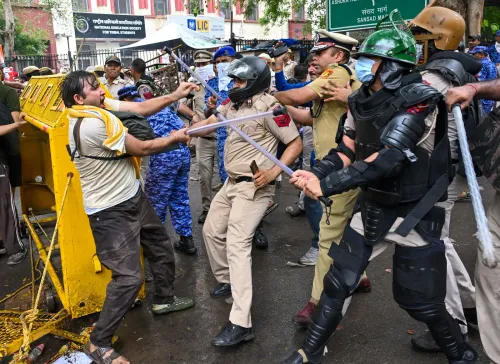
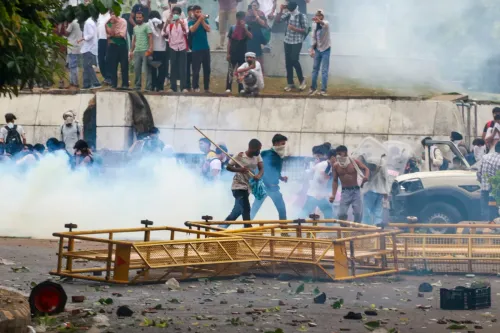
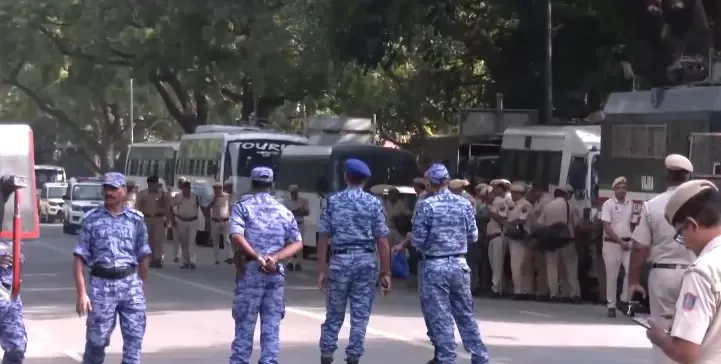
Delhi Police on Friday, 2 October imposed prohibitory orders under Section 163 of the Bharatiya Nagarik Suraksha Sanhita (BNSS) across the New Delhi district ahead of a planned protest at Jantar Mantar against Chief Election Commissioner (CEC) Gyanesh Kumar. The crackdown, which restricts gatherings of five or more people without prior written permission, comes as student and youth organisations announced their intent to march despite being denied police permission — on Gandhi Jayanti.
What the Order Restricts
The prohibitory order bars unauthorised sit-ins, processions, demonstrations, picketing, and dharnas across New Delhi district. The carrying of firearms, weapons, lathis, sticks, swords, brickbats and other potentially dangerous objects has also been prohibited. Raising slogans and delivering speeches as part of unauthorised gatherings are explicitly banned under the order.
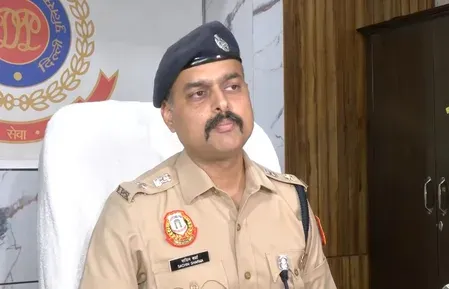
Deputy Commissioner of Police (DCP) Sachin Sharma confirmed the orders and appealed for compliance. 'Section 163 is in force in New Delhi. I would like to inform everyone that any kind of unauthorised sit-in or protest is not allowed here. Please follow the law, act lawfully and cooperate with the police,' Sharma told reporters.
Metro Services Disrupted Across Central Delhi
The Delhi Metro has curtailed entry and exit operations at several key stations until further notice, significantly disrupting commutes across central Delhi. Stations affected include Janpath, Patel Chowk, Central Secretariat, Rajiv Chowk, Seva Teerth, Mandi House, Lok Kalyan Marg, INA, Chawri Bazar, Ramakrishna Ashram Marg, and New Delhi.
Interchange facilities will continue to be available at Rajiv Chowk, Mandi House, New Delhi, and Central Secretariat stations. Security personnel and water cannons have been deployed at Jantar Mantar.
Who Is Protesting and Why
The protest has been announced by the All India Students' Association (AISA), the Students' Federation of India (SFI), and the Democratic Youth Federation of India (DYFI). The groups are demanding the resignation of CEC Gyanesh Kumar, citing concerns over the Election Commission of India's handling of electoral rolls and the Special Intensive Revision (SIR) exercise. An estimated 1,500 people are expected to participate, according to a member of one of the organisations.
Delhi Police have not granted permission for the proposed march. Despite this, the organisations have indicated they intend to proceed with the mobilisation. Notably, the protest is timed to coincide with Gandhi Jayanti, a symbolically charged choice that historically amplifies civil demonstrations in India.
Mumbai Parallel: 'Jail Bharo' Planned at Shivaji Park
In a parallel development, Abhijeet Dipke, founder of the Cockroach Janta Party (CJP) movement, announced a 'Jail Bharo Andolan' at Mumbai's Shivaji Park on 2 October at 4 pm. Dipke has claimed that Mumbai Police denied permission for the group's earlier proposed protest against CEC Kumar.
Mumbai Police, however, stated it was 'not empowered to grant permission' for a gathering at Shivaji Park, citing a 2013 Bombay High Court order, and noted that the area falls within a designated silence zone.
Broader Context
The protests reflect a growing chorus of criticism from activist and student circles over the Election Commission's conduct in the ongoing SIR exercise, which critics argue has raised questions about electoral roll accuracy. This is not the first time Jantar Mantar has been the focal point of mobilisation against an election body official, but the simultaneous invocation of Gandhi Jayanti and the scale of coordinated action across Delhi and Mumbai gives this episode added political weight. How authorities manage the situation through the day will be closely watched.
Point of View
When the optics of suppressing dissent are at their sharpest. The deeper issue is the Election Commission's credibility: the SIR exercise has generated enough unease that three national student organisations mobilised simultaneously in two cities. Mainstream coverage has focused on the security deployment; the less-examined thread is whether the Election Commission's institutional standing can absorb sustained organised opposition without a formal public accounting of the SIR process.
NationPress
2 Oct 2026
Frequently Asked Questions
What is Section 163 BNSS and why was it imposed in New Delhi?
Section 163 of the Bharatiya Nagarik Suraksha Sanhita (BNSS) empowers a district magistrate or police officer to impose prohibitory orders restricting public gatherings when a threat to public order is anticipated. It was imposed across New Delhi district on 2 October 2026 ahead of a planned protest at Jantar Mantar demanding the resignation of Chief Election Commissioner Gyanesh Kumar.
Which Delhi Metro stations are closed on 2 October 2026?
Entry and exit at eleven stations are closed until further notice: Janpath, Patel Chowk, Central Secretariat, Rajiv Chowk, Seva Teerth, Mandi House, Lok Kalyan Marg, INA, Chawri Bazar, Ramakrishna Ashram Marg, and New Delhi. Interchange facilities remain available at Rajiv Chowk, Mandi House, New Delhi, and Central Secretariat.
Why are student groups protesting against CEC Gyanesh Kumar?
AISA, SFI, and DYFI have called for the resignation of Chief Election Commissioner Gyanesh Kumar, citing concerns about the Election Commission's handling of electoral rolls and its Special Intensive Revision (SIR) exercise. The groups argue that the process raises questions about electoral roll accuracy and the Commission's impartiality.
What is the 'Jail Bharo Andolan' announced in Mumbai?
Abhijeet Dipke of the Cockroach Janta Party (CJP) movement announced a 'Jail Bharo Andolan' at Mumbai's Shivaji Park at 4 pm on 2 October 2026, also protesting against CEC Kumar. Mumbai Police stated it could not grant permission, citing a 2013 Bombay High Court order and the area's status as a silence zone.
Have the protesting organisations been given police permission?
No. Delhi Police have not granted permission for the proposed march to Jantar Mantar. Despite the denial, AISA, SFI, and DYFI have indicated they intend to proceed with the mobilisation, with around 1,500 people expected to participate according to a member of one of the organisations.