India's 7.8% Q1 growth reflects hard work of Indians, says FM Sitharaman
Synopsis
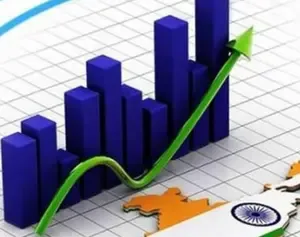
India's economy grew 7.8% in Q1 FY27 — and Finance Minister Nirmala Sitharaman used a G20 sideline interview in Asheville to frame it as validation of both grassroots hard work and structural reform. With manufacturing up 9.2%, services up 12.1%, and forex reserves above $700 billion, the numbers are strong. The real question is whether the momentum survives import-side vulnerabilities and a shifting global trade landscape.
Key Takeaways
India's economy grew 7.8 per cent in Q1 of FY 2026-27 , according to Finance Minister Nirmala Sitharaman .
Manufacturing expanded by 9.2 per cent ; financial and professional services grew by 12.1 per cent .
India's foreign exchange reserves stood at slightly over $700 billion .
More than 1,000 archaic laws removed and around 40,000 regulations simplified to ease business.
Sitharaman held bilateral talks with US Treasury Secretary Scott Bessent and counterparts from Poland, Qatar, South Korea , and Russia .
She is scheduled to meet prospective investors in New York after completing G20 engagements in Asheville .
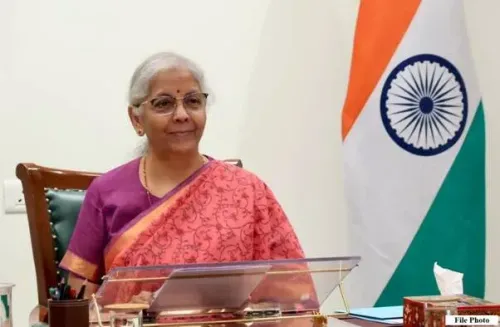
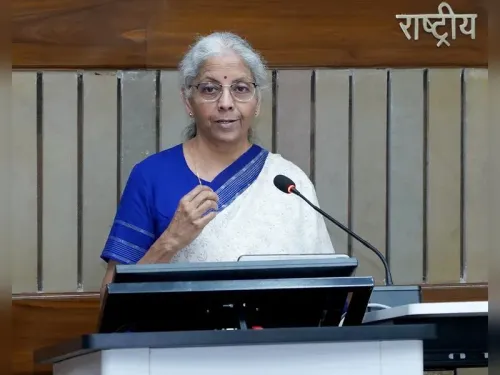
Finance Minister Nirmala Sitharaman on 1 September said India's 7.8 per cent economic growth in the first quarter of financial year 2026-27 reflects the hard work of its people and the expanding strength of its manufacturing and services sectors. Speaking on the sidelines of the G20 Finance Ministers' meeting in Asheville, she described the latest estimates as evidence of broad-based momentum across the economy.
Key Growth Numbers
Sitharaman cited manufacturing growth of 9.2 per cent and an expansion of 12.1 per cent in the financial and professional services sector during the quarter. India's foreign exchange reserves stood at slightly over $700 billion, she added.
'So across the board, growth is really clearly showing that Indians are working hard and taking the economy forward,' she said.
Viksit Bharat 2047 Vision
The Finance Minister linked the quarterly performance to the government's longer-term ambition. 'Prime Minister Modi has given us the Viksit Bharat goal for 2047. If every quarter Indians are able to lift the Indian economy like this, I'm sure clearly by 2047, the goal will be achieved,' she said.
Sitharaman attributed the economy's resilience to reforms undertaken across government departments, ministries, and the financial sector. She also highlighted India's digital public infrastructure — including UPI, NPCI, and QR codes — as a key enabler that has allowed small, micro, and medium enterprises to access global markets.
Challenges Acknowledged
Sitharaman acknowledged that India remains exposed to import dependence in crude oil, petroleum products, and fertilisers such as urea, ammonia, and DAP. She nevertheless described India as 'an economy which is receptive to the changes globally and adjusts itself in such a way that our growth does not get affected.'
She also credited state governments for easing the business environment, noting that more than 1,000 archaic laws had been removed and around 40,000 regulations simplified. The government, she said, continues to engage with industry and pursue bilateral trade and investor protection agreements.
G20 Deliberations and Bilateral Meetings
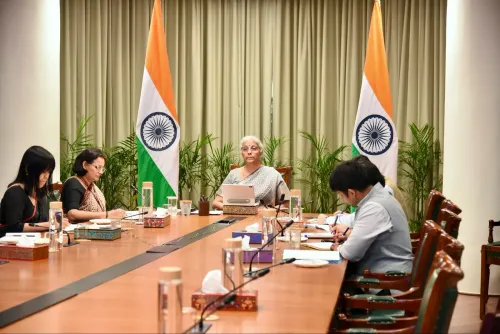
On the G20 financial track, Sitharaman said India supports the priorities advanced by the US presidency, including economic growth, addressing global imbalances, and financial literacy. She held a bilateral meeting with US Treasury Secretary Scott Bessent, describing it as 'very positive' and 'constructive.'
She also met counterparts from Poland, Qatar, South Korea, and Russia, saying all parties had facts about India's economy and were looking to deepen ties. Earlier in her overseas tour, Sitharaman visited Canada — where she met her Canadian counterpart and held discussions with pension funds interested in investing in India — and Chicago, where she engaged funding agencies and visited the Polsky Center for Entrepreneurship and Innovation.
After Asheville, she is scheduled to travel to New York to meet prospective investors. The government, she said, will continue reforms in customs and banking, including measures to make import clearances at Indian ports more seamless.
Point of View
But Sitharaman's framing — crediting 'hard work of Indians' — risks obscuring the structural questions that the number alone cannot answer. Manufacturing at 9.2 per cent is encouraging, yet India's share of global manufacturing exports remains modest relative to its GDP ambitions. The import-dependence on crude, fertilisers, and energy is not a footnote; it is a structural vulnerability that any external shock can activate rapidly. The Viksit Bharat 2047 target requires sustained double-digit growth trajectories that no economy of India's size has maintained for two decades — a point that deserves more than optimism from the sidelines of a G20 meeting.
NationPress
16 Oct 2026
Frequently Asked Questions
What was India's GDP growth rate in Q1 FY 2026-27?
India's economy grew at 7.8 per cent in the first quarter of financial year 2026-27, according to Finance Minister Nirmala Sitharaman. She described the growth as broad-based, covering manufacturing, financial services, and professional services.
How did India's manufacturing sector perform in Q1 FY27?
India's manufacturing sector grew by 9.2 per cent in Q1 FY27, while the financial and professional services sector expanded by 12.1 per cent . Sitharaman cited these figures as evidence of the economy's broad-based strength.
What did FM Sitharaman say about the Viksit Bharat 2047 goal?
Sitharaman said that if India sustains quarterly growth at this pace, the Viksit Bharat 2047 development goal set by Prime Minister Modi will be achievable. She described the Q1 performance as consistent with that long-term trajectory.
What challenges did Sitharaman acknowledge for the Indian economy?
The Finance Minister acknowledged India's continued dependence on imported crude oil, petroleum products, and fertilisers including urea, ammonia, and DAP as key vulnerabilities. She said the government would work to position India advantageously whenever such challenges arise.
Who did FM Sitharaman meet on the sidelines of the G20 Finance Ministers' meeting?
Sitharaman held a bilateral meeting with US Treasury Secretary Scott Bessent, which she described as 'very positive' and 'constructive.' She also met counterparts from Poland, Qatar, South Korea, and Russia, all of whom expressed interest in deepening ties with India.