India GDP grows 7.7% in FY26: FM Sitharaman vows to keep 'Reform Express' on track
Synopsis
India's FY26 GDP clocked 7.7% growth — with Q4 accelerating to 7.8% — and Finance Minister Sitharaman is doubling down, pledging to keep the 'Reform Express' moving. Double-digit sectoral growth across manufacturing, financial services, and trade signals this isn't a one-sector story, but the real test is whether private investment can sustain the pace once public capex plateaus.
Key Takeaways
India's real GDP grew 7.7 per cent in FY 2025-26 , with real GVA rising 7.9 per cent .
Q4 FY26 (January–March) GDP growth stood at 7.8 per cent , accelerating from the full-year average.
The secondary sector grew 8.8 per cent ; the tertiary sector expanded 9.9 per cent .
Manufacturing, financial services, real estate, trade, transport, and communication all recorded double-digit growth in FY26.
Both private consumption and gross fixed capital formation grew more than 7.5 per cent , backed by domestic demand and infrastructure spending.
FM Sitharaman reaffirmed the government's commitment to the 'Reform Express' on 5 June 2025 .
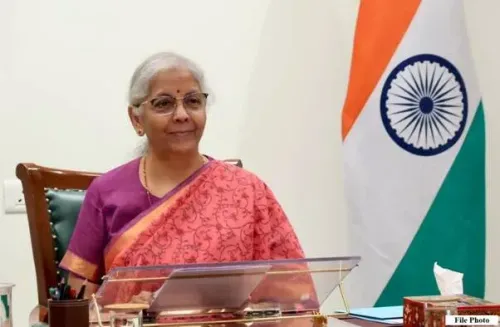
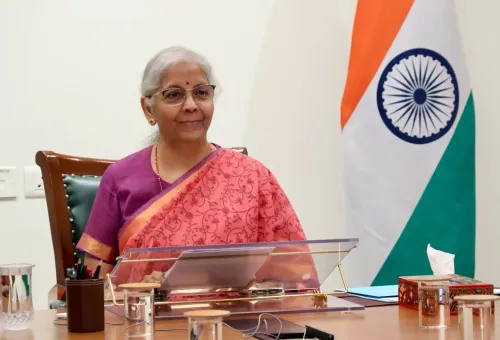
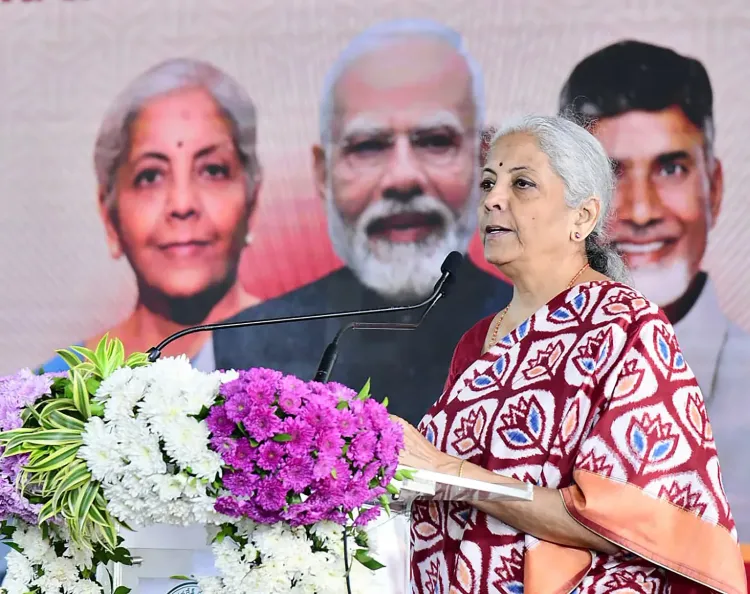
Finance Minister Nirmala Sitharaman on Friday, 5 June reaffirmed the Modi government's commitment to sustaining India's economic momentum, declaring that the administration would continue to drive the 'Reform Express' with decisive policy action even as global headwinds persist. Her remarks followed official data showing India's economy delivered one of its strongest annual performances in recent years.
GDP Figures at a Glance
According to data released by the Ministry of Statistics, India's real GDP expanded by 7.7 per cent in FY 2025-26, while real Gross Value Added (GVA) rose by 7.9 per cent for the full fiscal year. In the final quarter — January–March (Q4 FY26) — real GDP growth accelerated to 7.8 per cent and GVA growth held at 7.9 per cent, signalling that momentum strengthened rather than faded as the year closed.
Sectors Driving the Expansion
The growth was notably broad-based. The secondary sector recorded 8.8 per cent growth, while the tertiary sector expanded by 9.9 per cent during the fiscal year. Sitharaman specifically highlighted that manufacturing, trade, repair, hotels, transport, communication, broadcasting-related services, storage, financial services, real estate, and professional services all attained double-digit growth at both constant and current prices — a signal of breadth, not just headline strength.
On the demand side, both private final consumption expenditure and gross fixed capital formation grew by more than 7.5 per cent, supported by sustained domestic consumption and large-scale infrastructure investment. Agriculture, construction, and services also contributed to the overall expansion, according to earlier official assessments.
Government's Infrastructure Push
A significant portion of the growth momentum has been attributed to stepped-up public capital expenditure on highways, railways, ports, and airports. This infrastructure spending has not only directly supported economic activity but has also bolstered private investment sentiment — a transmission channel the government has consistently leaned on since FY 2021-22.
What the Finance Minister Said
'Our government led by PM Narendra Modi is committed to further drive the 'Reform Express' with decisive policy measures to ensure positive economic momentum amidst the global challenges,' Sitharaman said. She added that the double-digit sectoral growth figures at both constant and current prices underscored the resilience of India's structural reform agenda.
What Comes Next
With global trade uncertainty and elevated interest rate environments in advanced economies still presenting external risks, the government's stated focus on domestic demand drivers and capital formation will be closely watched by markets and multilateral institutions alike. The FY 2025-26 growth print positions India as one of the fastest-growing major economies in the world, though sustaining the 7-plus per cent trajectory into FY 2026-27 will depend on the pace of private investment picking up the baton from public spending.
Point of View
But the composition matters as much as the headline. Public capex on highways, railways, and ports has done the heavy lifting — private investment has been a lagging, not a leading, indicator of this cycle. The double-digit sectoral growth figures are encouraging, but several of those sectors, including real estate and financial services, are sensitive to interest rate conditions that India does not fully control. Sitharaman's 'Reform Express' framing is politically resonant, yet the next leg of growth will require private capital to accelerate, not just follow. If the Centre begins fiscal consolidation in FY27, the question of who replaces government spending as the primary growth engine becomes urgent.
NationPress
26 Sept 2026
Frequently Asked Questions
What is India's GDP growth rate for FY 2025-26?
India's real GDP grew by 7.7 per cent in FY 2025-26, according to data released by the Ministry of Statistics. Real GVA for the same period rose by 7.9 per cent, reflecting broad-based expansion across sectors.
What did Finance Minister Sitharaman say about the economy?
Finance Minister Nirmala Sitharaman said the Modi government is committed to continuing the 'Reform Express' with decisive policy measures to sustain positive economic momentum despite global challenges. She highlighted double-digit sectoral growth in manufacturing, financial services, and trade as evidence of structural strength.
Which sectors recorded double-digit growth in FY26?
Manufacturing, trade, repair, hotels, transport, communication, broadcasting-related services, storage, financial services, real estate, and professional services all recorded double-digit growth at both constant and current prices in FY 2025-26.
How did India's economy perform in Q4 FY26?
In the January–March quarter of FY 2025-26, real GDP growth stood at 7.8 per cent and GVA growth was estimated at 7.9 per cent, indicating that economic momentum strengthened in the final quarter of the fiscal year.
What drove India's GDP growth in FY 2025-26?
Growth was driven by strong performance in agriculture, construction, and services, alongside robust private consumption and gross fixed capital formation — both of which grew more than 7.5 per cent. Large-scale government infrastructure spending on highways, railways, ports, and airports also played a significant role.