Sitharaman slams Rahul Gandhi's 'dead economy' remark at G20 meet

Synopsis
At the G20 Finance Ministers’ meeting in Asheville, Finance Minister Nirmala Sitharaman fired back at Rahul Gandhi’s ‘dead economy’ label, citing 7.8% GDP growth, 9.2% manufacturing expansion, and $700 billion in forex reserves — and questioned why Congress’s own in-house economists were not pushing back on the characterisation.
Key Takeaways
Finance Minister Nirmala Sitharaman rebuked Rahul Gandhi on 1 September for calling India a ‘dead economy’.
India recorded 7.8 per cent GDP growth in Q1 of 2026-27 ; manufacturing rose 9.2 per cent and financial services 12.1 per cent .
Foreign exchange reserves stood at approximately $700 billion .
Sitharaman said criticism of the government must not ‘undermine the hard work of Indian citizens’.
More than 1,000 laws removed and about 40,000 regulations simplified under the current government, she noted.
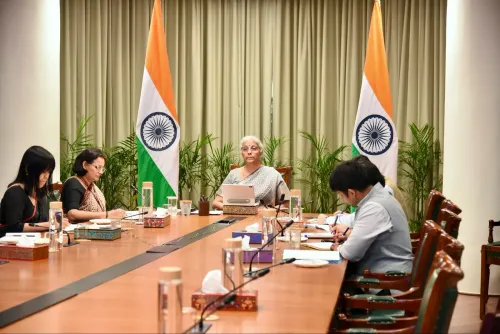
The Finance Minister is in Asheville for the G20 Finance Ministers’ meeting , with bilateral and investor meetings also scheduled.
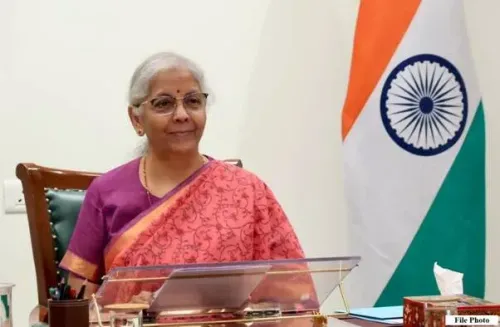
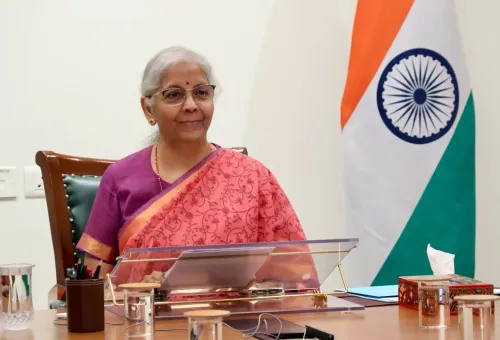
Finance Minister Nirmala Sitharaman on 1 September sharply rebuked Congress leader Rahul Gandhi for repeatedly calling India a “dead economy”, arguing the characterisation undermines the efforts of Indian citizens at a time when the country posted 7.8 per cent GDP growth in the first quarter of 2026-27. Sitharaman made the remarks on the sidelines of the G20 Finance Ministers’ meeting in Asheville, United States.
Sitharaman’s Rebuke
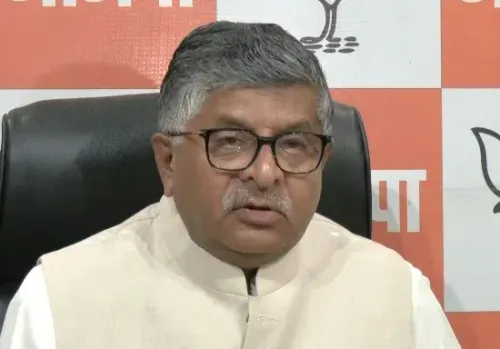
“With these kinds of growth numbers consistently, it is such an odd thing that the Leader of Opposition, Shri Rahul Gandhi, constantly refers to the Indian economy as a dead economy,” the Finance Minister said. “It just shows poorly as to how he undermines the hard work of the Indian citizens.”
Sitharaman was careful to distinguish between legitimate opposition and what she described as disparagement of citizens. She acknowledged that questioning the ruling party was “only right” in a democracy, but insisted that criticism of the government should not erase the contribution of ordinary Indians to the country’s economic performance.
The Economic Numbers Behind the Argument
India’s economy is estimated to have grown by 7.8 per cent in Q1 of 2026-27. Manufacturing expanded by 9.2 per cent, while the financial and professional services sector surged 12.1 per cent. Foreign exchange reserves stood at approximately $700 billion. “These are not ordinary numbers,” Sitharaman said, attributing the performance to citizens rising to meet personal aspirations and the broader goal of Viksit Bharat 2047.
The Finance Minister expressed confidence that first-quarter momentum would sustain through the financial year, crediting structural reforms under the Modi government — including the removal of more than 1,000 laws and simplification of about 40,000 regulations — as well as cooperation from state governments.
On Congress’s Economic Advisers
When asked whether Gandhi’s remarks reflected a lack of economic understanding or political intent, Sitharaman pointed to the presence of professional economists within Congress. “I thought there are quite a few economists within the Congress party who form an economic advisory group,” she said. “I am sure they can’t be denying the facts, but for political purposes, if you want to talk ill of the Indian economy at a time when people are really doing well… that doesn’t undermine the overall good story.”
She added that while there were areas where performance could be improved, those shortcomings did not negate consistently strong quarterly figures. “To deny that fact and to speak the opposite of it — it can’t go on for too long,” she said.
Sitharaman’s G20 Schedule
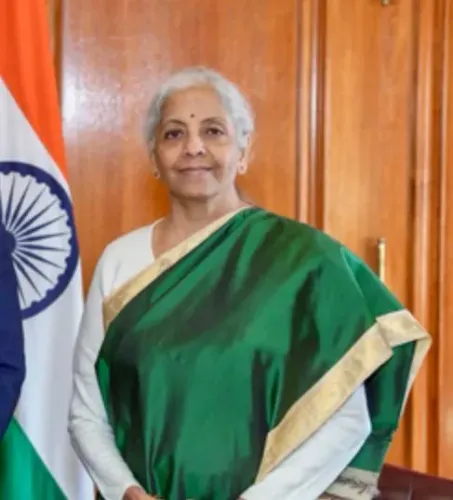
The Finance Minister is attending the G20 Finance Ministers’ meeting in Asheville and is also holding bilateral discussions with participating nations. Her broader North America visit includes meetings with international investors in Canada and the United States. The remarks come as India seeks to consolidate its standing as one of the world’s fastest-growing major economies ahead of the next G20 summit cycle.
Point of View
Rather than a point-by-point rebuttal of Gandhi’s specific concerns, suggests the government is more comfortable on the macro scoreboard than on granular issues like unemployment and consumption stress. Notably, she conceded there are ‘areas where performance could be improved’ — a rare qualifier that mainstream coverage largely glossed over. The sharper question is whether headline GDP numbers are translating into broad-based welfare gains, which is precisely the terrain Gandhi’s ‘dead economy’ framing is designed to contest.
NationPress
16 Oct 2026
Frequently Asked Questions
What did Nirmala Sitharaman say about Rahul Gandhi’s ‘dead economy’ remark?
Finance Minister Nirmala Sitharaman said Gandhi’s repeated description of India as a ‘dead economy’ ‘shows poorly’ and undermines the hard work of Indian citizens. She made the remarks on 1 September on the sidelines of the G20 Finance Ministers’ meeting in Asheville, citing India’s 7.8 per cent GDP growth in Q1 of 2026-27.
What are India’s latest GDP growth figures?
India’s economy is estimated to have grown by 7.8 per cent in the first quarter of 2026-27. Manufacturing expanded 9.2 per cent and the financial and professional services sector grew 12.1 per cent. Foreign exchange reserves stood at approximately $700 billion.
Did Sitharaman say all opposition criticism is wrong?
No. Sitharaman explicitly said questioning the ruling party is ‘only right’ in a democracy and that a strong opposition is necessary. Her objection was specifically to characterising the entire economy as ‘dead’ in a way she argued disregards citizens’ contributions.
Why did Sitharaman mention Congress’s in-house economists?
When asked if Gandhi’s remarks reflected a lack of economic understanding, Sitharaman noted that Congress has an economic advisory group of professional economists. She implied they could not credibly deny the growth data, suggesting the ‘dead economy’ framing was driven by political calculation rather than economic analysis.
Where is Finance Minister Sitharaman and why?
Sitharaman is in Asheville, United States, for the G20 Finance Ministers’ meeting. Her North America trip also includes bilateral discussions with participating nations and meetings with international investors in Canada and the United States.