Sitharaman in Bengaluru: India fastest growing economy quarter after quarter, IMF agrees
Synopsis
Finance Minister Nirmala Sitharaman took the Opposition head-on in Bengaluru, citing IMF validation and a string of welfare numbers to argue that India's economic trajectory is intact — and that Rahul Gandhi's repeated 'disaster' warnings risk manufacturing a false crisis in public perception. Her Karnataka funding data, showing a fivefold jump in tax devolution since 2014, adds a sharp fiscal dimension to an already heated Centre-state standoff.
Key Takeaways
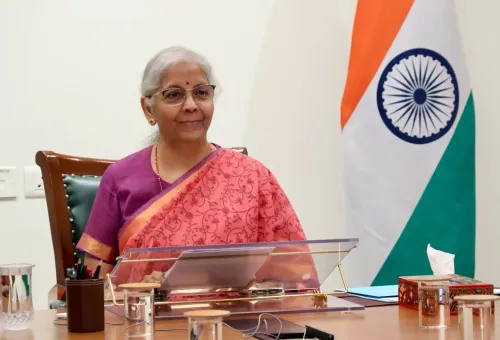
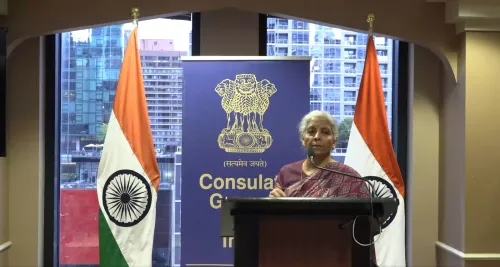
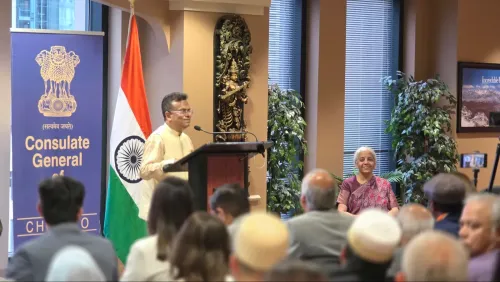
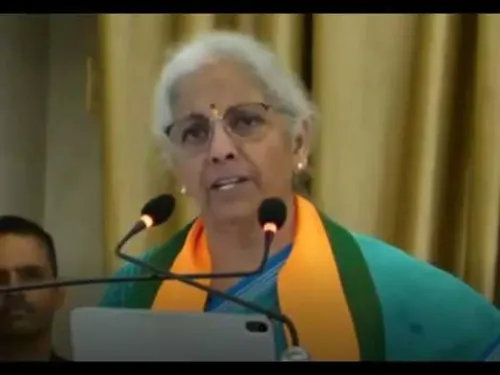
Finance Minister Nirmala Sitharaman addressed the BJP's 'Viksit Bharat' event in Bengaluru on 14 June .
She asserted India is the world's fastest-growing major economy , citing GDP data and the IMF .
Extreme poverty reportedly fell from 29.17% in 2013-14 to about 11.28% ; 25 crore Indians lifted out of multidimensional poverty.
India now has 58 crore Jan Dhan accounts , 144 crore Aadhaar identities , and 125 crore mobile connections .
Tax devolution to Karnataka between 2014 and 2026 was approximately ₹4 lakh crore — five times the pre-2014 figure of ₹82,000 crore .
Sitharaman warned that sustained Opposition criticism risks creating a false perception about India's economic health.
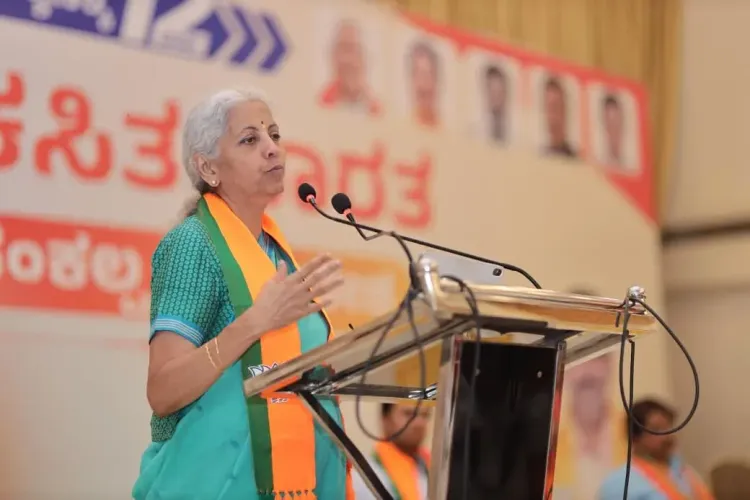
Union Finance Minister Nirmala Sitharaman on Sunday, 14 June pushed back sharply against Opposition criticism of India's economic record, asserting that quarter after quarter, year after year, India has remained the world's fastest-growing major economy — a position she said is backed not by government claims alone but by GDP data and the International Monetary Fund (IMF). Sitharaman was speaking at the Bharatiya Janata Party (BJP)'s 'Viksit Bharat' event in Bengaluru.
Direct Rebuttal of Rahul Gandhi
The Finance Minister directly named Lok Sabha Leader of the Opposition Rahul Gandhi, accusing him of repeatedly predicting economic disaster for India. 'The Leader of the Opposition and his party try to make people believe that India is in trouble,' she said, adding that no such disaster was on the horizon. Sitharaman warned that sustained criticism of this nature risks creating a 'false perception among citizens about the country's economic condition.'
She noted that even amid escalating tensions in West Asia and disruptions around the Strait of Hormuz, India had continued to advance economically — a pointed counter to Congress's framing of the government as unprepared for global shocks.
Geopolitical Headwinds and Fuel Supply
Sitharaman offered a detailed account of how geopolitical instability ripples through the Indian economy beyond headline crude prices. 'These challenges affect not only crude oil prices and LPG prices but global shipping as well. Shipping companies hesitate to send vessels through conflict zones. Insurance premiums increase because ships risk being attacked. Whether a vessel is empty or carrying crude oil, insurance costs rise significantly, and those costs ultimately have to be paid to ensure supplies reach the country,' she explained.
Despite these pressures, she credited the Narendra Modi government with ensuring 'uninterrupted supplies of petroleum products' throughout the period of global turbulence.
Poverty Reduction and Welfare Milestones
The Finance Minister cited a raft of social indicators to underline the BJP's 12-year governance record under Prime Minister Modi. According to her, 25 crore Indians have been lifted out of multidimensional poverty, with extreme poverty declining from 29.17% in 2013-14 to approximately 11.28% at present. She also pointed to the construction of 12 crore household toilets under rural sanitation programmes, achieving what she described as near-universal coverage.
On digital financial inclusion, Sitharaman highlighted that India now has 58 crore Jan Dhan accounts, 144 crore Aadhaar identities, and 125 crore mobile connections, with the Unified Payments Interface (UPI) emerging as a global benchmark for digital transactions. She attributed these gains to the JAM trinity — Jan Dhan, Aadhaar, and Mobile — as the backbone of direct benefit delivery.
Karnataka Funding: Centre's Counter to State Claims
Sitharaman also took aim at the Karnataka state government's repeated assertion that the Centre has shortchanged the state on fiscal transfers. She cited specific figures: tax devolution to Karnataka between 2014 and 2026 amounted to approximately ₹4 lakh crore — five times the ₹82,000 crore received in the comparable pre-2014 period. Grants-in-aid during the same period stood at around ₹2.71 lakh crore, with the state additionally receiving more than ₹18,000 crore under the Centre's 50-year interest-free loan scheme.
The remarks signal a sharpening of the Centre-state fiscal debate ahead of what is expected to be a politically charged budget cycle, with Karnataka's Congress government and the Union government locked in a prolonged dispute over revenue sharing.
Point of View
At a BJP event in Congress-governed Karnataka, was deliberate. The welfare numbers she cited are real, but the government's own Economic Survey has flagged that job quality and wage growth have not kept pace with headline GDP. The Karnataka funding data is striking if accurate, yet the state government's grievance centres on the formula of devolution, not the absolute number — a distinction the Finance Minister did not address. Meanwhile, invoking the IMF as a validator works domestically, but the Fund has also flagged India's fiscal consolidation path and data transparency as areas needing attention. The full picture is more textured than either side is presenting.
NationPress
13 Sept 2026
Frequently Asked Questions
What did Finance Minister Nirmala Sitharaman say about India's economy at the Bengaluru event?
Sitharaman said India has been the world's fastest-growing major economy quarter after quarter and year after year, citing GDP figures and IMF assessments. She made the remarks at the BJP's 'Viksit Bharat' event in Bengaluru on 14 June, directly countering Opposition leader Rahul Gandhi's criticism of the government's economic record.
Why did Sitharaman target Rahul Gandhi in her speech?
Sitharaman accused Gandhi of repeatedly predicting economic disaster for India and said such criticism risks creating a false public perception about the country's economic condition. She argued that data — not government claims — demonstrates India's growth leadership.
What welfare achievements did Sitharaman highlight under the Modi government?
She cited the lifting of 25 crore Indians out of multidimensional poverty, a fall in extreme poverty from 29.17% in 2013-14 to about 11.28%, construction of 12 crore household toilets, and the expansion of Jan Dhan accounts to 58 crore. She also pointed to 144 crore Aadhaar identities and 125 crore mobile connections as pillars of direct benefit delivery.
How did Sitharaman respond to Karnataka's claim that the Centre is not giving it its due share?
She said tax devolution to Karnataka between 2014 and 2026 amounted to approximately ₹4 lakh crore — five times the ₹82,000 crore received in the comparable pre-2014 period. She also cited ₹2.71 lakh crore in grants-in-aid and over ₹18,000 crore under the Centre's 50-year interest-free loan scheme.
What did Sitharaman say about the impact of West Asia tensions on India?
She said geopolitical instability in West Asia and disruptions near the Strait of Hormuz have raised shipping insurance costs and complicated global supply chains, not just crude and LPG prices. Despite these headwinds, she credited the Modi government with ensuring uninterrupted petroleum product supplies to India.