FM Sitharaman: States key to India's 7.8% growth amid global headwinds
Synopsis
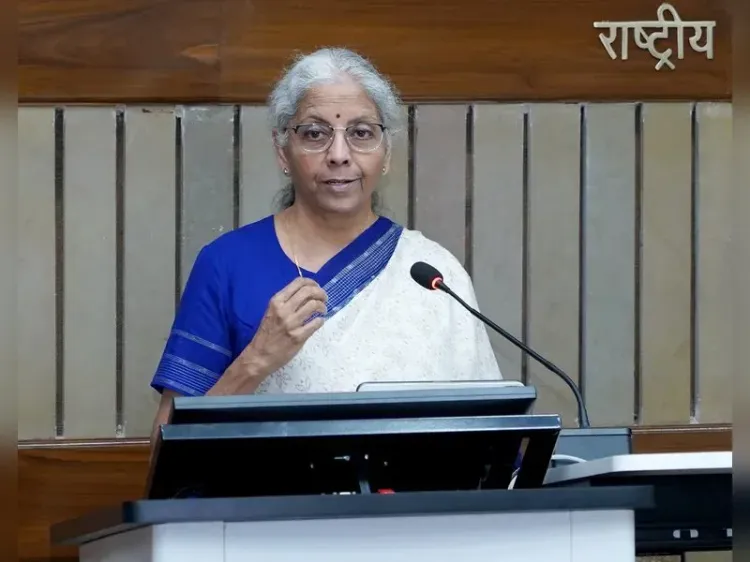
India grew at 7.8% in Q1 FY27 — with manufacturing surging 9.2% and forex reserves near $700 billion — and Finance Minister Nirmala Sitharaman says the unsung driver is Centre-state cooperation on regulatory reform. Over 1,000 laws scrapped, 40,000 regulations simplified: the compliance overhaul is now a core part of India's resilience story.
Key Takeaways
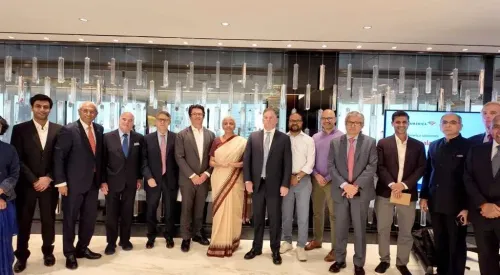
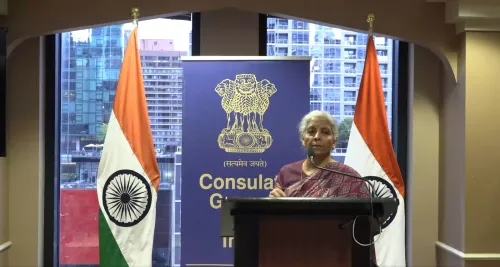
Finance Minister Nirmala Sitharaman credited state governments and compliance reforms for India's economic resilience at the G20 Finance Ministers' meeting in Asheville on 1 September .
India's GDP grew at 7.8% in the first quarter of FY 2026-27 , with manufacturing up 9.2% and financial and professional services up 12.1% .
The government has removed over 1,000 laws and simplified 40,000 regulations to ease compliance burdens.
India's foreign exchange reserves stood at approximately $700 billion .
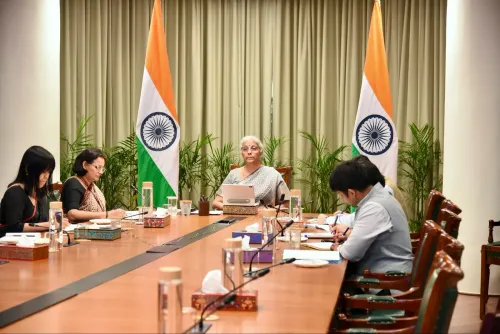
Sitharaman held bilateral meetings with counterparts from the US , Poland , Qatar , South Korea , and Russia on the sidelines of the G20 meet.
Finance Minister Nirmala Sitharaman has credited state governments, reduced compliance burdens, and sustained industry engagement as the pillars behind India's resilient economic performance, even as global pressures continue to mount. Speaking on the sidelines of the G20 Finance Ministers' meeting in Asheville on 1 September, she said the Centre-state partnership had been instrumental in sustaining momentum.
States as Growth Partners
'I think together with the states, I will also credit the states, many of them who have come forward to make doing business a bit easier,' Sitharaman said. The Finance Minister emphasised that several state governments had proactively aligned with the Centre's ease-of-doing-business agenda, a convergence that she argued was rare and consequential.
This comes amid a broader push by the Union government to devolve reform implementation to the state level, recognising that ground-level regulatory friction often originates in state jurisdictions rather than at the Centre.
Compliance Overhaul: Over 1,000 Laws Removed
Sitharaman outlined the scale of the regulatory cleanup undertaken by the government. 'We have reduced a lot of compliance burden on the citizens, whether it is by reforming the Acts, by simplifying the regulations, and also by removing archaic laws,' she said.
'Over a thousand laws have been removed, 40,000 regulations have been simplified,' she added. The government has also maintained regular consultations with companies and trade bodies — 'Constantly, we are engaging with the industry, with businesses, with trade' — as part of its effort to keep policy responsive to market realities.
Trade Pacts and Investor Confidence
The Finance Minister pointed to bilateral trade agreements and a new push on investor protection agreements as further signals of India's outward economic orientation. 'The way in which bilateral trade agreements are being signed, we are now pushing ahead with investor protection agreements as well,' she said.
She also cited FCNR (Foreign Currency Non-Resident) bank deposits and investments by the Indian diaspora as concrete indicators of confidence in the country's financial system. 'The trust that people have in the Indian banking system and in the Indian macroeconomic indicators is clearly telling us the positive story,' Sitharaman said. India's foreign exchange reserves stood at approximately $700 billion at the time of the meeting.
7.8% First-Quarter Growth Despite External Shocks
India recorded 7.8% GDP growth in the first quarter of the 2026-27 financial year, a figure Sitharaman described as particularly meaningful given the external environment. 'Despite these global challenges, if the Indian economy is still growing at 7.8% in the first quarter of this financial year, 2026-2027, it is heartening that the people's hard work is bearing fruit,' she said.
Manufacturing expanded by 9.2% during the quarter, while financial and professional services grew by 12.1%. The Finance Minister expressed confidence that India could sustain comparable growth in subsequent quarters, calling the first-quarter print a strong foundation for the full year.
Bilateral Engagements at G20
On the sidelines of the Asheville meeting, Sitharaman held bilateral discussions with counterparts from the United States, Poland, Qatar, South Korea, and Russia. The breadth of these engagements reflects India's positioning as a key interlocutor across both Western and non-Western economic blocs at a time of heightened geopolitical fragmentation.
With the global outlook remaining uncertain, the Finance Minister's remarks signal that New Delhi intends to lean further into domestic reform and bilateral deal-making as buffers against external volatility.
Point of View
000 laws and simplifying 40,000 regulations are process metrics, not outcome metrics. The more telling question is whether business formation rates, FDI inflows, and MSME credit access have moved in tandem. The 7.8% Q1 print is impressive, but with global headwinds 'not dying down,' as Sitharaman herself acknowledged, the durability of that number depends on whether domestic demand can compensate for export softness — something the bilateral trade and investor protection push is designed to address, but has yet to deliver at scale.
NationPress
16 Oct 2026
Frequently Asked Questions
What did FM Nirmala Sitharaman say at the G20 Finance Ministers' meeting in Asheville?
Finance Minister Nirmala Sitharaman said that cooperation between the Centre and state governments, reduced compliance burdens, and sustained industry engagement had helped India sustain strong economic growth despite global challenges. She made the remarks on the sidelines of the G20 Finance Ministers' meeting in Asheville on 1 September.
What was India's GDP growth rate in Q1 FY 2026-27?
India recorded GDP growth of 7.8% in the first quarter of the 2026-27 financial year. Manufacturing grew by 9.2% and financial and professional services expanded by 12.1% during the same period.
How many laws and regulations has the Indian government reformed?
According to Finance Minister Sitharaman, over 1,000 laws have been removed and 40,000 regulations have been simplified as part of the government's effort to reduce compliance burdens on citizens and businesses.
What is the current level of India's foreign exchange reserves?
India's foreign exchange reserves stood at approximately $700 billion at the time of the G20 Finance Ministers' meeting in Asheville, according to figures cited by Finance Minister Sitharaman.
Which countries did FM Sitharaman hold bilateral talks with at the G20 meeting?
On the sidelines of the Asheville G20 Finance Ministers' meeting, Sitharaman held bilateral discussions with counterparts from the United States, Poland, Qatar, South Korea, and Russia.