PM Modi: 'I live not for ambition, but for mission' at Viksit Bharat Sabha
Synopsis
At the Viksit Bharat Sankalp Sabha on 7 October 2026, PM Modi made a rare personal declaration: he never sought electoral office and governs not from ambition but from mission. Invoking the Gita and 25 years of unbroken service, he renewed his Viksit Bharat 2047 pledge — framing India's rise as the only yardstick by which his tenure should be judged.
Key Takeaways
PM Modi declared at the Viksit Bharat Sankalp Sabha on 7 October 2026 that he lives 'not for ambition, but for a mission.' He said he had never contested an election on his own initiative, serving as a BJP organisational worker until he was called upon to lead.
Modi invoked the Bhagavad Gita's 'Karmanyevadhikaraste' to frame governance as devotion, not duty alone.
He asked that his 25 years in governance be judged by India's progress , not his personal ascent.
He renewed the Viksit Bharat by 2047 vision, including goals of a top-three global economy , Olympic hosting , and a global manufacturing hub .
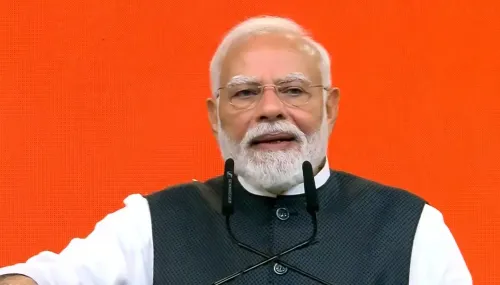
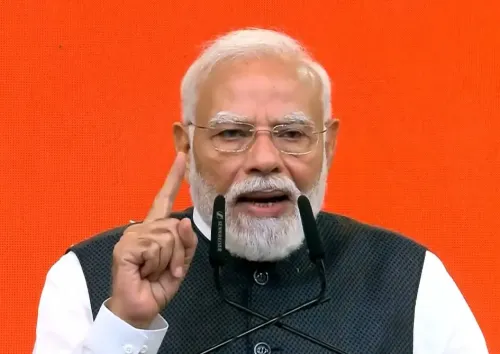
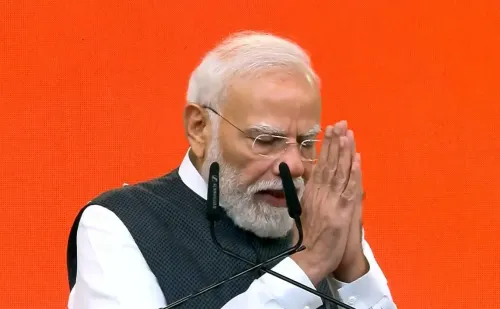
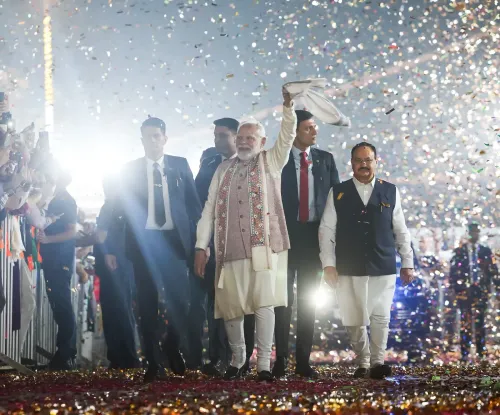
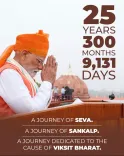
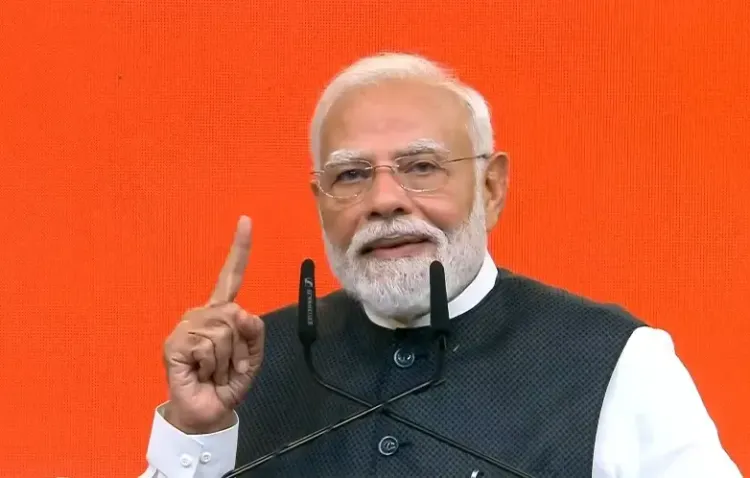
Prime Minister Narendra Modi on Wednesday, 7 October 2026, declared that he has never been driven by personal ambition, saying the values instilled in him since childhood shaped him into a person who 'lives not for ambition, but for a mission'. Addressing the Viksit Bharat Sankalp Sabha in New Delhi, he reflected on 25 years of continuous governance and framed his public service as an act of devotion rather than political calculation.
Mission Over Ambition: Modi's Self-Assessment
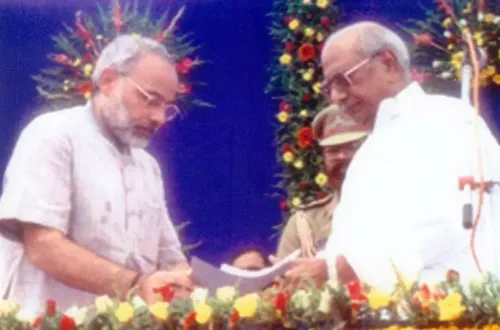
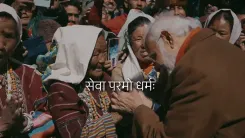
Modi said he had never once considered contesting an election on his own initiative. Twenty-five years ago, at the age of 50, he was, by his own account, serving tribal communities in forests and working through the organisational ranks of the Bharatiya Janata Party (BJP) — with no electoral record to his name. 'My political report card was that of a worker in the organisation. I had never fought an election before,' he said.
He added that had personal advancement been his goal, he could have entered the electoral arena far earlier. Instead, he said, 'I never thought about what I would become in life or what would happen to me, because the education and values I received since childhood taught me that I have been a person who lives not for ambition, but for a mission.'
Gita, Duty, and Devotion to the Nation
Drawing on the Bhagavad Gita, the Prime Minister invoked the verse 'Karmanyevadhikaraste' — underscoring that one's right lies only in one's actions, not in their fruits. 'For me, action is not merely a responsibility; it is my devotion to the country,' he said, framing governance as a form of spiritual service.
He credited the country, the people's trust, and the lessons of circumstance for giving him what he called 'the opportunity for unbroken service to my countrymen.'
Assessing 25 Years: Country's Progress, Not Personal Rise
Modi urged that his quarter-century in public office be measured not by how far he has risen, but by how far India has advanced. 'If these 25 years are to be assessed, it should not be based on where I have reached, but on how far my country has reached,' he said.
Recalling his time as Chief Minister of Gujarat, he acknowledged entering office without formal administrative experience, relying instead on faith in the people and years as a social worker. His governing mantra then, he said, was: 'the development of Gujarat is the development of the country'.
Viksit Bharat 2047: The Rallying Cry
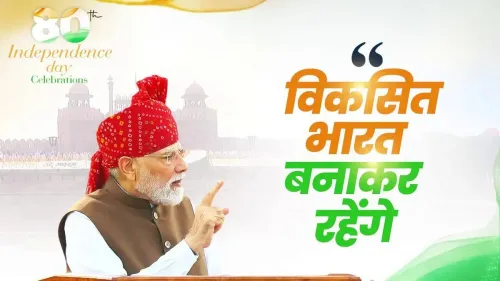
The Prime Minister used the platform to reignite momentum around the Viksit Bharat by 2047 vision, leading the gathering in a series of pledges. Echoing his Red Fort speeches on Sabka Prayas, he called out aspirations including becoming a top-three global economy, achieving Atmanirbhar Bharat, emerging as a global manufacturing hub, hosting the Olympics, and advancing India's space programme — punctuating each with the refrain, 'We will do it!'
The event marks a significant moment in the BJP's political calendar as the party seeks to sustain public energy around its long-term development narrative heading into the coming years.
Point of View
Arriving at a moment when the ruling party needs to sustain popular energy over a 21-year horizon. The speech conflates personal biography with national destiny in a way that is rhetorically potent but difficult to scrutinise — because the metric he proposes, India's collective progress, is broad enough to absorb almost any outcome. The Gita invocation is a recurring device in Modi's oratory; what is notable here is the explicit disavowal of electoral ambition, which functions simultaneously as a character claim and a pre-emptive shield against succession questions. Whether the Viksit Bharat pledges — Olympics, top-three economy, space — acquire a credible implementation roadmap will be the real test of whether Wednesday's rally was mobilisation or momentum management.
NationPress
7 Oct 2026
Frequently Asked Questions
What did PM Modi say at the Viksit Bharat Sankalp Sabha on 7 October 2026?
PM Modi declared that he has never been driven by personal ambition, saying he is a person who 'lives not for ambition, but for a mission.' He reflected on 25 years of continuous governance, invoked the Bhagavad Gita, and renewed his Viksit Bharat 2047 vision with pledges covering economic, manufacturing, sports, and space goals.
Did PM Modi ever contest an election before becoming Gujarat Chief Minister?
No. Modi said he had never fought an election before being entrusted with leadership, describing his political record at the time as that of 'a worker in the organisation' within the BJP. He was serving tribal communities and working through the party's organisational structure at the age of 50.
What is the Viksit Bharat 2047 vision that Modi referenced?
Viksit Bharat by 2047 is India's centenary-of-independence development goal, targeting the country's emergence as a developed nation. Modi's pledges on 7 October included becoming a top-three global economy, achieving Atmanirbhar Bharat self-reliance, becoming a global manufacturing hub, hosting the Olympics, and advancing the space programme.
Why did Modi quote the Bhagavad Gita in his speech?
Modi invoked the verse 'Karmanyevadhikaraste' — which holds that one's right is over one's actions alone — to frame his approach to governance as devotion rather than personal gain. He said, 'For me, action is not merely a responsibility; it is my devotion to the country.'
How does Modi say his 25 years in office should be judged?
Modi explicitly asked that his tenure not be measured by his personal rise but by India's collective progress. 'If these 25 years are to be assessed, it should not be based on where I have reached, but on how far my country has reached,' he said at the event.