PM Modi marks 25 years in office, calls people his 'greatest strength'
Synopsis
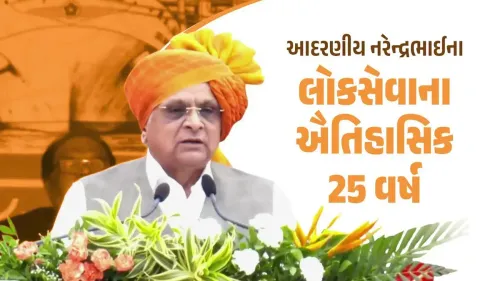
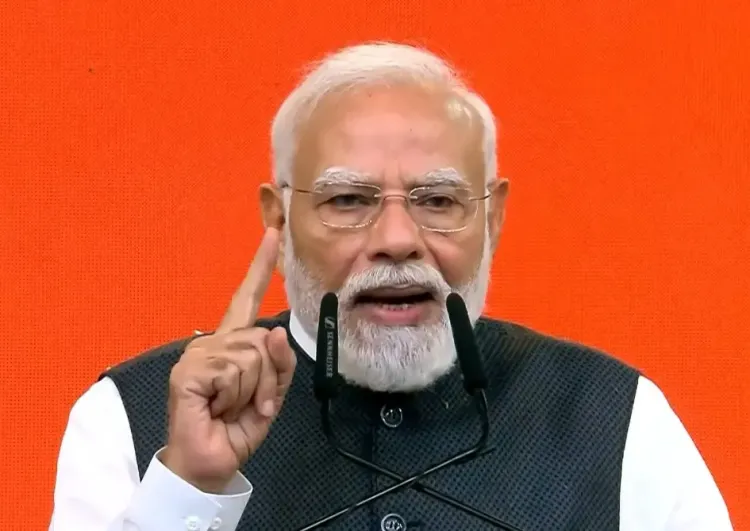
On the exact date he was sworn in as Gujarat Chief Minister in 2001, PM Modi marked 25 unbroken years in public office — a milestone with no modern parallel in Indian democratic history. At the Viksit Bharat Sankalp Sabha, he declared every citizen holds 'the greatest right' over him, framing the occasion not as celebration but as a renewal of obligation.
Key Takeaways
PM Narendra Modi completed 25 consecutive years as head of government on 7 October 2026 , starting from his oath as Gujarat Chief Minister on 7 October 2001 .
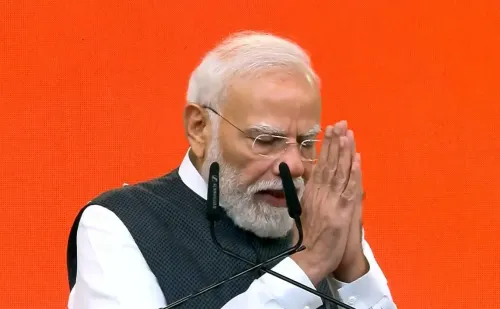
He attended the Viksit Bharat Sankalp Sabha in New Delhi , where he was welcomed with flower showers and BJP flags.
Modi said the trust of 'lakhs and crores of countrymen' has always been his 'greatest strength' and that every citizen has the 'greatest right' over him.
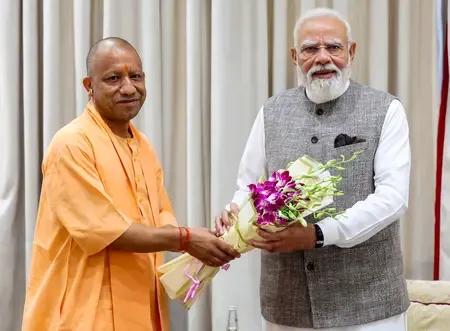
He earlier offered prayers at Shri Vinayak Mandir in Sarojini Nagar, Delhi , seeking Lord Ganesha's blessings on the milestone.
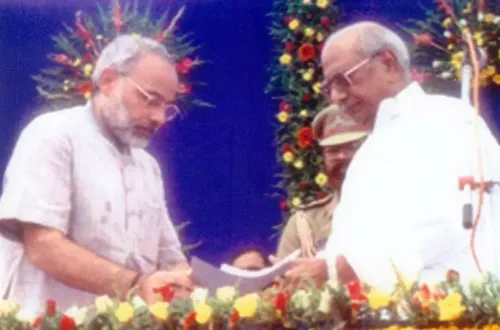
Modi replaced Keshubhai Patel as Gujarat CM in October 2001 , during the state's recovery from the Bhuj earthquake , and served until 2014 before moving to national politics.
Prime Minister Narendra Modi on 7 October 2026 completed 25 consecutive years as head of government — a milestone he marked by attending the Viksit Bharat Sankalp Sabha in New Delhi, where he credited the trust of ordinary citizens as the foundation of his political journey. The occasion traces back to 7 October 2001, when Modi was sworn in as Chief Minister of Gujarat.
What Modi Said at the Gathering
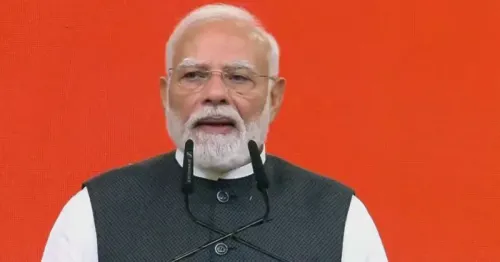
Addressing a large gathering that welcomed him with flower showers, BJP flags, and chants of 'Bharat Mata ki Jai' and 'Modi ji ka swagat hai', the Prime Minister reflected on the arc of his public life. "When I took oath as the Chief Minister of Gujarat on October 7, 2001, I never thought that I would reach this milestone one day," he said. "Today marks my 25th consecutive year as Head of Government. This is evidence of continued blessings of the public."
He also paid tribute to India's democratic tradition: "Be it the Assembly or the Lok Sabha elections, people have chosen me for their service for 25 years. Today, I also pay respects to India's democracy and the Constitution."
People as His Strength — and His Responsibility
Modi framed the milestone explicitly in terms of obligation, not celebration. "For me, the people are also a form of God. The trust of lakhs and crores of countrymen and the hard work of lakhs of workers have always been my greatest strength," he said. He added: "The country has given me so much. Therefore, my responsibility towards the country is also the greatest. And I sincerely believe that every citizen of the country has the greatest right over me."
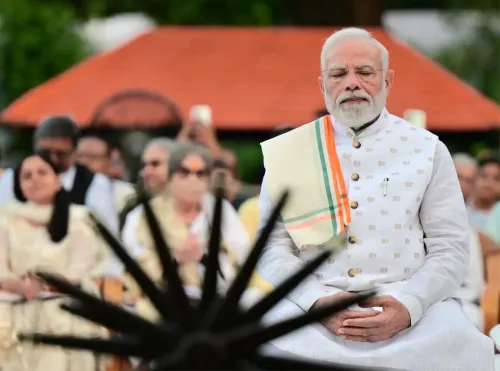
Earlier in the day, the Prime Minister visited the Shri Vinayak Mandir in Delhi's Sarojini Nagar to offer prayers to Lord Ganesha, saying he prayed for the happiness, prosperity, and good health of his "family members across the country." He also expressed gratitude to participants of the Seva Jyoti Yatra.
How the 25-Year Journey Began
In October 2001, Modi was chosen to replace Keshubhai Patel as Gujarat Chief Minister at a particularly difficult moment — the state was still recovering from the devastating Bhuj earthquake and facing significant administrative and political challenges. He went on to serve as Chief Minister until 2014, before entering national politics.
His transition to the Centre brought three consecutive terms as Prime Minister, a run with no modern parallel in Indian democratic history. Notably, the Bharatiya Janata Party (BJP) and the National Democratic Alliance (NDA) have remained the institutional vehicles for this unbroken stretch of leadership.
India's Expanded Global Role
Modi's tenure has also been defined by a sharply elevated international profile for India. According to reports, the government has pursued deeper diplomatic engagement, strengthened ties with major powers, and positioned India as a leading voice for the Global South at forums including the G20 and BRICS.
What This Milestone Signals
Twenty-five years of uninterrupted governance — across two distinct constitutional roles — is a rare marker in any democracy. As Modi begins the next phase of his third term, the Viksit Bharat Sankalp Sabha gathering underscored that the political brand remains tightly fused with a narrative of popular trust. How that trust translates into deliverables on jobs, inflation, and social equity will define the legacy chapters still being written.
Point of View
Modi is reinforcing an emotional compact over an accountability audit. The harder question mainstream coverage sidesteps is what the 25-year record actually looks like on the indicators that affect ordinary lives — manufacturing employment, rural incomes, air quality, judicial independence. Milestones invite reflection; the Viksit Bharat framing ensures that reflection stays aspirational rather than retrospective.
NationPress
7 Oct 2026
Frequently Asked Questions
Why is PM Modi marking 25 years in office in 2026?
PM Modi was sworn in as Chief Minister of Gujarat on 7 October 2001, making 7 October 2026 exactly 25 years of continuous service as head of government — first as Gujarat CM until 2014, and then as Prime Minister through three consecutive terms.
What is the Viksit Bharat Sankalp Sabha?
The Viksit Bharat Sankalp Sabha is a gathering organised around the government's 'Developed India' vision. PM Modi attended the event in New Delhi on 7 October 2026 to mark his 25-year leadership milestone and address a large public gathering.
What did PM Modi say at the event?
Modi said the trust of 'lakhs and crores of countrymen' has always been his 'greatest strength' and that every citizen holds the 'greatest right' over him. He also paid tribute to India's democracy and Constitution, and expressed gratitude to the BJP, NDA, and the Seva Jyoti Yatra participants.
How did Modi's political career begin?
Modi was chosen in October 2001 to replace Keshubhai Patel as Gujarat Chief Minister during a difficult period — the state was still recovering from the devastating Bhuj earthquake. He served as CM until 2014, then transitioned to national politics.
Is 25 consecutive years as head of government a record in Indian democracy?
It is widely regarded as having no modern parallel in Indian democratic history. No post-Independence leader has held uninterrupted executive authority — across state and national roles — for as long as 25 years.