PM Modi marks 25 years in public office, pledges deeper service
Synopsis
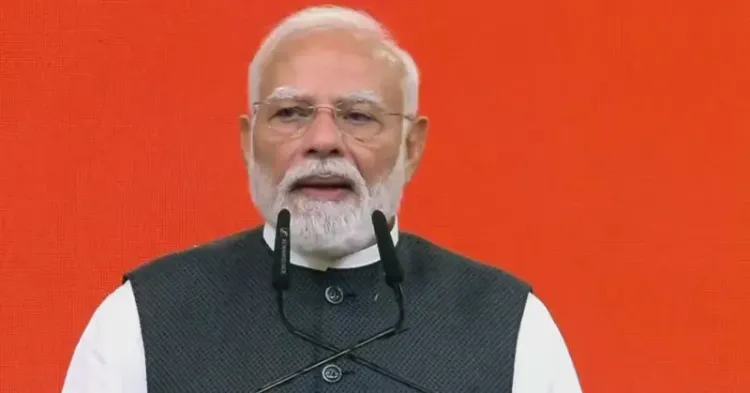
Prime Minister Narendra Modi on 7 October 2026 marked 25 years of uninterrupted elected public service, bowing to 140 crore Indians for their trust and pledging deeper commitment — a milestone that traces from his Gujarat chief ministership in 2001 to three consecutive general-election victories.
Key Takeaways
7 October 2026 marks exactly 25 years since Narendra Modi entered elected executive office as Gujarat Chief Minister on 7 October 2001 .
Modi has served as Prime Minister since May 2014 , winning three consecutive Lok Sabha mandates in 2014, 2019, and 2024.
He governed Gujarat for over 12 years , the longest chief-ministerial tenure in that state's history.
In his post, Modi credited 140 crore Indians and pledged 'greater commitment' — framing the milestone as a renewal of public trust rather than a personal achievement.
The occasion was marked with a live broadcast on X , giving citizens a real-time window into the reflection.
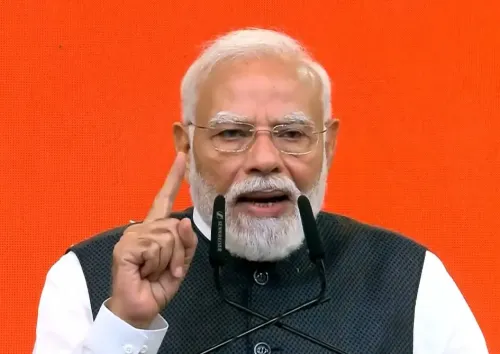
A quarter-century in public life is not a footnote — it is a chapter of history. On Wednesday, 7 October 2026, Prime Minister Narendra Modi marked 25 years of uninterrupted elected service to the Indian people, pausing to acknowledge the extraordinary trust that has carried him from the streets of Gujarat to the highest executive office in the world's largest democracy.
In a post shared on X, Modi wrote: 'I bow to 140 crore Indians for their trust and look forward to serving the nation with greater commitment in the times to come.' The tone — reverent, forward-looking, conspicuously devoid of triumphalism — was deliberate. Twenty-five years demands reflection; it also invites a renewed promise.
From Gujarat's chief minister to India's longest-serving modern leader
Narendra Modi was sworn in as Chief Minister of Gujarat on 7 October 2001, stepping into elected executive office for the first time after decades of organisational work with the Rashtriya Swayamsevak Sangh (RSS) and the Bharatiya Janata Party (BJP). He held the Gujarat chief ministership for an unbroken 12 years and 227 days — the longest tenure any chief minister of that state has served — before leading the BJP to a sweeping general-election victory in May 2014.
That 2014 mandate gave the party its first outright Lok Sabha majority in 30 years. Modi was re-elected in 2019 with an even larger seat tally, and again in 2024, making him only the second Prime Minister in Indian history — after Jawaharlal Nehru — to win three consecutive general elections. By October 2026, he has served as Prime Minister for more than 12 years, a span that places him among the longest-serving leaders in India's post-independence era.
The weight of 140 crore — and what the number signals
Modi's invocation of '140 crore Indians' is a recurring rhetorical and philosophical anchor in his public communication. It frames every policy decision — from infrastructure mega-projects to welfare transfers — not as governmental action but as a covenant with citizens. The framing matters: it signals that the milestone is being read not as personal achievement but as collective trust renewed.
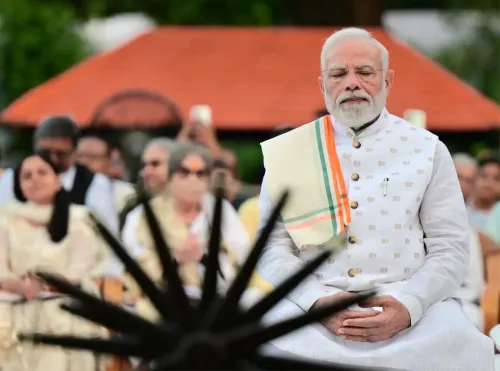
The live broadcast linked in the post — streamed on X (formerly Twitter) — suggests the moment was given a formal, public dimension, inviting citizens to witness the reflection in real time rather than receive it as a press release.
A pledge, not a victory lap
What is notable about the post is what it does not say. There is no enumeration of schemes launched, no tally of infrastructure projects, no comparison with predecessors. The register is one of gratitude and forward obligation — 'serving the nation with greater commitment' — which, in the grammar of Indian political communication, functions as both a closing statement on the first twenty-five years and an opening bid on whatever comes next.
For a leader whose political identity has always been built around the idea of perpetual motion — always governing, always campaigning — a silver jubilee in public service is less a finish line than a checkpoint. The next chapter, the post implies, is already under way.
Point of View
He reinforces the 'sevak' (servant) identity that has been the spine of his electoral brand across three mandates. The live-stream format extends that brand logic — it democratises the commemoration, making 140 crore citizens nominal participants rather than passive recipients of a press note. Historically, longevity in Indian executive office tends to generate both deep loyalty and sharpened opposition; how Modi's third term deploys this symbolic reset will shape the BJP's political narrative heading into the second half of the decade.
NationPress
7 Oct 2026
Frequently Asked Questions
When did Narendra Modi complete 25 years in public service?
7 October 2026 marks 25 years since Modi was sworn in as Chief Minister of Gujarat on 7 October 2001 , beginning his uninterrupted run in elected executive office.
How long has Modi been Prime Minister of India?
Modi has served as Prime Minister since May 2014 , making it over 12 years as of October 2026, across three consecutive general-election victories.
What did Modi say on his 25-year milestone post?
Modi wrote that he 'bows to 140 crore Indians ' for their trust and that he looks forward to serving the nation 'with greater commitment in the times to come.'
Is Modi the longest-serving Prime Minister of India?
By October 2026, Modi's tenure as Prime Minister exceeds 12 years , placing him among the longest-serving PMs in post-independence India, though Jawaharlal Nehru served approximately 17 years as the country's first PM.
How long was Modi Chief Minister of Gujarat?
Modi served as Gujarat Chief Minister from October 2001 to May 2014 — approximately 12 years and 7 months — the longest unbroken chief-ministerial tenure in the state's history.