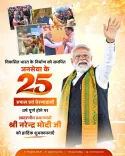
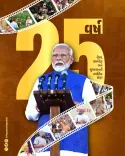
PM Modi completes 25 years in governance: CM Yogi leads BJP tributes
Synopsis
PM Modi's 25-year run as head of a government — beginning as Gujarat CM in the earthquake-battered state in 2001 — is not just a political milestone but a record of unbroken electoral dominance that few in Indian democracy have matched. The Union Cabinet's formal resolution and Yogi's X tribute signal the BJP is treating this as both a commemoration and a political statement.
Key Takeaways
PM Narendra Modi completed 25 consecutive years as head of a government on 7 October 2026 .
Uttar Pradesh Chief Minister Yogi Adityanath congratulated Modi in a post on X and a video message, calling it 'a moment of immense joy.' The Union Cabinet passed a formal resolution on Tuesday marking Modi's 25 years of continuous leadership .
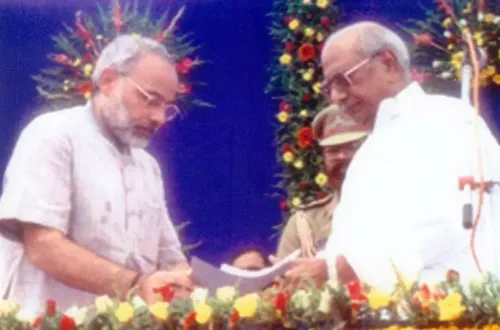
Modi was sworn in as Gujarat Chief Minister on 7 October 2001 , replacing Keshubhai Patel , and became Prime Minister in May 2014 .
The World Bank has noted India's extreme poverty reportedly fell from 16.2% in 2011-12 to 2.3% in 2022-23 during this period.
Modi's organisational career in the BJP stretches back to 1987 , when he became General Secretary of BJP's Gujarat unit .
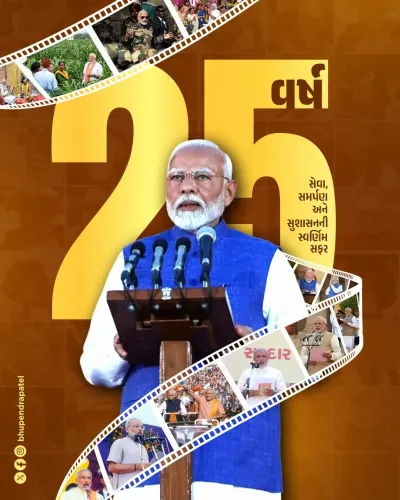
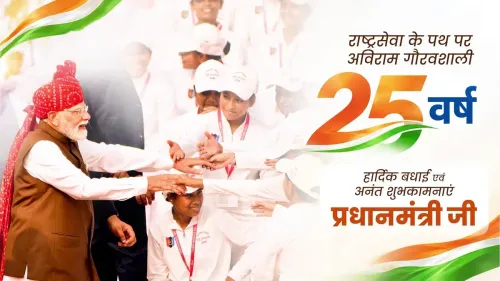
Prime Minister Narendra Modi marked a significant political milestone on 7 October 2026, completing 25 consecutive years as head of a government — a journey that began when he was sworn in as Gujarat Chief Minister on 7 October 2001 and has continued uninterrupted through his tenure as Prime Minister since May 2014. The occasion prompted an outpouring of tributes from within the ruling establishment, led by Uttar Pradesh Chief Minister Yogi Adityanath.
CM Yogi's tribute on X
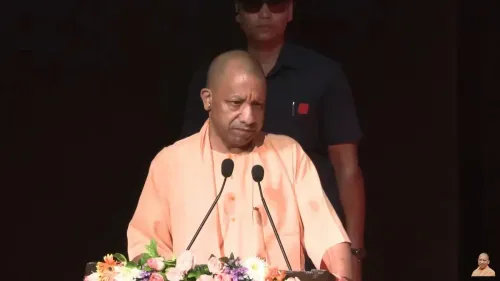
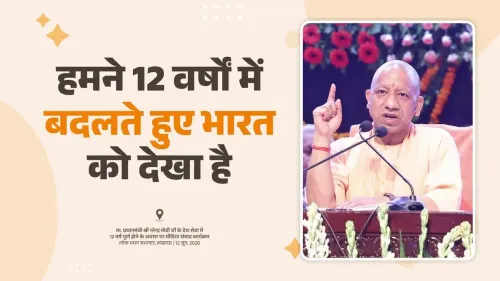
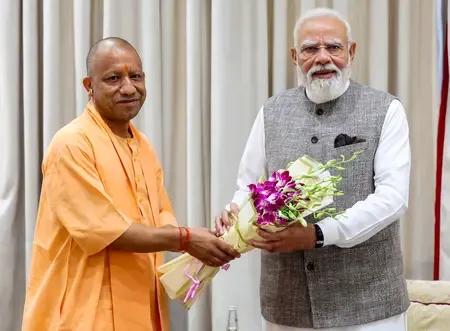
In a post on X, Chief Minister Yogi Adityanath hailed the milestone as 'a moment of immense joy for all of us,' crediting Modi with making 'From Public Service to National Service' the defining motto of his political life. 'The completion of 25 glorious years as Head of the Government by the esteemed Prime Minister Shri Narendra Modi ji, who has made 'From Public Service to National Service' the motto of his life and remains ceaselessly dedicated to elevating India's identity, pride, and honour to new heights, is a moment of immense joy for all of us,' Yogi said in his post.
In a separate video message, Yogi said Modi's journey had enabled the country to 'witness a new Bharat, a Bharat we are all proud of, a Bharat that is safe, and a Bharat that has prepared itself to look the world in the eye.' He described the Prime Minister's 25-year record as reflecting 'an unwavering commitment to public service, resolute determination, visionary leadership, and the spirit of Nation First.'
The Union Cabinet's resolution
A day earlier, on Tuesday, the Union Cabinet passed a formal resolution congratulating Modi on completing 25 years of continuous leadership as head of government — an unusual institutional gesture that underscored the political significance the ruling Bharatiya Janata Party (BJP) attaches to the anniversary.
Modi's political journey: From Gujarat to New Delhi
Modi's rise through public office traces back to his organisational roots in the Rashtriya Swayamsevak Sangh (RSS) and the BJP. By 1987, he had become General Secretary of the BJP's Gujarat unit. Following the party's 1995 Gujarat Assembly victory, he was elevated to National Secretary and relocated to New Delhi, where he oversaw several northern states. In 1998, he was appointed BJP National General Secretary (Organisation), one of the party's most consequential internal posts.
His appointment as Gujarat Chief Minister in October 2001 came at a particularly testing moment — the state was still recovering from the catastrophic Bhuj earthquake and grappling with significant administrative and political challenges. He replaced Keshubhai Patel in that role, serving as Chief Minister until May 2014, when he moved to national leadership.
Governance record and development indicators
Over the 25-year period, governance under Modi has placed sustained emphasis on scheme implementation, technology integration, and digital public administration. The World Bank has noted substantial shifts in India's development indicators during this period, including a reported fall in extreme poverty from an estimated 16.2% in 2011-12 to 2.3% in 2022-23, alongside measurable expansion in infrastructure and access to basic services.
India's international profile has also grown markedly, with the Modi government pursuing deeper diplomatic engagement, stronger ties with major powers, and a more assertive role for India within the Global South. This comes amid broader geopolitical shifts — including post-pandemic supply chain realignments and growing multipolarity — that have amplified India's strategic weight.
As tributes continue to pour in, the political focus will now turn to how the government frames the milestone — and whether the anniversary translates into a renewed policy push or remains a moment of consolidation ahead of the electoral cycle.
Point of View
But the real editorial question is whether the milestone will be accompanied by a substantive policy reset or remain a largely symbolic occasion. Notably, the tributes lean heavily on the narrative of national transformation without engaging with persistent structural challenges — sluggish private investment, agrarian stress, and a jobs deficit — that have shadowed the record. The contrast between the headline development indicators cited and the ground-level experience of many citizens is exactly the space that rigorous coverage must hold open.
NationPress
7 Oct 2026
Frequently Asked Questions
How many years has PM Modi been in governance as of 7 October 2026?
PM Narendra Modi completed 25 consecutive years as head of a government on 7 October 2026. His tenure began when he was sworn in as Gujarat Chief Minister on 7 October 2001 and has continued through his time as Prime Minister since May 2014.
Why did CM Yogi Adityanath congratulate PM Modi on 7 October 2026?
Uttar Pradesh Chief Minister Yogi Adityanath congratulated PM Modi on completing 25 years as head of a government, calling it 'a moment of immense joy.' He posted a tribute on X and shared a video message praising Modi's commitment to public service and the 'Nation First' principle.
When did PM Modi first become Chief Minister of Gujarat?
PM Modi was sworn in as Gujarat Chief Minister on 7 October 2001, replacing Keshubhai Patel. He led the state through the aftermath of the Bhuj earthquake and served as Chief Minister until May 2014, when he became Prime Minister.
What did the Union Cabinet do to mark Modi's 25 years in governance?
The Union Cabinet passed a formal resolution on Tuesday, 6 October 2026, congratulating PM Modi on completing 25 years of continuous leadership as head of government — an unusual institutional gesture marking the political milestone.
What development changes has India seen during Modi's 25 years in governance?
According to the World Bank, India's extreme poverty reportedly fell from an estimated 16.2% in 2011-12 to 2.3% in 2022-23 during this period, alongside infrastructure expansion and greater access to basic services. India also deepened its international engagement and became a more prominent voice in the Global South.