CM Himanta: IAF Airdrops Now More Targeted as Assam Floods Recede
Synopsis
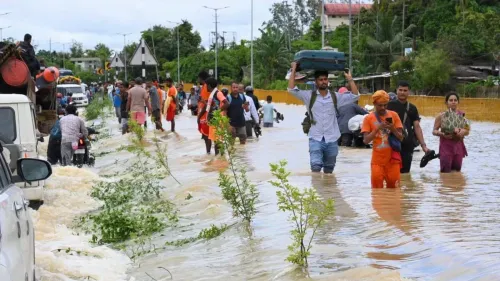
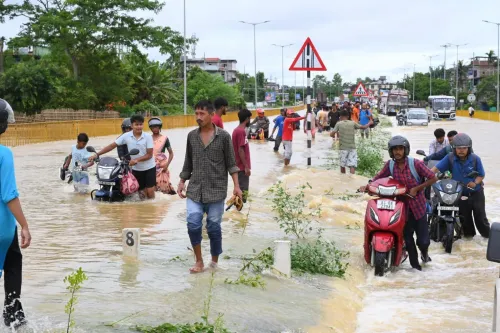
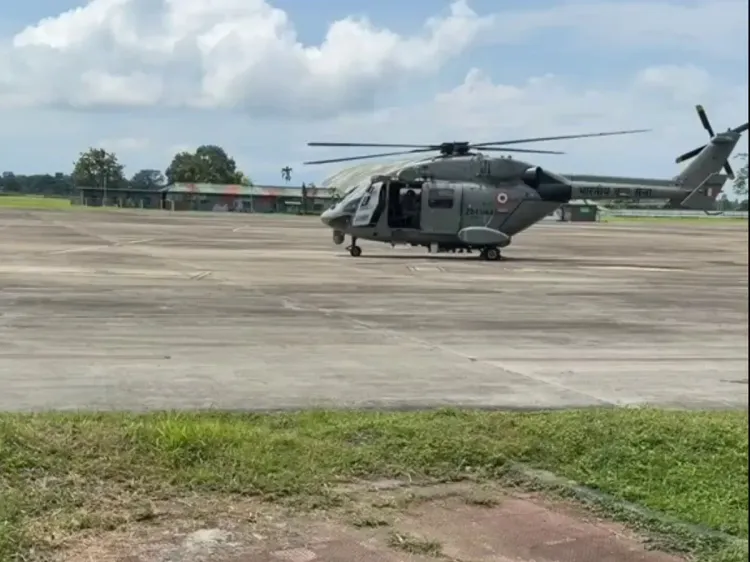
Assam Chief Minister Himanta Biswa Sarma on 26 July 2026 said IAF airdrops in flood-hit areas are now more targeted as water recedes, enabling relief to reach a larger number of people. District administrations are coordinating with the IAF in what is part of Assam's established federal disaster-response protocol.
Key Takeaways
Assam CM Himanta Biswa Sarma confirmed on 26 July 2026 that flood relief operations are continuing in full swing.
The Indian Air Force (IAF) and state district administrations are jointly conducting relief operations in flood-affected areas.
Floodwaters are receding in some areas, creating 'dry patches' that allow for more targeted and effective airdrops.
The improved targeting means IAF relief is now reaching a larger number of flood-affected people.
Assam has established standing inter-agency protocols with the IAF and NDRF, with major joint operations conducted during the 2020 and 2022 flood seasons.
A transition from aerial to road-based relief distribution is expected as more areas become accessible.
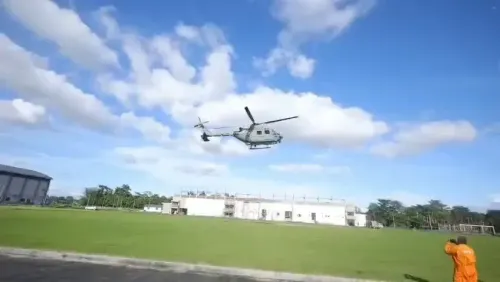
Assam Chief Minister Himanta Biswa Sarma on Sunday, 26 July 2026, said that relief operations by the Indian Air Force (IAF) and district administrations are continuing in full swing across flood-affected areas of the state, with airdrops becoming more targeted as water levels begin to recede in some regions.
Context
Posting on X, CM Sarma noted that 'dry patches' are now emerging as floodwaters retreat in parts of Assam, allowing relief agencies to concentrate aerial supply drops more precisely and reach a larger number of affected people. The update signals a gradual shift in the operational phase of the state's flood response, from broad-area emergency relief toward more targeted distribution.
The post, which accompanied a video, was shared at a time when the state administration is managing what is a near-annual crisis along the Brahmaputra river basin. Assam's monsoon floods routinely displace lakhs of residents and inundate vast swathes of agricultural and residential land each year.
Policy Backdrop
Assam has long maintained standing inter-agency protocols with the IAF and the National Disaster Response Force (NDRF) for monsoon flood relief. Significant joint operations were conducted during the major flood seasons of 2020 and 2022, establishing a well-rehearsed federal disaster-response model in which the state executive coordinates and directs central defence assets on the ground.
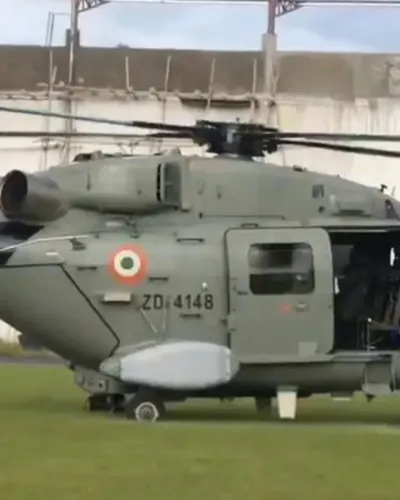
Under this model, district administrations serve as the primary coordination layer, identifying cut-off communities and directing IAF sorties to priority zones. The involvement of the IAF's Maintenance Command (@IAF_MCC) — the logistics and support arm of the air force — underscores the scale of the operation, which requires sustained aerial logistics rather than one-off emergency sorties.
Stakeholders and Impact
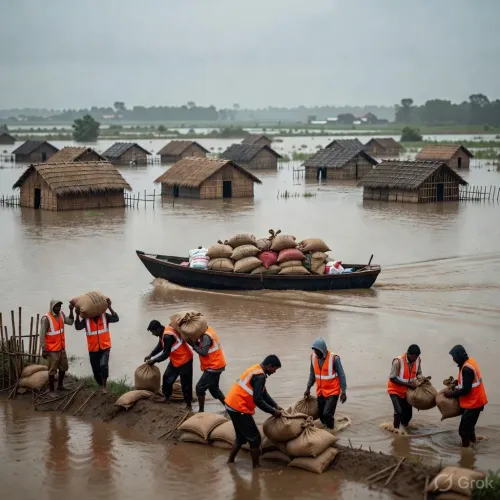
The primary beneficiaries of the ongoing operations are flood-affected residents in low-lying and riverine districts of Assam who remain cut off from road-based supply chains due to inundation. For these communities, IAF airdrops represent the only reliable channel for receiving food, drinking water, and essential medicines.
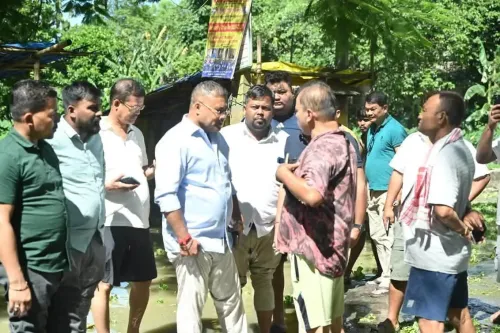
District administrations across the state are playing a critical coordination role, mapping dry patches as they emerge and relaying ground intelligence to IAF crews to ensure supplies reach the most vulnerable pockets. The improved targeting described by CM Sarma suggests that the logistics chain is becoming more efficient as the flood situation evolves.
What's Next
As water continues to recede across affected districts, the state is expected to begin transitioning from aerial relief operations to road-based distribution, which allows for larger volumes of supplies and easier two-way logistics. The pace of that transition will depend on how quickly inundated roads and bridges become passable.
CM Sarma's administration will likely face continued pressure to accelerate rehabilitation and damage assessment, particularly for agricultural land and housing, in the weeks ahead. The broader pattern of annual Brahmaputra flooding also keeps the longer-term question of flood-mitigation infrastructure — embankments, dredging, early-warning systems — on the policy agenda for Assam and the central government alike.
Point of View
Suggesting the administration is keen to project a sense of managed recovery rather than ongoing crisis. This fits a broader pattern in which state executives use social media to shape the narrative around disaster response in real time, often ahead of formal situation reports. The post also implicitly reinforces the federal disaster-response model, highlighting the IAF's role in a way that acknowledges central government support without ceding ownership of the relief narrative.
NationPress
25 Oct 2026
Frequently Asked Questions
What is the current status of Assam floods in July 2026?
As of 26 July 2026, floodwaters are receding in some parts of Assam, with 'dry patches' emerging, though relief operations by the IAF and district administrations are still ongoing in affected areas.
How is the IAF helping in Assam flood relief?
The Indian Air Force is conducting targeted airdrops of essential supplies to flood-affected communities in Assam that remain cut off from road-based distribution, coordinating with district administrations to identify priority zones.
What did CM Himanta Biswa Sarma say about Assam floods?
CM Sarma said on 26 July 2026 that relief operations are in full swing, and that as dry patches appear due to water receding, airdrops are now more targeted and are benefitting a larger number of people.
Does Assam face floods every year?
Yes, Assam experiences near-annual monsoon flooding caused by the Brahmaputra river and its tributaries. Major flood seasons in recent years include 2020 and 2022, prompting repeated deployment of IAF and NDRF assets.
What happens after IAF airdrops stop in Assam floods?
As floodwaters recede and roads become passable, the state typically transitions from aerial relief operations to road-based distribution, which allows for larger supply volumes and easier logistics for rehabilitation.