ICG retires hovercraft H-186 after 24 years; craft heads to Kolkata museum
Synopsis
After 24 years and some of the ICG's most dramatic rescues — including 511 pilgrims saved in a single mission — hovercraft H-186 has been retired at Haldia. It now heads to a Kolkata museum, even as the Coast Guard pivots to a new generation of indigenous ACVs to secure India's shallow-water coastlines.
Key Takeaways
Indian Coast Guard decommissioned hovercraft H-186 at Haldia, West Bengal on 30 June after 24 years of service.
H-186 was commissioned on 21 March 2002 and served with 88 ACV Squadron at Coast Guard HQ No.
The craft rescued 511 pilgrims on 16 January 2023 and 182 pilgrims on 16 January 2024 .
H-186 was awarded 'Best SAR Unit' in 2004 and again for saving 78 lives in 2006 .
The hovercraft will be displayed at a museum in New Town, Kolkata as part of ICG's Golden Jubilee celebrations.
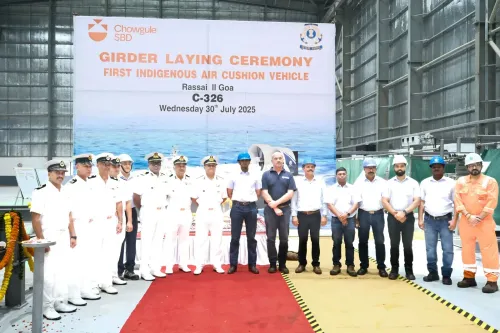
The ICG is inducting a new series of indigenous ACVs to replace its ageing hovercraft fleet.
The Indian Coast Guard (ICG) on Tuesday, 30 June formally decommissioned one of its oldest Air Cushion Vehicles (ACVs), H-186, at Haldia in West Bengal, marking the end of a 24-year operational life that spanned coastal surveillance, anti-smuggling missions, and large-scale search and rescue operations. The hovercraft will now be preserved on public display at a museum in New Town, Kolkata, as part of the ICG's Golden Jubilee celebrations.
A Record of Service
H-186 was commissioned on 21 March 2002 and assigned to the 88 ACV Squadron at Coast Guard Headquarters No. 8 in Haldia. Over more than two decades, the craft proved its value in some of the most operationally demanding conditions in the region. The ICG credited its 'agility and unique amphibious capabilities' as providing 'a stable and capable platform for a wide range of missions, ranging from coastal surveillance to anti-smuggling operations.'
The vessel was decorated twice as 'Best SAR Unit' — first in 2004 and again for saving 78 lives in 2006 — recognitions that underline its outsized contribution relative to its size.
Key Rescue Milestones
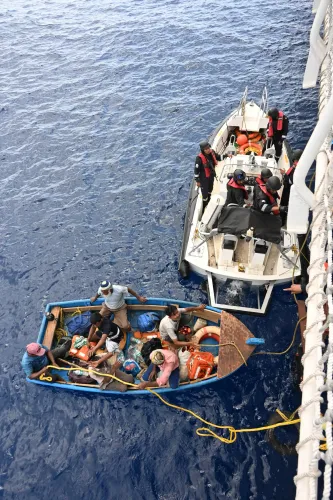
H-186's most consequential missions came in its final years of service. On 16 January 2023, the craft executed a large-scale SAR operation, successfully rescuing 511 pilgrims under challenging conditions — one of the largest single-mission rescues in recent ICG history. Exactly a year later, on 16 January 2024, it rescued 182 pilgrims, ensuring their safe evacuation. On 11 August 2024, the vessel conducted a search operation at Bakkhali Beach, recovering the bodies of two individuals.
The Decommissioning Ceremony
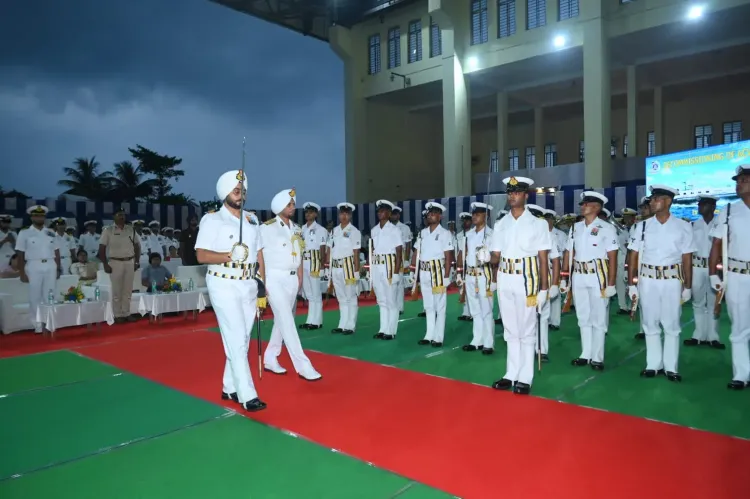
The solemn farewell ceremony at Haldia was attended by Iqbal Singh Chauhan, Inspector General and Commander of Coast Guard Region (North East), alongside senior ICG officers, civil dignitaries, and representatives from the wider maritime community. The force acknowledged the 'unwavering dedication and professionalism' of all officers and crew who served aboard H-186 throughout its operational life.
The hovercraft will join a decommissioned Tu-142M aircraft of the Indian Navy already on display at the New Town museum, making the site a growing repository of retired military hardware accessible to the public.
What Comes Next for the ICG's ACV Fleet
The ICG began inducting ACVs after recognising that conventional platforms were ill-suited for shallow-water operations off the coasts of West Bengal and Gujarat. An ACV's ability to traverse shallow stretches and sandbanks extends the force's operational reach in ways that standard vessels cannot match.
As its legacy hovercraft fleet ages out, the ICG has begun inducting a new series of indigenous ACVs, signalling a shift toward domestically built assets. The move aligns with the broader national push for defence indigenisation and positions the Coast Guard to meet evolving coastal security challenges with modernised technology.
Point of View
But delivery timelines and operational readiness of the new fleet will determine whether the transition is seamless or leaves a window of reduced shallow-water coverage. The museum placement, meanwhile, is a rare and welcome act of institutional memory in a force that often operates outside public view.
NationPress
30 Jun 2026
Frequently Asked Questions
What is hovercraft H-186 and why was it decommissioned?
H-186 is an Air Cushion Vehicle (ACV) of the Indian Coast Guard, commissioned on 21 March 2002 and decommissioned on 30 June after 24 years of service. It was retired as part of the natural ageing of the ICG's legacy hovercraft fleet, with newer indigenous ACVs being inducted as replacements.
What were H-186's most notable rescue missions?
H-186's most significant missions included rescuing 511 pilgrims on 16 January 2023 and 182 pilgrims on 16 January 2024, both under challenging conditions. It also conducted a recovery operation at Bakkhali Beach on 11 August 2024 and was twice named 'Best SAR Unit' — in 2004 and for saving 78 lives in 2006.
Where will the decommissioned hovercraft H-186 be displayed?
H-186 will be placed on public display at a museum in New Town, Kolkata. The museum already houses a decommissioned Tu-142M aircraft of the Indian Navy, and the hovercraft's addition is part of the ICG's Golden Jubilee celebrations.
Why does the Indian Coast Guard use hovercrafts?
The ICG inducted Air Cushion Vehicles because conventional platforms could not operate effectively in the shallow waters and sandbanks off the coasts of West Bengal and Gujarat. Hovercrafts can traverse these terrains, significantly extending the force's coastal surveillance and rescue reach.
What is the ICG doing to replace its ageing hovercraft fleet?
The Indian Coast Guard has begun inducting a new series of indigenous ACVs to replace retiring hovercrafts like H-186. The move is part of a broader commitment to maintaining a robust coastal security architecture using modernised, domestically built assets.