How is IIT Delhi Leading the Charge as Seven Indian Universities Enter QS Asia Top 100 for 2026?
Synopsis
The QS World University Rankings: Asia 2026 has placed seven Indian institutions in the top 100, showcasing the country's resilience in higher education amid rising competition. With IIT Delhi leading the charge, India's academic prominence is expanding beyond the IITs into other universities.
Key Takeaways
Seven Indian institutions ranked in the top 100 of QS Asia 2026.
IIT Delhi leads at 59th place.
Significant increase in overall Indian university representation .
Challenges remain in international recruitment and student diversity.
National Education Policy aims for a globally competitive education system.
New Delhi, Nov 4 (NationPress) India achieved a significant milestone in the realm of Asian higher education on Tuesday, as the QS World University Rankings: Asia 2026 recognized seven of its institutions within the continent's top 100. This number remains unchanged from the previous year, highlighting India's resilience amidst increasing regional competition.
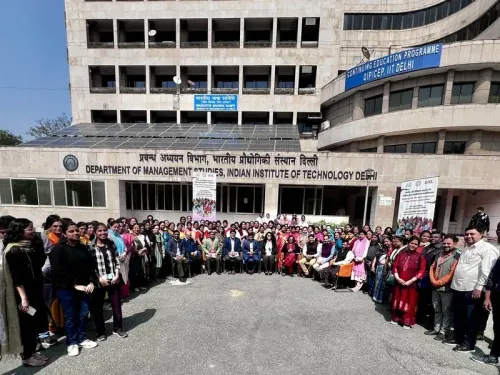
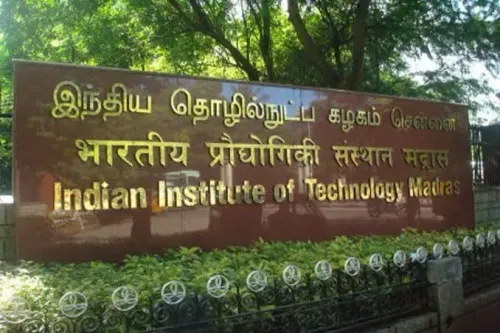
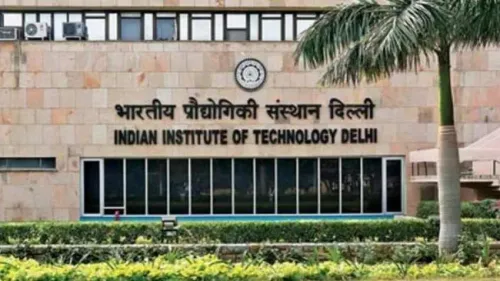
The Indian Institute of Technology Delhi has successfully maintained its position as the nation's top university, ascended to 59th place with a score of 78.6. This upward trajectory is largely attributed to its enhanced employer reputation and a notable increase in impactful research citations. Following closely is the Indian Institute of Science Bangalore at 64th (score: 76.5), with IIT Madras at 70th (score: 75.1), IIT Bombay at 71st (score: 75.0), and both IIT Kanpur and IIT Kharagpur sharing 77th (score: 73.4).
The University of Delhi completes the list at 95th with a score of 68.5, indicating that India's academic reputation is now expanding beyond the esteemed IIT framework into broader public universities.
Across the Asian landscape, the University of Hong Kong has taken the top spot, pushing Peking University into second place. Singapore's National University of Singapore and Nanyang Technological University are tied for third, while Fudan University, The Hong Kong University of Science and Technology, The Chinese University of Hong Kong, and City University of Hong Kong highlight the dominance of institutions from Hong Kong, mainland China, and Singapore.
India's overall representation has grown significantly, with 137 new universities boosting the national total to 294 ranked institutions, trailing only behind China's 395. Notably, five Indian universities rank among Asia's top ten for research productivity, and 28 are in the top 50—more than double China's count—demonstrating a nation that is prolific in publishing and employing PhD graduates in laboratories.
However, the rankings also come with warnings. Several flagship IITs have experienced declines in their absolute rankings, particularly IIT Bombay, which dropped 23 places. This decline has been attributed to competitors advancing rapidly in international faculty recruitment, student diversity, and faculty-student ratios.
Moreover, foreign academics and international students remain limited on Indian campuses; infrastructure investments and talent retention strategies are lagging in comparison to Singapore's NUS, Beijing's Tsinghua, or Seoul's KAIST.
Jessica Turner, QS chief executive, praised the impact of the National Education Policy over the past five years for fostering a “system-level capacity that is globally relevant and locally empowering,” yet cautioned that the upcoming decade will require deeper international partnerships and modernized curricula for India to compete effectively.
As vice-chancellors analyze this data in New Delhi and Bengaluru, one key truth emerges: India's universities are no longer just trying to catch up—they are racing ahead, but the finish line keeps shifting eastward.
Point of View
It is evident that India's universities are making commendable strides in the global education landscape. The latest QS rankings reflect not just growth but a burgeoning potential that, if nurtured, can elevate India's educational standards to new heights. However, we must remain vigilant and proactive in addressing the challenges that lie ahead, ensuring that our institutions not only compete but thrive on the global stage.
NationPress
26 Sept 2026
Frequently Asked Questions
How many Indian universities made it to the QS Asia top 100?
Seven Indian universities have made it to the QS Asia top 100 for 2026, the same number as last year.
What is the rank of IIT Delhi in the QS Asia rankings?
IIT Delhi is ranked 59th in the QS Asia rankings for 2026.
Which Indian university ranks second after IIT Delhi?
The Indian Institute of Science Bangalore ranks second among Indian universities at 64th position.
What challenges do Indian universities face in the QS rankings?
Indian universities face challenges such as fierce competition in international faculty recruitment and limited diversity among students.
What is the significance of the National Education Policy in India's education?
The National Education Policy has played a crucial role in building a globally relevant and locally empowering education system in India.