Alpana Buch on women's double standards: 'Clothes become an excuse'
Synopsis
Alpana Buch, who plays Leela Baa in 'Anupamaa', has called out a pattern that goes well beyond fashion: clothes, she says, are not the issue — they are the excuse. Her remarks cut to the heart of how Indian society polices women's choices, and challenge both families and television producers to do better.
Key Takeaways
Alpana Buch , known for playing Leela Baa in 'Anupamaa' , has spoken out against society's double standards towards women.
She argued that clothing is used as a pretext to question a woman's independence, not the real concern.
Buch called on families, friends, and colleagues to recognise that a woman's choices belong to her alone.
She urged Indian television to portray independent women as normal rather than rebellious.
Buch stressed that older and younger generations of women have different but equally valid forms of strength, and should learn from each other rather than compete.
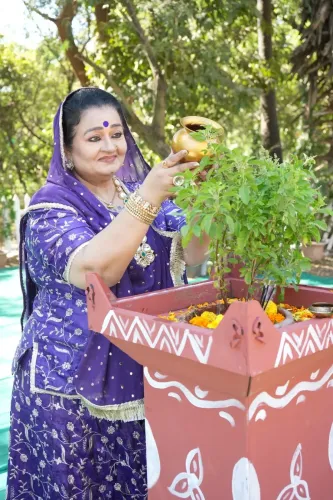
Actress Alpana Buch, widely recognised for her role as Leela Baa in the hit television series 'Anupamaa', has spoken candidly about the persistent double standards women face in Indian society, calling out how personal choices — from clothing to career decisions — are routinely weaponised to question a woman's character.
The Core Argument
Buch argued that a woman's clothes are rarely the real issue — they are, in her words, a convenient pretext. 'A woman is judged for wearing a short dress, staying out late, choosing not to marry at a certain age or simply speaking with confidence,' she said. 'Many times, the clothes are not really the issue. They become an excuse to question a woman's independence.'
She placed the responsibility of change squarely on communities rather than on women themselves. 'I think society changes when people stop participating in that judgement. Families, friends and colleagues have to understand that a woman's choices belong to her,' Buch added.
Television's Role in Shifting Narratives
The 'SaraswatiChandra' actress also pointed to the influence of popular media in shaping social attitudes. She argued that television has a responsibility to portray independent women as ordinary rather than framing their autonomy as an act of rebellion. 'Television can also play a role by showing independent women as normal rather than making them look rebellious just because they want to live life on their own terms,' she said.
This comes amid a broader conversation in the Indian entertainment industry about how female characters are written — particularly as long-running shows like 'Anupamaa' have brought multi-generational women's stories into prime-time viewing.
Generational Strength, Not Generational Conflict
Buch, whose show features characters spanning multiple generations — including Anupama, Leela, Prerna, and younger women — drew a nuanced distinction between how different age groups understand independence. She resisted framing it as a conflict between old and new.
'Every generation has its own understanding of independence. Older women have a strength that comes from experience and from knowing how to survive difficult situations. Younger women are more willing to question things and refuse to accept certain limitations,' she said. 'I don't think one generation is right and the other is wrong. Strength can look different at different ages.'
Her message was one of solidarity: 'If women listen to each other instead of comparing their choices, there is a lot they can learn from one another.'
About the Show
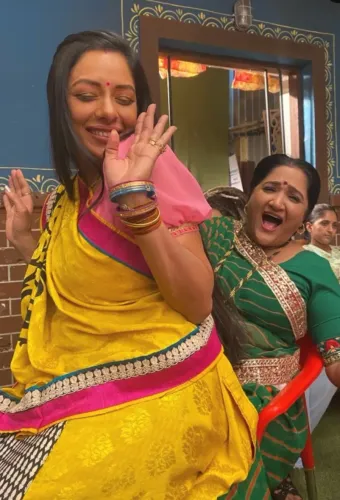
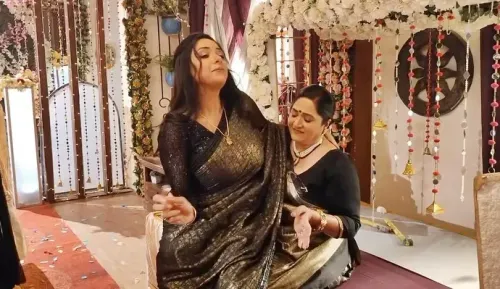
'Anupamaa', produced by Deepa Shahi and Rajan Shahi, stars Rupali Ganguly, Adrija Roy, and Shivam Khajuria, alongside Buch. The show has consistently ranked among the most-watched Hindi television series and has been credited with putting complex female narratives at the centre of mainstream Indian television.
As the debate around women's autonomy and media representation continues, Buch's remarks add a prominent on-screen voice to an off-screen conversation that shows no sign of fading.
Point of View
Yet Indian prime-time television still routinely frames female autonomy as transgression. The fact that an actress on one of the country's most-watched shows is publicly pushing back on that framing — and calling on producers to change it — signals a tension within the industry itself. Whether that translates into script-level change, or remains a headline moment, is the question mainstream coverage tends to leave unasked.
NationPress
12 Aug 2026
Frequently Asked Questions
What did Alpana Buch say about double standards towards women?
Alpana Buch said women are routinely judged for choices like their clothing, staying out late, or not marrying at a socially expected age. She argued that clothes are not the real issue but become an excuse to question a woman's independence and character.
Who is Alpana Buch and what is her role in 'Anupamaa'?
Alpana Buch is a veteran Indian television actress best known for playing Leela Baa in the popular Star Plus series 'Anupamaa', produced by Deepa Shahi and Rajan Shahi. She has also appeared in 'SaraswatiChandra'.
What did Alpana Buch say about television's role in women's empowerment?
Buch said television can help shift social attitudes by portraying independent women as ordinary rather than framing their choices as rebellious. She believes mainstream media has a responsibility to normalise female autonomy.
How did Alpana Buch address the generational divide among women?
Buch rejected the idea of a conflict between older and younger generations of women. She said older women carry strength from lived experience while younger women are more willing to challenge limitations, and argued that both forms of strength are valid and complementary.
What show does Alpana Buch currently appear in?
Alpana Buch currently appears in 'Anupamaa', one of India's highest-rated Hindi television serials, alongside Rupali Ganguly, Adrija Roy, and Shivam Khajuria.