Tillotama Shome on gender bias in cinema: 'Why don't we ask men the same thing?'
Synopsis
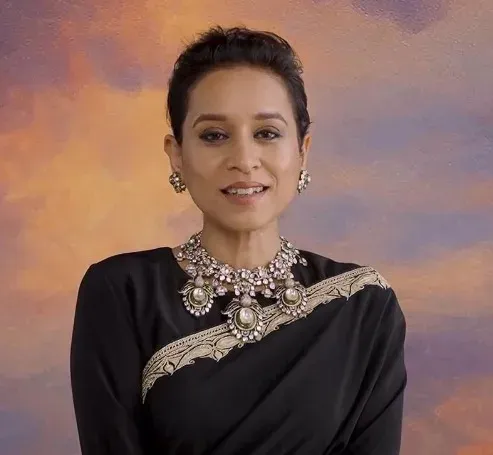
Tillotama Shome isn't just playing a prosecutor in 'Ikka' — she's making a case off-screen too. The actress has called out the industry's habit of treating every underperforming women-led film as proof that women-centric cinema doesn't work, while male-led flops go unscrutinised. It's a sharp, specific argument — and it lands harder coming from an actress who has consistently worked outside the commercial mainstream.
Key Takeaways
Tillotama Shome questioned the double standard applied to women-led films at the box office in a recent interview.
She argued that male actors face no equivalent scrutiny when their films underperform commercially.
Shome cited successful films by Kangana Ranaut , Taapsee Pannu , Vidya Balan , and Alia Bhatt to challenge the narrative that women-centric cinema does not work.
She also criticised gendered language — terms like 'female director' and 'female actor' — as a reflection of industry bias.
Shome plays public prosecutor Madhura Banerjee in 'Ikka' , which premiered on Netflix on 10 July .
Actress Tillotama Shome, currently drawing attention for her role in the Netflix courtroom thriller 'Ikka', has spoken out against the persistent double standard applied to women-led films in Indian cinema — questioning why box office failures are treated as a referendum on gender rather than on the film itself.
The Double Standard Tillotama Is Calling Out
In a candid interview, Shome challenged the industry's selective scrutiny, arguing that male actors are rarely held accountable in the same way when their films underperform. 'Many male-led films also fail at the box office, yet male actors are rarely questioned about whether films led by men are working,' she said. 'On the other hand, if one women-led film underperforms, it immediately becomes a discussion about whether women-centric cinema works.'
Shome pointed to a track record of commercially successful films headlined by women — citing Kangana Ranaut, Taapsee Pannu, Vidya Balan, and Alia Bhatt — to argue that the evidence does not support a structural failure of women-led cinema. 'Success and failure belong to films, not to gender,' she said.
Language as a Mirror of Bias
Shome extended her critique beyond box office discourse to the language of the industry itself. She questioned why the qualifiers 'female director,' 'female producer,' and 'female actor' remain standard usage in India when many other countries have dropped gendered labels entirely. 'Why not simply say director, producer, or actor?' she asked. 'Women make up half the population. We shouldn't be treated as an exception.'
Her observation reflects a wider conversation in global media about how language shapes perception — and how professional titles that default to a male norm implicitly frame women as outsiders in their own fields.
Tillotama's Role in 'Ikka'
In 'Ikka', Shome plays Madhura Banerjee, a tenacious public prosecutor who squares off in the courtroom against Sunny Deol's character, defence attorney Arjun Mehra. The film, directed and produced by Siddharth P. Malhotra, premiered on Netflix on 10 July. Notably, the project was also associated with director Imtiaz Ali.
The role itself — a woman in a position of institutional authority driving the narrative — is, in some ways, a practical answer to the debate Shome is raising publicly.
Why This Matters Beyond One Interview
The OTT boom has expanded the market for women-led stories considerably, with platforms commissioning content that multiplex economics historically discouraged. Yet the critical conversation around commercial performance has not kept pace — women-led theatrical releases still attract disproportionate scrutiny when they fail, while their successes are less frequently used to set a baseline expectation. Shome's intervention is part of a growing chorus from within the industry — including voices like Vidya Balan and Konkona Sen Sharma — pushing back on this asymmetry. When a film fails, she argued, 'it is the responsibility of everyone involved — the filmmaker, the actors, and the audience — not an entire gender.'
Point of View
Which inevitably shapes the context. The more substantive point she makes is about language: the persistence of 'female director' as a qualifier is not a trivial stylistic choice — it signals who the industry still treats as the default and who is considered a deviation. Indian cinema has produced enough data by now to test the hypothesis that women-led films are commercially riskier than male-led ones; no one in the industry appears to have done that analysis rigorously. Until they do, the debate will keep running on anecdote and confirmation bias — in both directions.
NationPress
18 Oct 2026
Frequently Asked Questions
What did Tillotama Shome say about women-led films?
Tillotama Shome argued that the box office failures of women-led films are unfairly used to question whether women-centric cinema works at all, while male-led failures attract no such generalisation. She said 'success and failure belong to films, not to gender.'
Which film is Tillotama Shome currently promoting?
Shome recently appeared in 'Ikka', a Netflix courtroom thriller directed and produced by Siddharth P. Malhotra, which premiered on 10 July. She plays Madhura Banerjee, a public prosecutor, opposite Sunny Deol.
What is the gender bias in Bollywood that Tillotama Shome is referring to?
Shome is referring to the pattern in which a single underperforming women-led film triggers industry-wide questions about whether women-centric cinema is viable, while equivalent failures by male-led films are treated as individual setbacks rather than a gender-level verdict.
Why does Tillotama Shome object to terms like 'female director' or 'female actor'?
She argues that gendered professional labels frame women as exceptions in fields where they should be treated as equals. She noted that in many countries, actors are simply called actors regardless of gender, and called for Indian cinema to adopt the same standard.
Which actresses did Tillotama Shome cite as examples of successful women-led cinema?
Shome cited Kangana Ranaut, Taapsee Pannu, Vidya Balan, and Alia Bhatt as examples of actresses whose films have succeeded commercially, countering the claim that women-centric cinema does not perform at the box office.