IIT Guwahati develops smart nanocrystals for anti-counterfeiting
Synopsis
IIT Guwahati has developed smart nanocrystals for next-generation anti-counterfeiting solutions, with the Chief Minister's Office of Assam amplifying the breakthrough. The research aligns with India's push for indigenous security technologies and growing central support for Northeast India's research institutions.
Key Takeaways
The Chief Minister's Office of Assam announced a research breakthrough from IIT Guwahati on 30 May 2026 .
Scientists at IIT Guwahati have developed smart nanocrystals intended for next-generation anti-counterfeiting applications.
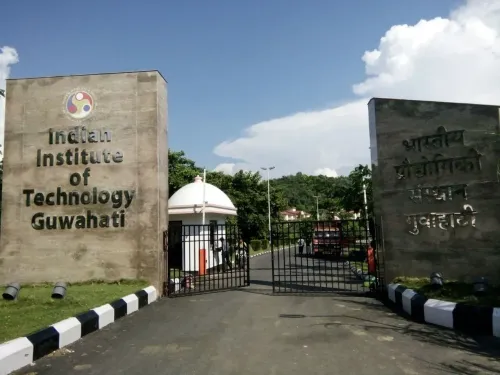
IIT Guwahati was established in 1994 as a premier technical institute for Northeast India .
India's National Education Policy 2020 prioritises indigenous innovation and applied research at IITs.
Key stakeholders include security agencies, pharmaceutical manufacturers, and industrial producers vulnerable to counterfeiting.
Commercialisation pathways, patent filings, and pilot deployments remain the critical next steps to watch.
The Chief Minister's Office of Assam on Saturday, 30 May 2026 highlighted a research breakthrough from IIT Guwahati, announcing that scientists at the institute have developed smart nanocrystals designed for next-generation anti-counterfeiting solutions.
Context
The CMO Assam post describes the development as 'a breakthrough from IIT Guwahati,' positioning the institute's latest research as a significant advance in materials science with direct security applications. Anti-counterfeiting technologies are critical across sectors ranging from currency and pharmaceuticals to luxury goods and official documents, where authentication failures carry serious economic and public-safety consequences.
IIT Guwahati, established in 1994, is one of India's premier technical institutes and serves as a flagship research hub for the Northeast region. The institute has steadily expanded its focus beyond conventional engineering education into applied materials science and nanotechnology.
Policy Backdrop
India's National Education Policy 2020 places strong emphasis on indigenous innovation and applied research at institutions such as the IITs, encouraging them to develop technologies with direct commercial and strategic value. This policy framework has accelerated research investment in nanotechnology and advanced materials across the IIT network.
Northeast India's research institutions, including IIT Guwahati, have received increasing support from both the central government and the Government of Assam to build robust research ecosystems. The state administration has consistently amplified the institute's achievements as part of a broader narrative around Northeast India's growing role in national science and technology.
Stakeholders and Impact
The primary beneficiaries of nanocrystal-based anti-counterfeiting technology span several sectors: security agencies responsible for protecting currency and identity documents, pharmaceutical manufacturers combating fake medicines, and industrial producers seeking reliable product authentication. Counterfeiting costs the Indian economy thousands of crore rupees annually across these verticals.
Academic researchers at IIT Guwahati stand to gain international recognition and potential commercialisation opportunities if the technology advances to pilot deployment. Collaboration with government mints, the pharmaceutical regulator, or private authentication firms would represent a significant step from laboratory to real-world application.
What's Next
The immediate pathway to watch is whether the nanocrystal research advances toward patent filing, technology transfer, or a formal pilot with a government or industry partner. India's growing emphasis on 'Make in India' security solutions creates a receptive environment for domestically developed authentication technologies.
With the Government of Assam publicly backing the breakthrough, there is potential for state-level facilitation of commercialisation or further funding. The trajectory of this research will be a marker of how effectively Northeast India's academic institutions can translate laboratory innovation into deployable national security solutions.
Point of View
Not merely a recipient of central largesse. Nanocrystal-based authentication sits at the intersection of national security and industrial policy, making it a politically valuable showcase for both the institute and the state government. The announcement also signals that IIT Guwahati is positioning itself for technology-transfer conversations with government agencies and industry — a pattern increasingly common among IITs seeking to demonstrate real-world relevance. Whether the breakthrough translates into deployment will depend on institutional follow-through and central procurement interest.
NationPress
14 Oct 2026
Frequently Asked Questions
What has IIT Guwahati developed for anti-counterfeiting?
IIT Guwahati has developed smart nanocrystals designed to serve as next-generation anti-counterfeiting solutions, capable of authenticating products, documents, or currency.
What are nanocrystals used for in security applications?
Nanocrystals can be embedded in materials to create unique, difficult-to-replicate optical or physical signatures, making them useful for authenticating currency, pharmaceuticals, official documents, and high-value goods.
Why is IIT Guwahati important for Northeast India?
IIT Guwahati , established in 1994 , is the premier technical and research institution in Northeast India, receiving growing support from both the central government and the Government of Assam to develop applied technologies.
How does India's National Education Policy support research like this?
India's National Education Policy 2020 prioritises indigenous innovation and applied research at premier institutes like the IITs, encouraging development of technologies with direct commercial and strategic value.
What happens next with IIT Guwahati's nanocrystal research?
The key next steps include patent filings, technology-transfer agreements, and potential pilot deployments with government security agencies or private industry partners in pharmaceuticals and manufacturing.