IIT Kharagpur launches SAHACHAR to combat student suicides after 8 deaths
Synopsis
Eight student suicides in under two years — and now a Supreme Court directive — have forced India's first IIT to move beyond counselling hotlines. IIT Kharagpur's SAHACHAR programme, launched on World Suicide Prevention Day, bets on peer networks and trained campus staff to catch warning signs before they escalate. Whether a buddy programme can hold against the systemic pressure-cooker culture of elite technical education is the real question.
Key Takeaways
IIT Kharagpur launched SAHACHAR , a peer wellness buddy programme, on 10 September 2026 — World Suicide Prevention Day .
At least three students died by suicide on campus in 2026 ; five similar deaths were reported in 2025 .
The most recent death involved a 19-year-old second-year mechanical engineering student from Rajasthan on 13 August 2026 .
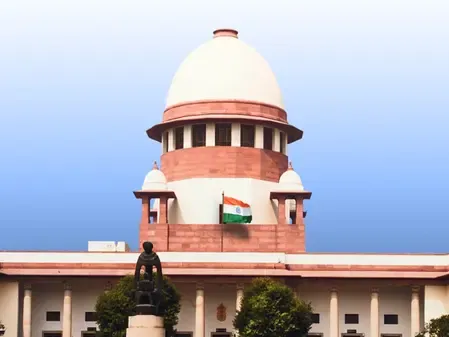
The Supreme Court of India has expressed concern and directed appropriate remedial measures.
Training has been extended to security guards, supervisors, hall managers , and student mentors to identify early signs of mental distress.
Experts note that not all campus suicides are academic in origin — personal relationship distress is also a significant factor.
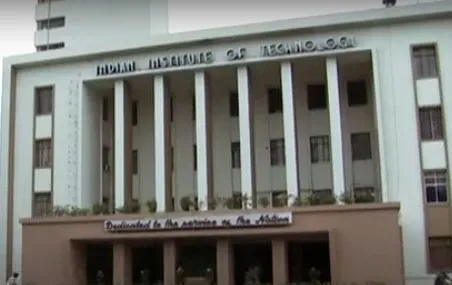
IIT Kharagpur has rolled out a comprehensive mental health and suicide prevention programme following a troubling series of student deaths on campus — at least three in 2026 and five in 2025. The institute's latest initiative, SAHACHAR, a peer wellness buddy programme, was formally launched on 10 September 2026 — World Suicide Prevention Day — as part of a broader institutional effort to change how the campus community talks about and responds to mental distress.
A Grim Pattern on Campus
The most recent death occurred on 13 August 2026, when a 19-year-old second-year mechanical engineering student from Rajasthan died by suicide on campus. The incident followed five similar tragedies reported at the institute in 2025, prompting mounting institutional and judicial attention. The Supreme Court of India has expressed concern over the rising number of student deaths at the country's premier technical institutes and has directed that appropriate remedial measures be put in place.
What SAHACHAR Involves
SAHACHAR — launched in line with this year's World Suicide Prevention Day theme, 'Changing the Narrative on Suicide' — positions students as frontline wellness supporters for their peers. The programme is backed by structured training: a dedicated module developed by the institute's Counselling Centre was conducted for security guards, supervisors, and hall managers, equipping them to identify and respond to crisis situations.
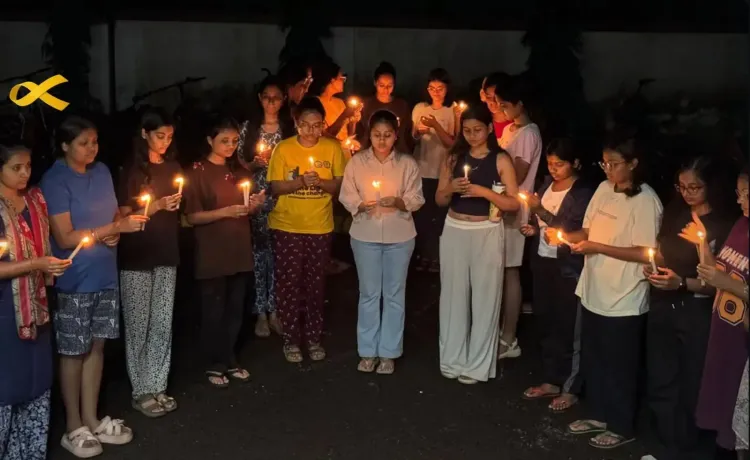
A day after the initial staff training, student mentors were trained under the Student Mentorship Programme, ahead of SAHACHAR's formal launch. A Yellow Ribbon Drive was organised across campus, with students pasting ribbons of hope at various locations. The day concluded with a collective candlelight pledge, symbolising a shared commitment to openness over silence and conversation over stigma.
What Experts at the Institute Say
A mental health expert associated with IIT Kharagpur noted that the pressures at elite institutions are qualitatively different from those elsewhere. 'Students across the world are under a lot of stress today. The stress is more at institutes like this one where there is constant pressure to perform. Even a minor slip can affect a sensitive mind. And these are among the best brains in the world we are dealing with. That is where that human touch comes into play,' the expert said.
Experts also cautioned against reducing all campus suicides to academic pressure alone. According to them, mental distress arising from personal relationships — both on and off campus — is equally significant. 'Everybody on campus has to be involved to identify signs. While students will be playing an important role in playing the role of buddies, they will have to be assisted by staff, who will have to be sensitive and adequately trained to identify signs,' the expert added.
The Broader Context
IIT Kharagpur is India's first IIT, and its student suicide crisis mirrors a wider pattern of mental health distress being reported across the IIT system. The twin pressures of academic performance and social isolation in high-intensity residential campuses have repeatedly been flagged by student welfare advocates. The Supreme Court's directive signals that institutional self-regulation alone may no longer be considered sufficient by the judiciary.
What Comes Next
The institute has indicated that training for both staff and students will be ongoing, not a one-time event. The success of SAHACHAR will hinge on whether peer-support culture can be sustained beyond awareness-day programming, and whether the counselling infrastructure can scale to meet actual student demand. All stakeholders — faculty, administration, and students — will need to remain engaged for the effort to yield measurable results.
Point of View
Not just IIT Kharagpur. SAHACHAR is a meaningful step, but peer-buddy programmes have a structural ceiling — they depend on voluntary student engagement in an environment where admitting distress is still stigmatised. The Supreme Court's intervention is significant: it suggests the judiciary no longer trusts institutions to self-correct on student welfare. The harder question, which no IIT has yet answered credibly, is whether the selection and training system itself needs reform, not just the counselling layer placed on top of it.
NationPress
14 Sept 2026
Frequently Asked Questions
What is the SAHACHAR programme launched by IIT Kharagpur?
SAHACHAR is IIT Kharagpur's in-house peer wellness buddy programme, launched on 10 September 2026 as part of the institute's mental health and suicide prevention efforts. It trains student mentors to identify signs of distress in peers and connects them with professional counselling support.
How many students have died by suicide at IIT Kharagpur recently?
At least three students died by suicide on the IIT Kharagpur campus in 2026, and five such deaths were reported in 2025. The most recent case, on 13 August 2026, involved a 19-year-old second-year mechanical engineering student from Rajasthan.
Why has the Supreme Court intervened in the IIT Kharagpur suicide cases?
The Supreme Court of India expressed concern over the large number of student deaths at the institute and directed that appropriate remedial measures be put in place. The judicial intervention signals that the court no longer considers institutional self-regulation sufficient.
Who is being trained under IIT Kharagpur's new mental health initiative?
The institute's Counselling Centre has trained security guards, supervisors, and hall managers to identify and respond to crisis situations. Student mentors have also been trained under the Student Mentorship Programme, forming a campus-wide early-warning network.
Are student suicides at IIT Kharagpur only linked to academic pressure?
Not entirely, according to mental health experts associated with the institute. While academic performance pressure is a significant factor at elite institutions, experts say personal relationship distress — both on and off campus — is an equally important trigger and must be addressed in any prevention framework.